Deep-sea mollusc Chaetoderma shenloong found to host bacteria in a new organelle, the dracosphera
Authors describe ~12 μm multilamellar compartments in the digestive gland of a cold-seep mollusc that culture sulphur-oxidising bacteria. No organelle dedicated to chemosynthesis was known before.
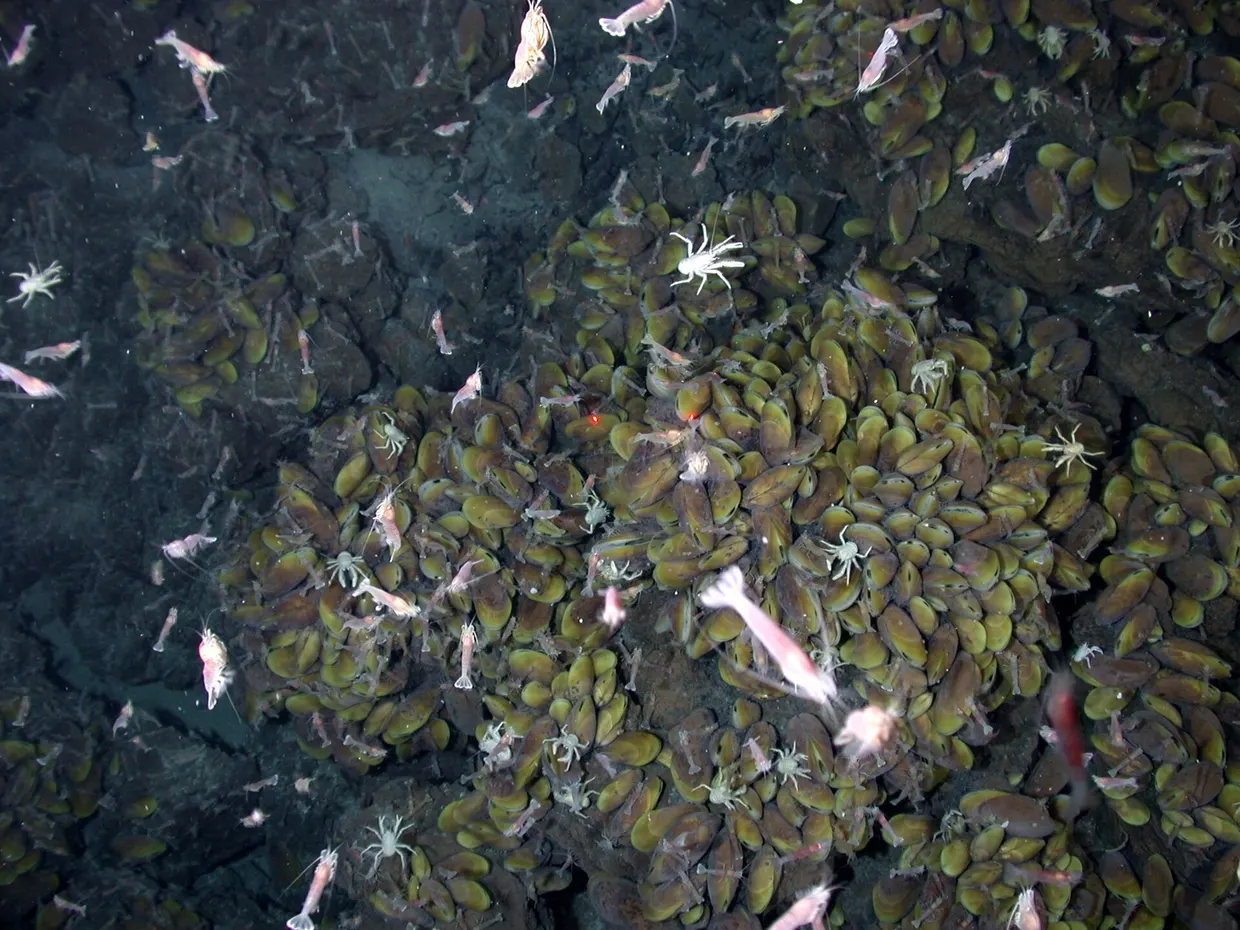
Researchers from Japan and China have reported in Nature Communications a previously unknown organelle in the cold-seep mollusc Chaetoderma shenloong. The authors named it "dracosphera" ("dragon ball"). These are spherical multilamellar compartments about 12 μm across, in which sulphur-oxidising bacteria are cultured nature.com
Nature Communicationsnature.comOpen source ↗.
The specimens came from methane seeps in the South China Sea. One animal was collected at a seep near a mud volcano off Japan, which extends the known range of the species.
Structure of the organelle
Chaetoderma shenloong is an aplacophoran mollusc that lives in anoxic sediments tens of centimetres below the surface. It has lost most of its gut, and its digestive gland is hypertrophied and intricately reticulate. The dracosphera is found throughout this gland.
According to the authors, each compartment is bounded by more than 20 membrane layers and contains hundreds of bacteria. DNA sequencing showed a single species of symbiotic sulphur-oxidising bacterium. No lysosomes were found inside the compartments.
Symbiosis with chemoautotrophic bacteria is known in many animal lineages at hydrothermal vents, and in some of them the symbionts live inside specialised cells called bacteriocytes. However, no specialised organelle dedicated to chemosynthesis had been identified before this work nature.com
Nature Communicationsnature.comOpen source ↗.
Possible function
The symbionts are microaerobic, while the host lives in anoxic sediment. The authors suggest that the dracosphera may minimise oxygen diffusion to the bacteria, similar to mechanisms seen in microbial diazotrophs and termite hindguts. Genomic and spatial transcriptomic analyses support this.
Two further ideas are discussed. The host may break down some of the membranes to release bacteria into the cell for digestion; the absence of lysosomes inside the compartments suggests this would happen outside them. Alternatively, enclosing the bacteria may keep them from consuming scarce oxygen, leaving more for the host.
The authors note that no living specimens were available for experiments. The hypothesis rests on correlative evidence and requires physiological validation. They also point out that hypoxia is known to induce radical adaptations in meiofauna, such as hydrogenosomes, and that the finding offers insight into how such organelles evolved in larger animals nature.com
Nature Communicationsnature.comOpen source ↗.