Physicists film Landau–Zener–Majorana tunnelling in graphene across the whole Brillouin zone
Researchers from Regensburg, Marburg and Jülich tracked field-driven electrons in graphene with attosecond-precision subcycle videography. The method covers the entire first Brillouin zone.
Researchers from the University of Regensburg, Philipps-Universität Marburg and Forschungszentrum Jülich have recorded electrons in graphene undergoing non-adiabatic Landau–Zener–Majorana tunnelling between bands, according to a 2026 paper in Nature nature.com
Naturenature.comOpen source ↗. The technique, called subcycle band-structure videography, has attosecond precision and covers the entire first Brillouin zone. Earlier subcycle measurements were limited to small electron momenta.
Method and instrument
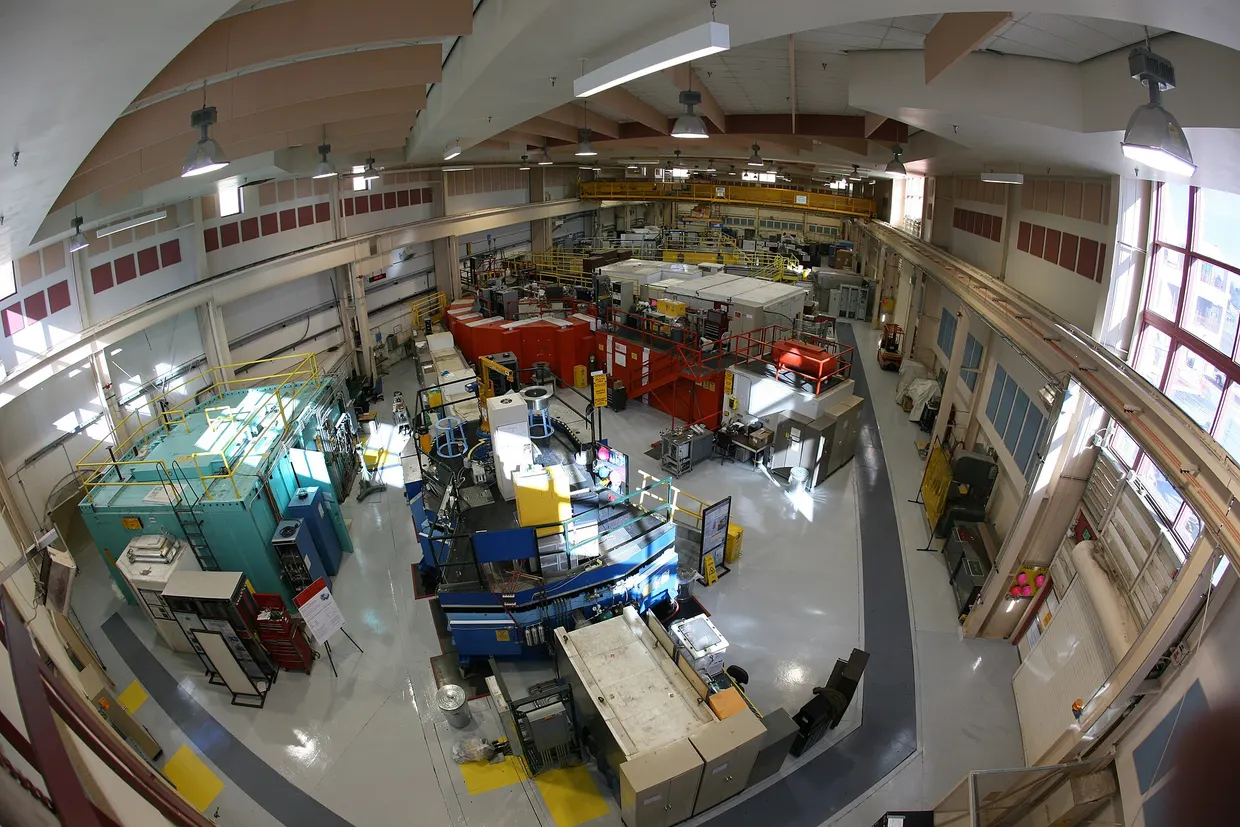
The key instrument is a photoemission momentum microscope. It does not form an enlarged image of the surface; it measures the energies and momenta of electrons, from which maps of the electron distribution across energy states are built. The team combined these measurements with strong light fields oscillating at extremely high speeds, so that the electrons were driven and recorded at the same time. First author Vincent Eggers explained that as many electrons as possible must be observed at once to catch those that undergo a transition while moving.
The samples were exceptionally pure single-layer graphene made at Forschungszentrum Jülich. The researchers also used "rotated" graphene, which, according to Stefan Tautz of Jülich, lets the quantum dynamics emerge particularly clearly.
What the measurements show
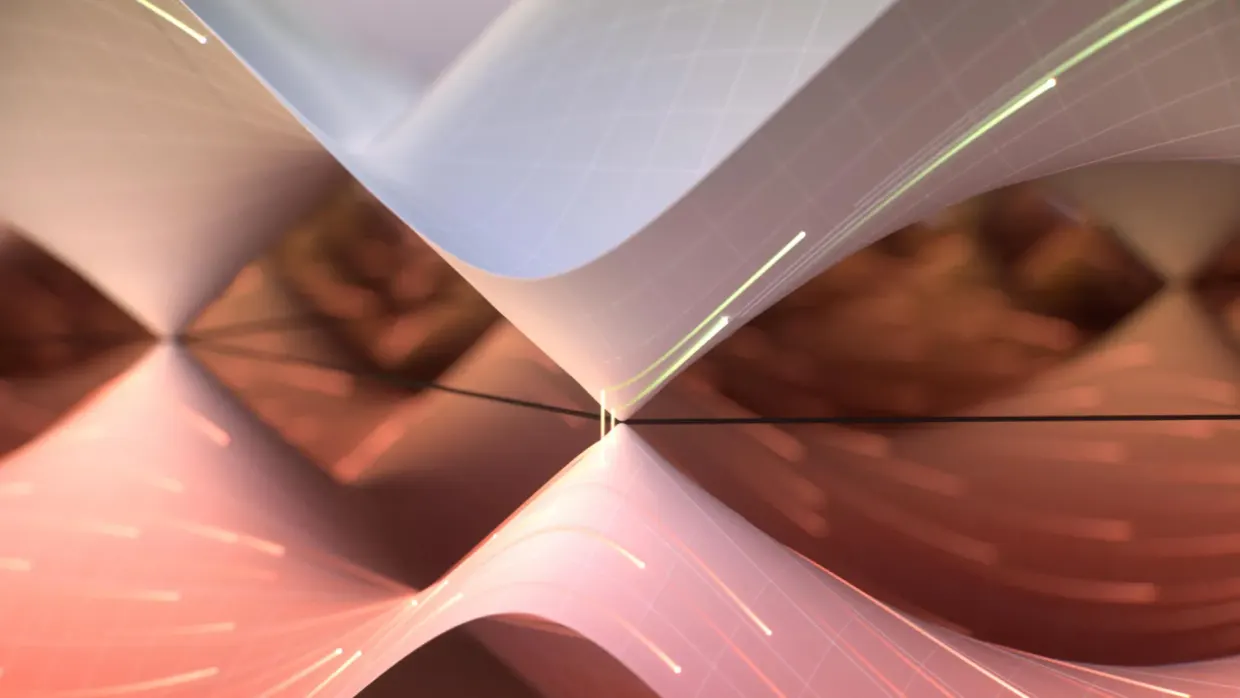
In the Dirac-like band structure of graphene, acceleration of electrons by the strong field combines with periodic interband tunnelling. This appears as a coherent subcycle displacement and distortion of the carrier distribution at the Brillouin zone edge nature.com
Naturenature.comOpen source ↗. The authors reported that in sufficiently strong fields the transition probability reached 100 percent. The decisive factor is how fast the electrons approach the gap under the field, which distinguishes the process from conventional tunnelling through a barrier in physical space.
The electron distributions were extremely non-thermal, which allowed the authors to separate competing scattering processes and assess their effect on coherent electronic control. According to the report, the electrons initially move in an orderly way, but their interaction with the crystal lattice gradually disrupts the motion. The researchers expect the method to work with other quantum materials. They note that this knowledge is relevant for electronics in which the oscillations of light, rather than electrical voltages, direct the electrons.