Lagos cohort: HIV-exposed infants on formula seroreverted earlier than exclusively breastfed ones
In a prospective cohort of 111 HIV-exposed infants in Lagos, median seroreversion came at 24 weeks; formula feeding was linked to earlier seroreversion than exclusive breastfeeding.
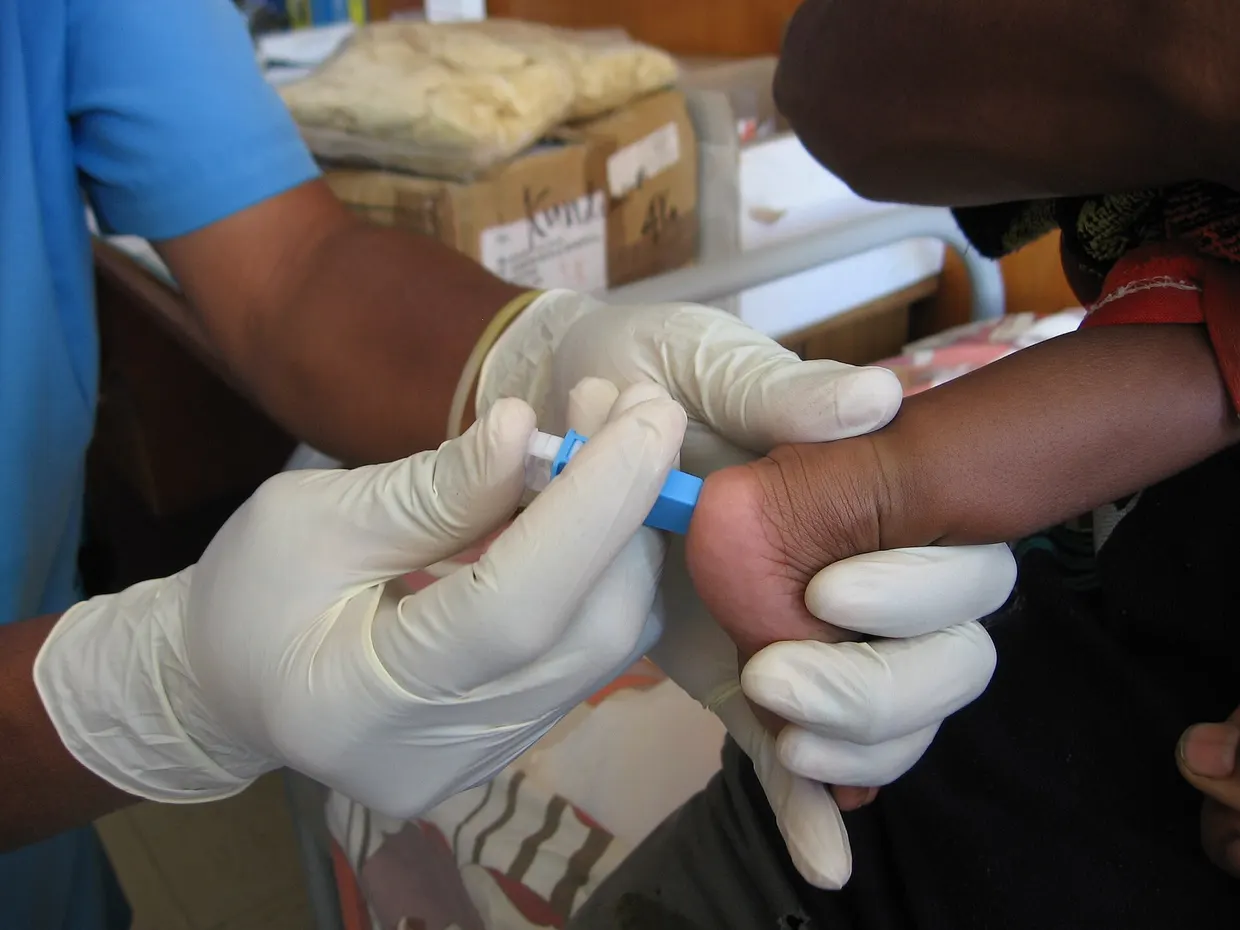
Researchers at the Nigerian Institute of Medical Research in Yaba, Lagos, followed HIV-exposed infants and their mothers attending the PMTCT clinic and recorded the age at which infant rapid HIV tests turned negative (seroreversion). According to Frontiers in Pediatrics, 130 mother-infant pairs were screened and 111 were enrolled frontiersin.org
Frontiers in Pediatricsfrontiersin.orgOpen source ↗. Infants fed breast milk substitutes (BMS) seroreverted earlier than exclusively breastfed infants.
The authors note that the study was run in the era of test-and-treat, and that early infant diagnosis in sub-Saharan Africa is limited by declining donor support, unreliable supplies and a fragile health system.
Time to seroreversion
Infant HIV serology was done at 6–8 weeks, 3, 6, 9, 12, 15 and 18 months. A rapid test was discontinued after at least two consecutive negative results. Of 111 infants, 103 seroreverted and 8 were censored: 7 were lost to follow-up and 1 died.
The median age at seroreversion was 24 weeks (95% CI 24–32). The cumulative probability of seroreversion, estimated by the Kaplan–Meier method, was 20.0% by 12 weeks, 54.6% by 24 weeks and 87.8% by 36 weeks frontiersin.org
Frontiers in Pediatricsfrontiersin.orgOpen source ↗.
Feeding mode and associated factors
Mean age at seroreversion was 21.7 (±11.5) weeks among infants on BMS and 27.7 (±11.9) weeks among exclusively breastfed infants (p = 0.013).
The team collected infant characteristics (age at enrolment, sex, birth weight, place and mode of delivery, gestational age, duration of membrane rupture, ART prophylaxis, feeding mode) and maternal ones (education, occupation, type of ART, recent viral load and CD4 counts). Associations were tested in a single multivariable Cox proportional hazards model over the full 18-month follow-up, with Benjamini-Hochberg correction for multiple testing. BMS feeding was associated with earlier seroreversion: adjusted HR 2.77 (95% CI 1.67–4.61; adjusted p < 0.001).
An interval-censored proportional hazards model, used as a check, gave a consistent estimate: adjusted HR 2.22 (95% CI 1.34–3.68). The association did not differ across age periods (p for heterogeneity = 0.53) frontiersin.org
Frontiers in Pediatricsfrontiersin.orgOpen source ↗. The authors state that the findings can help strengthen diagnostic algorithms and support sustainable early detection in Nigeria.