3,543 de novo mutations in Holstein and Montbéliarde cattle linked to DNA methylation at CpG sites
Genomes of 507 Holstein and Montbéliarde cattle show CpG>TpG transitions enriched 10–30-fold, tracking local methylation; the results match observations in other mammals.
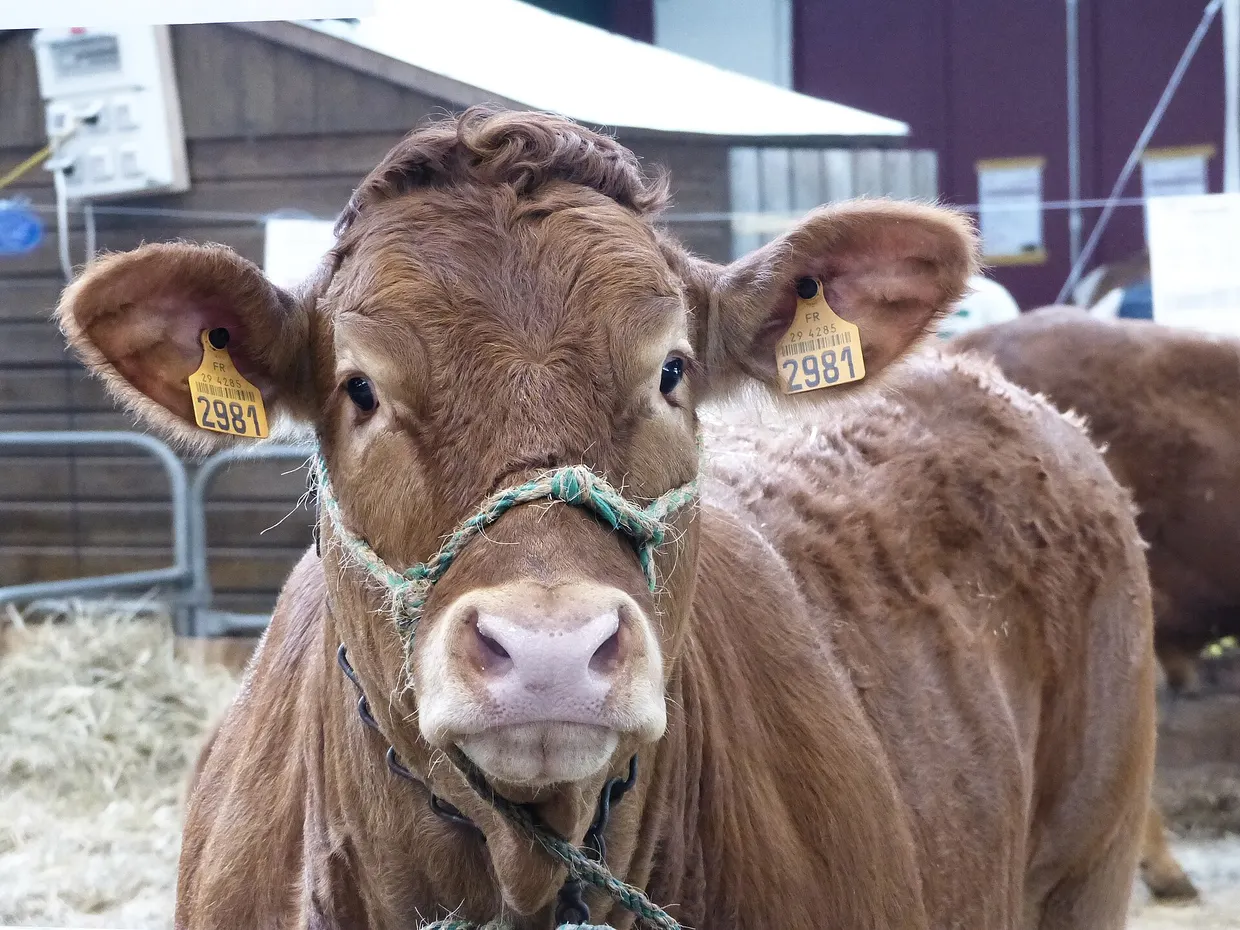
A study in Genetics Selection Evolution analysed germline de novo mutations (DNMs) in two dairy cattle breeds using whole-genome sequences of 507 animals: 369 Holstein and 138 Montbéliarde, sequenced at an average coverage above 16x biomedcentral.com
Genetics Selection Evolutionbiomedcentral.comOpen source ↗. The authors identified 3,543 putative DNMs, 1,670 in Holstein and 1,873 in Montbéliarde. In mammals such mutations occur only a few dozen times per generation, and their rate depends on several factors, including DNA methylation.
Two ways to count mutations
The work uses the population structure of cattle, in which a few ancestors contribute heavily to the current gene pool. In the first approach, the authors reconstructed identical-by-descent segments shared between descendants and direct ancestors across several generations. These segments totalled 378.3 gigabases in Holstein and 121.1 gigabases in Montbéliarde. Candidates were filtered by mapping quality, read depth, genotype quality and allelic balance, and 0.8 megabases were trimmed from both ends of every segment because of anomalous variant clustering.
In the second approach, the team took 1,148 Holstein sequences from the 1,000 Bull Genomes Project and selected 1,802,081 rare bi-allelic substitutions with minor allele frequency below 0.001.
Base substitutions made up 82.3% of DNMs in Holstein and 72.0% in Montbéliarde. Small insertions and deletions of 1–10 base pairs made up 9.0% and 16.3%. The transition-to-transversion ratio was 2.13 in Holstein and 2.23 in Montbéliarde. For Montbéliarde, the authors estimated the DNM rate at 2.05 × 10⁻⁸ per base pair per generation, and the number of DNMs grew with the number of generations separating descendants from their ancestors biomedcentral.com
Genetics Selection Evolutionbiomedcentral.comOpen source ↗.
Methylation and CpG hotspots
Transitions were over-represented relative to transversions in both DNMs and rare substitutions, and C>T substitutions showed the strongest enrichment. Within CpG dinucleotides, CpG>TpG transitions had odds ratios of 10 to 30 in both breeds. In high-density CpG islands the enrichment was weaker, with odds ratios of 2 to 6.
The team compared the mutations with whole-genome bisulfite sequencing data from ten bovine tissues, including gametes, early embryos, blood, liver and adipose tissue. Local methylation levels correlated positively with CpG>TpG substitutions in gametes and several somatic tissues. Even within CpG islands, mutated sites had higher methylation than neighbouring unmutated dinucleotides.
Several transposable elements also had higher mutation rates than the rest of the genome, particularly young SINE and LINE elements. These included the LINE/RTE-BovB, SINE/Core-RTE and SINE/tRNA-Core-RTE families, which were enriched for rare substitutions biomedcentral.com
Genetics Selection Evolutionbiomedcentral.comOpen source ↗. The authors state that the results describe the mutational landscape in cattle and reinforce observations made in other mammalian species.