Cornell researchers record bowhead whale calls on an Alaska telecom cable with fibre-optic sensing
Distributed acoustic sensing turned a telecommunication cable into a listening array for bowhead whales, a proof of concept for monitoring baleen whales from shore.
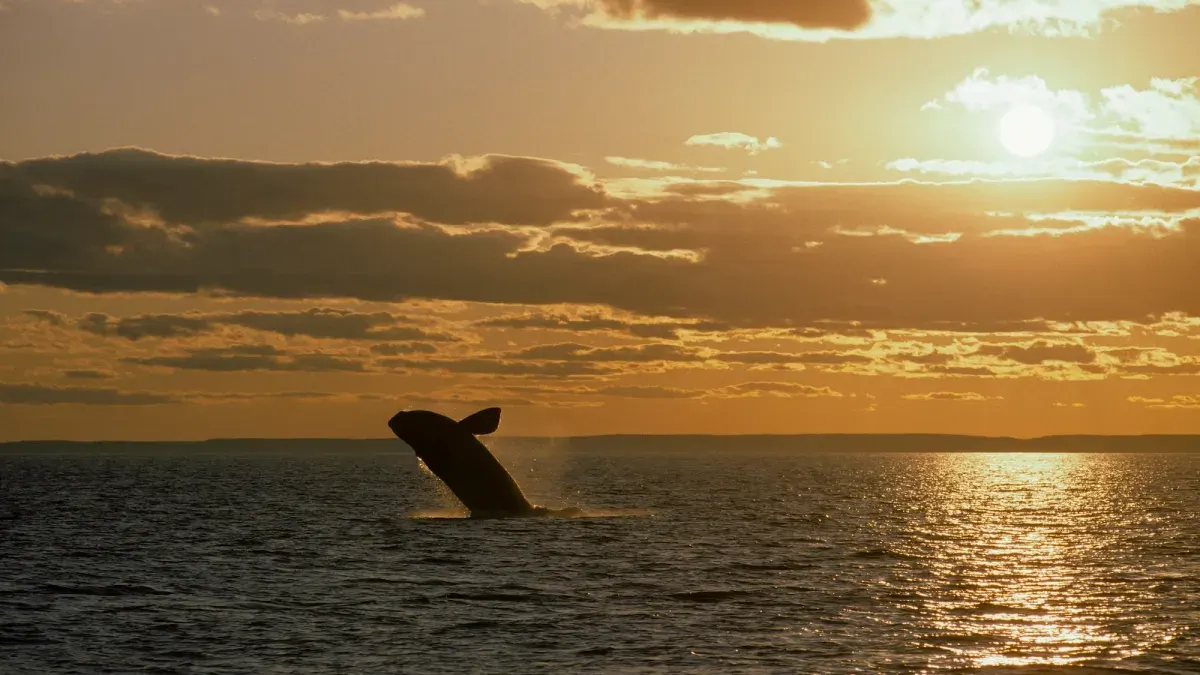
Bioacoustics researcher Léa Bouffaut of Cornell University and colleagues used distributed acoustic sensing (DAS) on a deep sea telecommunications cable near Utqiaġvik, on Alaska's North Slope, and confirmed bowhead whale (Balaena mysticetus) vocalizations. The advances are described in a review in Methods in Ecology and Evolution. According to the researchers, this is the first confirmation of bowhead calls using fibre-optic cables. wiley.com
Methods in Ecology and Evolutionwiley.comOpen source ↗
How distributed acoustic sensing works
DAS converts underwater fibre-optic cables into dense listening arrays with high spatial and temporal resolution. Specialized equipment sends laser pulses through the cable, and researchers analyze them for minute changes caused by sound waves in the surrounding water. The system is usually installed at the dry end of the cable, for example on shore, at a substation or on a platform, which allows real-time data processing and communication.
In 2022 Bouffaut's team was the first to demonstrate cable-based monitoring of blue (Balaenoptera musculus) and fin (B. physalus) whales. These species produce loud vocalizations below 100 hertz. The cables' positions were then used to map the animals' movements and distribution.
Bowhead whales on the Quintillion cable
Bowhead whales and North Atlantic right whales (Eubalaena glacialis) call at about 150 to 300 hertz. Their calls are less intense and travel shorter distances, which makes them harder to extract from DAS data. In the spring Bouffaut worked in Utqiaġvik with the local Iñupiat community of whalers. The Arctic broadband company Quintillion gave access to one of its deep sea telecommunications cables. Bowhead vocalizations were confirmed in terabytes of DAS recordings. wiley.com
Methods in Ecology and Evolutionwiley.comOpen source ↗
Bouffaut said that detecting bowhead whales on a telecommunication cable is the proof of concept needed to show that DAS can be used to monitor all baleen whales. She also noted that the technology provides real-time data access over tens of miles and from land.
The method is not sensitive enough to replace dedicated monitoring with underwater microphone arrays, but the authors consider it a promising economic alternative or supplemental method. The review names two priorities: characterizing DAS performance across species-relevant frequency ranges and cable configurations, and developing robust automated methods to process the large spatial and temporal datasets. The authors recommend standardized protocols, algorithm benchmarking and open collaboration among researchers, industry and regulators.