Study maps aquavoltaics: PV over fish ponds could yield 4,143 TWh a year in simulation
A Nature Food simulation estimates PV over freshwater fish pond clusters could generate 4,143 ± 145 TWh per year. By 2023, 423 km² of aquavoltaics existed, 97% of it in China.
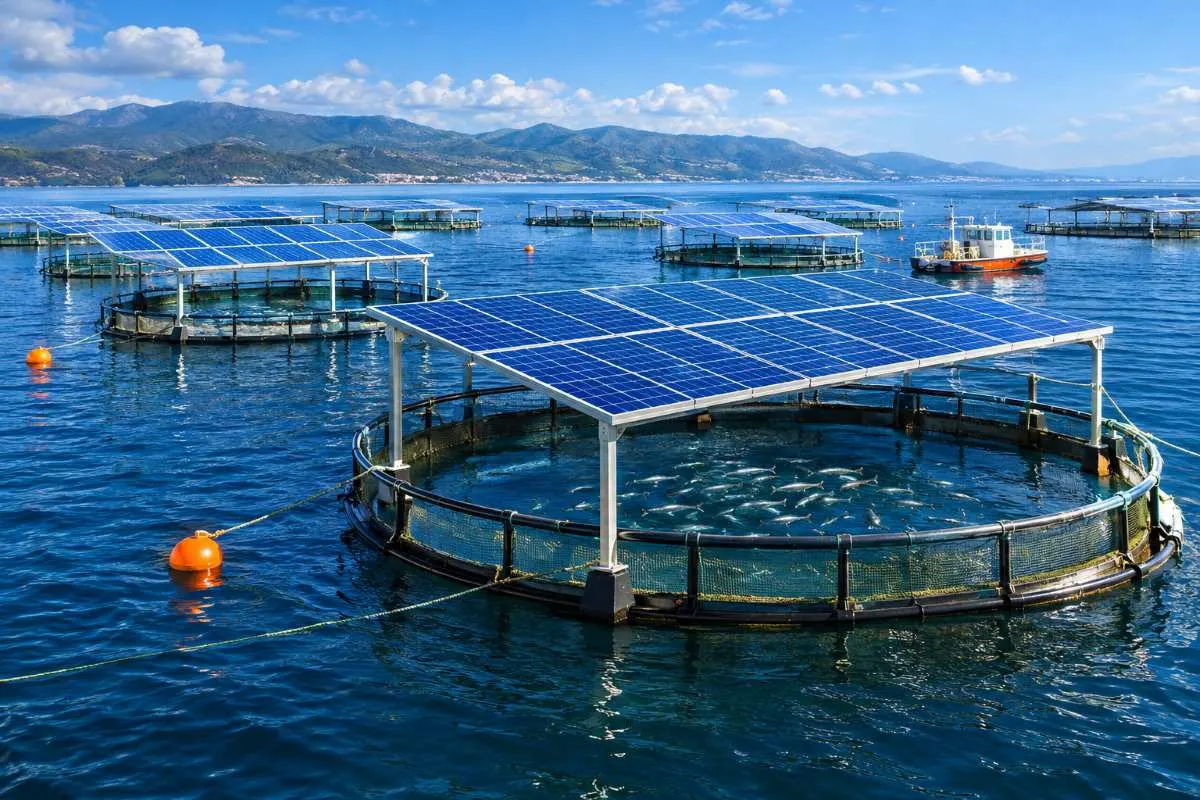
A research team led by Xia Z. has published in Nature Food a global assessment of aquavoltaics, the combination of photovoltaics with aquaculture. The authors integrated satellite observation products with climate-driven simulations of photovoltaic systems to map where such installations already exist and where they could be built. nature.com
Nature Foodnature.comOpen source ↗
According to the study, the global aquavoltaics area reached 423 km² by 2023. China accounts for 97% of it.
Simulated generation potential
The main scenario assumes PV with a 40% coverage rate over more than 50,000 km² of landside clusters of aquaculture ponds worldwide. Under these conditions the authors estimate an electricity generation potential of 4,143 ± 145 TWh per year.
The authors state that this is sufficient to support energy self-sufficiency in many cities and to offset the carbon footprint of freshwater aquaculture in numerous countries. nature.com
Nature Foodnature.comOpen source ↗ According to the ecoinventos.com summary of the paper, this corresponds to 878 cities reaching an annual electricity balance and to 61 countries.
The figure is a simulation of technical potential. It is not electricity that is already being produced, and it does not mean that every site can be developed at once or at a profit. An annual balance also does not mean round-the-clock supply from solar power alone.
Why freshwater aquaculture
The study starts from the rapid expansion of global inland freshwater aquaculture, which has intensified greenhouse gas emissions and sustainability challenges. Aquavoltaics is proposed as a multifunctional option, but its global deployment and decarbonization potential had been poorly understood.
As described in the summary, modules can be mounted on elevated structures above the ponds or as floating arrays. The electricity can power aeration, circulation pumps, filtration and sensors, or be exported to the grid where infrastructure allows.
The same summary notes that excessive panel coverage can reduce the light available for aquatic photosynthesis and change dissolved oxygen levels. The effects of partial shading on water temperature and evaporation depend on climate, the cultivated species and the installation design. The authors conclude that aquavoltaics is a scalable pathway towards sustainable aquaculture and low-carbon energy. nature.com
Nature Foodnature.comOpen source ↗