Southampton simulation: avoiding whale shark sites adds up to 1% fuel on voyages over six days
A simulation of eight tanker and container ship voyages found that routing around whale shark aggregation sites costs little fuel, and slowing down suits shorter trips.
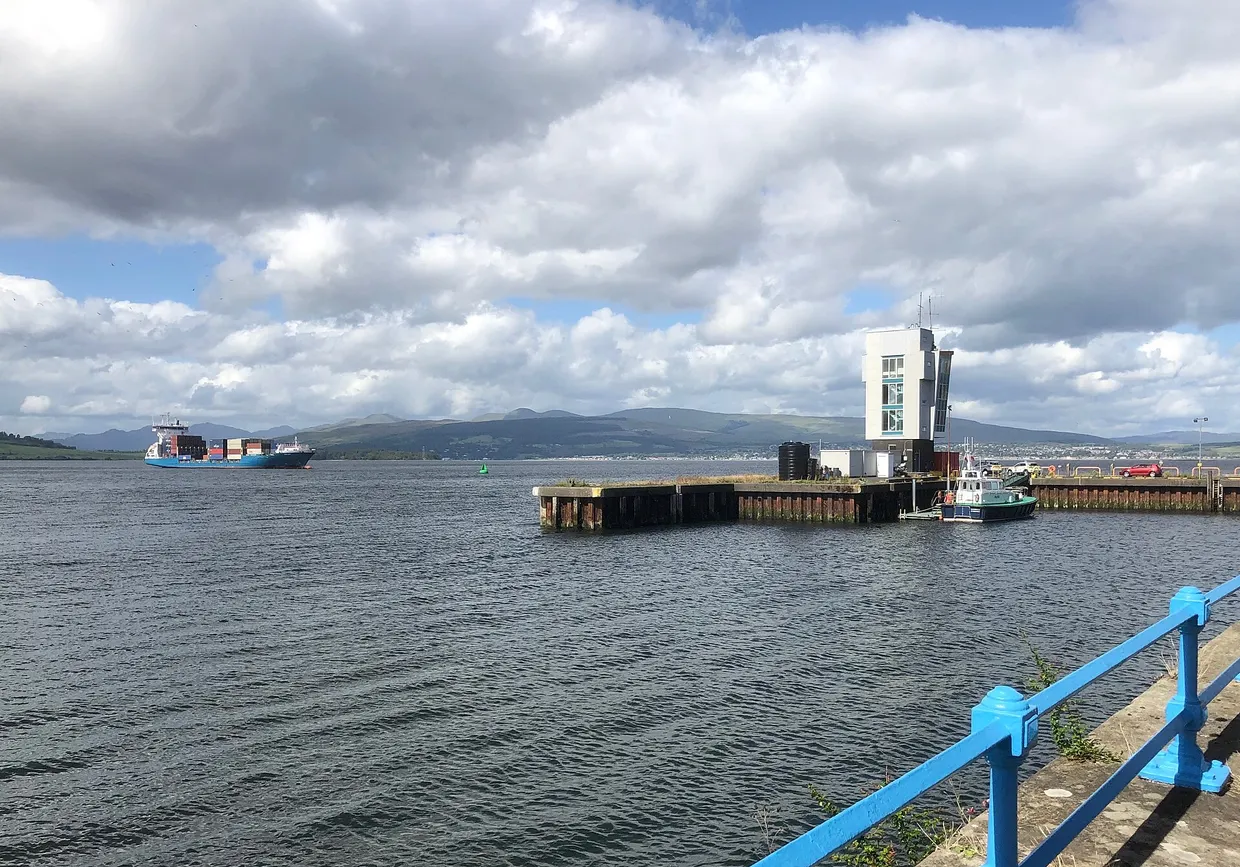
A team led by the University of Southampton simulated eight port-to-port ship voyages and found that routing around whale shark aggregation sites changes fuel use only slightly. The results were published on 11 November 2026 in Royal Society Open Science doi.org
Royal Society Open Sciencedoi.orgOpen source ↗. The simulations covered two vessel classes, a crude oil tanker and a container ship, on crossings originating in the Persian Gulf and the Gulf of Mexico.
Simulation design
The researchers added maps of known whale shark aggregation sites to voyage optimisation software widely used in commercial shipping. They compared three scenarios: baseline optimisation, speed reduction to 10 kts within core habitats, and complete avoidance of these areas. According to the authors, the chosen crossings were among the most dangerous for whale sharks.
The whale shark (Rhincodon typus) is an endangered species. According to the university, it spends almost half of its time in surface waters, and its population has more than halved in 75 years. Ship strikes have been recorded for at least 75 marine species, but the true scale is unclear, because collisions can go undetected or unreported, especially for animals that sink when killed.
Fuel use results
Across routes, fuel-use changes ranged from −0.13% to 9.65%, with impacts below 1% for most long-distance voyages doi.org
Royal Society Open Sciencedoi.orgOpen source ↗. According to the university, full avoidance of the aggregation sites used at most one percent extra fuel on journeys of more than six days, and voyages lasting more than 12 days showed an increase of 0.5%.
For shorter voyages, where a change in distance has a larger proportional effect, speed reduction was the more efficient measure. The additional fuel use stayed below one percent for slower vessels. The authors note that the impacts vary with vessel type and operational constraints.
The authors state that dynamic, species-specific habitat layers in voyage planning could allow targeted mitigation of vessel strikes with negligible disruption to global trade. "We demonstrated this with whale sharks, but it could be applied to other large sea creatures at risk of ship strikes, such as whales and dolphins," said Dr Ryan Reisinger of the University of Southampton, who led the work.
The study is a simulation of voyages, not a trial on operating ships. For wider use the authors point to improved data pipelines, dynamic forecasting, and integration into regulatory and incentive frameworks doi.org
Royal Society Open Sciencedoi.orgOpen source ↗.