KIMM develops EEG helmet with 32 channels that adjusts electrode contact on the scalp automatically
The Korea Institute of Machinery and Materials has built a helmet that checks electrode contact in real time and repositions electrodes itself. Performance validation and field trials are still ahead.
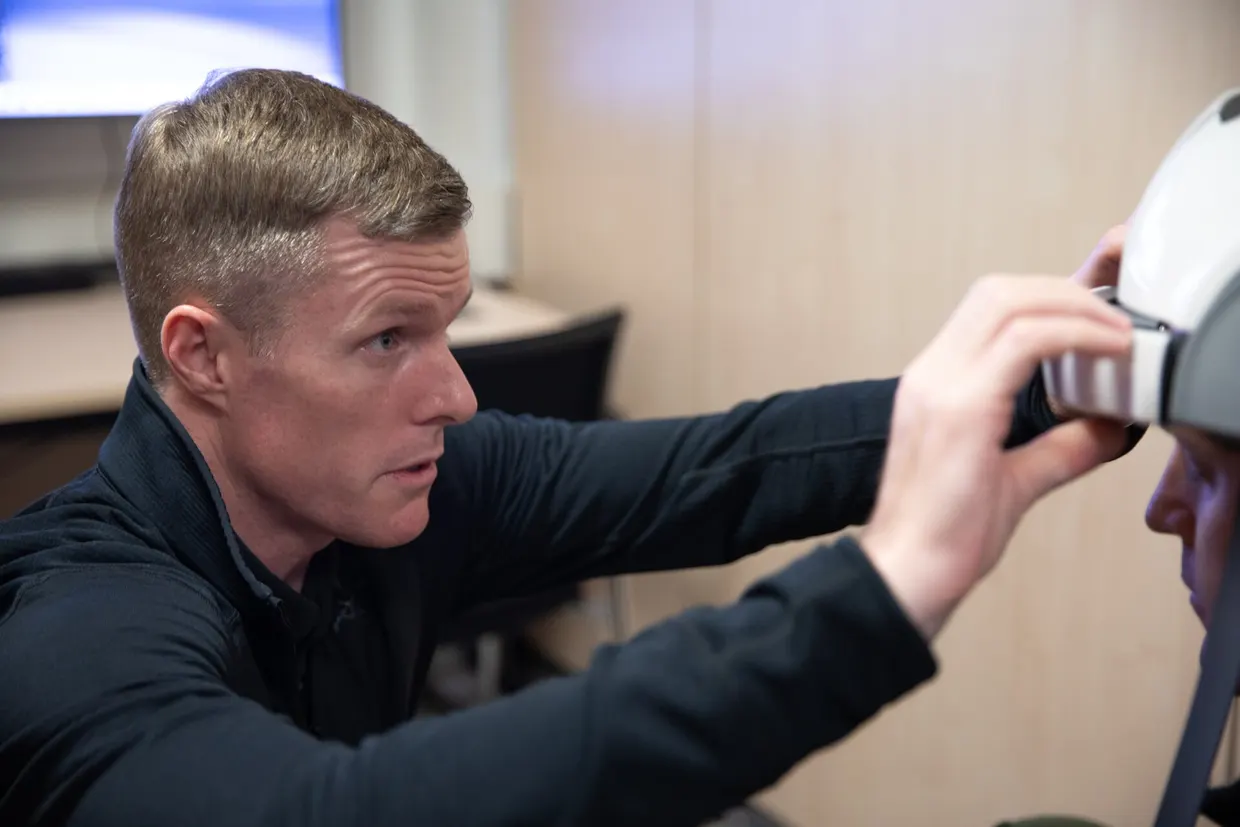
The Korea Institute of Machinery and Materials (KIMM) announced on the 12th that it has developed an auto-fitting EEG monitoring helmet, according to biz.heraldcorp.com. The work was done by a team led by senior researcher Lee Seung-chan at the Diagnostic Sensor Laboratory of the Daegyeong Convergence Research Division. The device adjusts electrode positions automatically, so a person only needs to put it on. biz.heraldcorp.com
biz.heraldcorp.combiz.heraldcorp.comOpen source ↗
The helmet records brain signals on 32 channels simultaneously, at 500 samples per second. According to the researchers, this allows brain activity at many scalp locations to be analysed in detail.
The problem with conventional EEG
Electroencephalography (EEG) measures the weak electrical signals generated by the brain. It is used in diagnosing brain disorders, rehabilitation, cognitive science research and brain-computer interfaces (BCI).
In the conventional procedure, a trained specialist attaches electrodes to the scalp one by one and adjusts their contact. Head shape and hair condition differ between people, so signal quality varies. If an electrode lifts during measurement because the subject moves, its position has to be corrected again. biz.heraldcorp.com
biz.heraldcorp.combiz.heraldcorp.comOpen source ↗
Closed-loop control of electrode contact
The core of the system is closed-loop control that lets the helmet assess electrode-to-scalp contact on its own. After the helmet is put on, the system analyses the contact of each electrode in real time. An electrode with unstable contact is moved automatically and stops once it reaches proper contact.
According to the team, this reduces measurement variation caused by different head shapes and hair conditions and yields a stable EEG signal. The system also prevents electrodes from pressing too hard on the scalp, which makes the helmet more comfortable to wear. If the contact state changes because the user moves during a session, the system corrects it automatically.
The researchers say this removes the need for specialists to adjust each electrode and improves the reliability of repeated measurements. The next steps are performance validation and field trials. biz.heraldcorp.com
biz.heraldcorp.combiz.heraldcorp.comOpen source ↗
Lee said EEG has high value in medicine, healthcare and cognitive science, but setting electrode contact is complicated and signal quality depends on the user. In his words, the new technology judges contact in real time and corrects it automatically, laying a basis for obtaining consistent EEG data more easily in settings that require repeated measurements.
Sources · 1
Found a mistake?Read also