Saitama University engineered Synechocystis cells keep photosystem II working at 46 °C longer than wild type
Researchers at Saitama University combined ROS-scavenging enzymes with an oxidation-resistant EF-Tu in Synechocystis; in the lab strains, PSII inactivation at 46 °C slowed.
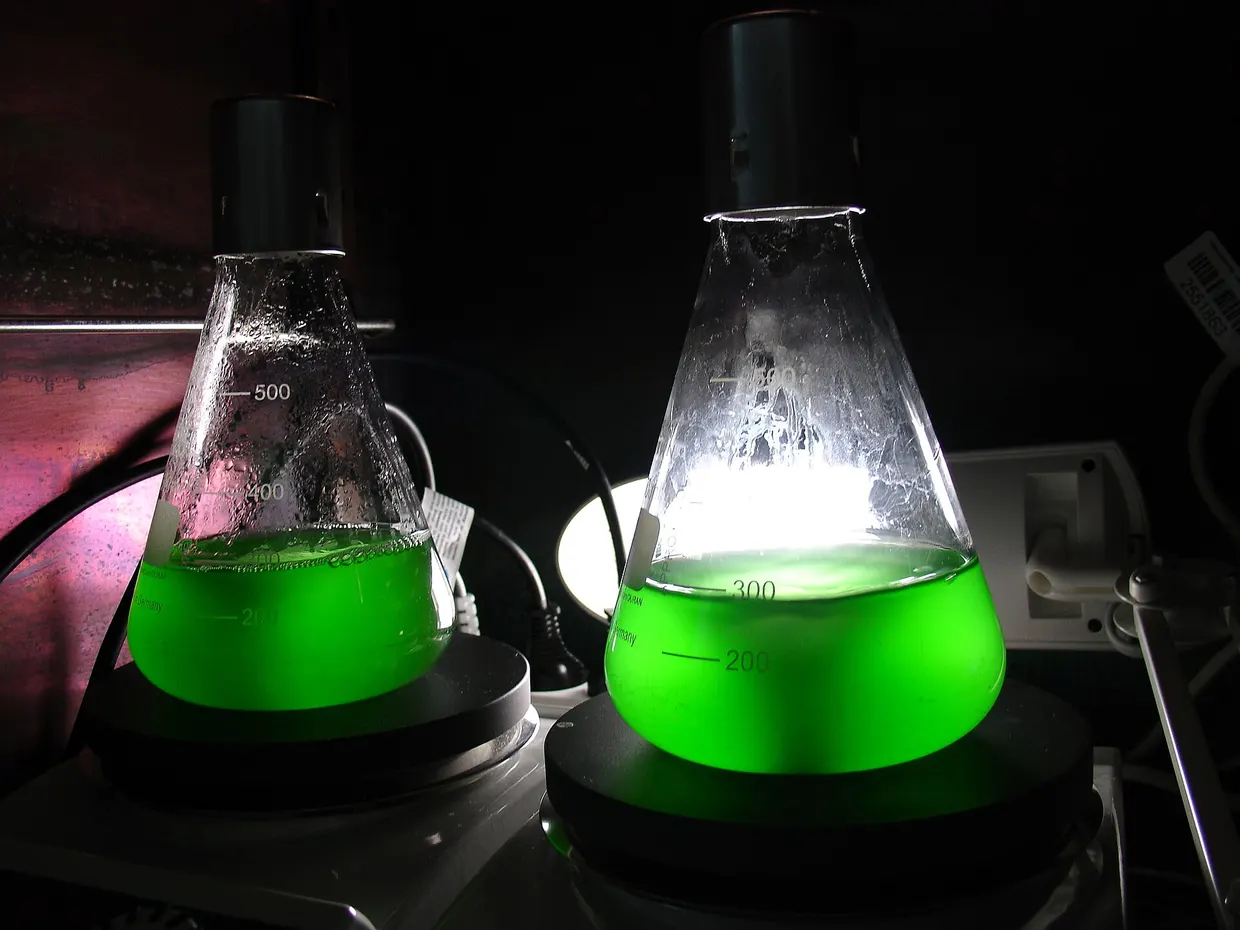
An international team led by Yoshitaka Nishiyama at Saitama University reported that engineered strains of the cyanobacterium Synechocystis sp. PCC 6803 keep photosystem II (PSII) active longer at 46 °C than wild-type cells. According to PubMed, the work also involved researchers from the University of Turku and Kasetsart University, and it was published on November 11, 2026, in Plant and Cell Physiology oup.com
PubMedoup.comOpen source ↗. The experiments were carried out on laboratory cultures of a model organism.
Two protective mechanisms combined
PSII converts light energy and releases oxygen during photosynthesis. Earlier work linked the capacity for PSII repair to tolerance of strong light, and it was unclear whether repair also matters under heat. The authors tested this by enhancing repair in two ways.
The first was overexpression of two enzymes that scavenge reactive oxygen species (ROS): superoxide dismutase (SodB) and catalase (VktA). The second was a mutated version of the translation factor EF-Tu (C82S), which is normally sensitive to oxidation by ROS. According to the authors, the combination worked better than strengthening either system alone.
What was measured at high temperature
In wild-type cells, raising the temperature from the normal growth temperature of 32 °C to 46 °C increased ROS production about fourfold. The authors report that ROS formed during photosynthetic electron transport accelerated heat damage to PSII and interfered with its repair oup.com
PubMedoup.comOpen source ↗.
At 46 °C under standard growth illumination, PSII activity in the transformants declined more slowly than in wild-type cells. Heat-induced accumulation of intracellular ROS was significantly suppressed, and net photosynthetic activity and cell viability at high temperature were higher.
The authors attribute the slower inactivation to two effects: better PSII repair and higher thermostability of the PSII complex itself. De novo synthesis of the D1 protein, which is needed for repair, was maintained at about 1.6 times the wild-type level in the doubly enhanced strain at 46 °C.
In prolonged cultivation at 40 °C, the engineered cells continued to survive and proliferate, while wild-type cells bleached and died, the authors report oup.com
PubMedoup.comOpen source ↗. The study was supported by the Japan Society for the Promotion of Science and the Japan Science and Technology Agency, among others.