DGIST and KIST extend perovskite solar cell lifetime 5.5-fold with a taurine layer
Korean teams applied taurine at the tin oxide–perovskite interface. In laboratory cells, T80 in an operating-stability test rose from 23.6 to 130 hours.
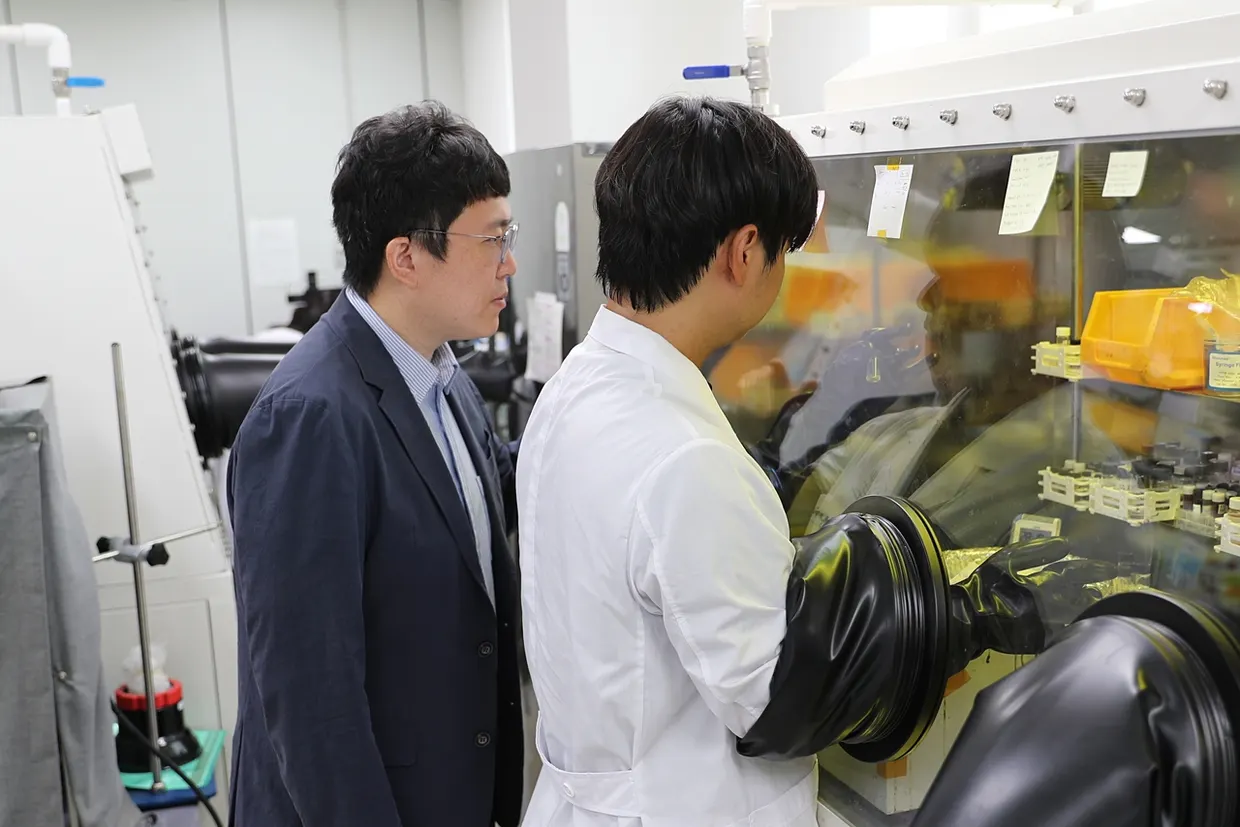
The Daegu Gyeongbuk Institute of Science and Technology (DGIST) announced a technique that uses taurine, an antioxidant, to extend the lifetime and raise the efficiency of perovskite solar cells, according to biz.heraldcorp.com. The work was done by a team led by Prof. Choi Jong-min of the Department of Energy Science and Engineering together with a team led by Dr. Moon Byung-joon at the Jeonbuk branch of the Korea Institute of Science and Technology (KIST) biz.heraldcorp.com
biz.heraldcorp.combiz.heraldcorp.comOpen source ↗. The time for efficiency to fall to 80% of its initial value (T80) grew from 23.6 to 130 hours, about 5.5 times longer.
Perovskite cells are considered a possible successor to conventional silicon cells. They can reach high conversion efficiency, but prolonged exposure to light or heat damages their internal structure and performance drops sharply. The short lifetime is regarded as the main obstacle to commercialization.
Superoxide as the cause of degradation
The researchers focused on superoxide, a type of reactive oxygen species. They established that during cell operation superoxide forms in the metal oxide layer and destroys the perovskite structure, shortening the cell's life.
To address this, they applied taurine, widely known as an ingredient of fatigue-relief products, at the boundary where tin oxide meets perovskite. This formed a thin antioxidant layer biz.heraldcorp.com
biz.heraldcorp.combiz.heraldcorp.comOpen source ↗.
Test results and limits
According to the team, taurine removed the superoxide generated during operation and suppressed damage to the internal structure. It also acted as a chemical bridge between the two materials, reducing microscopic defects and easing electron transport, which raised efficiency as well. Cells with taurine kept more than 95% of their initial efficiency after more than 500 hours of continuous illumination.
The authors note that the approach works after the cell has been sealed. Conventional protection blocks external moisture and oxygen, whereas this method controls a cause of degradation inside the cell directly.
Commercialization will require further research. The technique has so far been demonstrated at the level of individual cells, and extending it to large-area manufacturing remains a task. The team plans to apply it to tandem solar cells to raise efficiency and to secure longer operating stability. The results were published as a cover article in Advanced Energy Materials.