Korea's science ministry hosts deep tech festival in Daejeon: 7 startups pitch to investors
A two-day festival in Daejeon connects university and institute technologies in seven strategic fields with investors; reviews worth 56억 원 were announced.
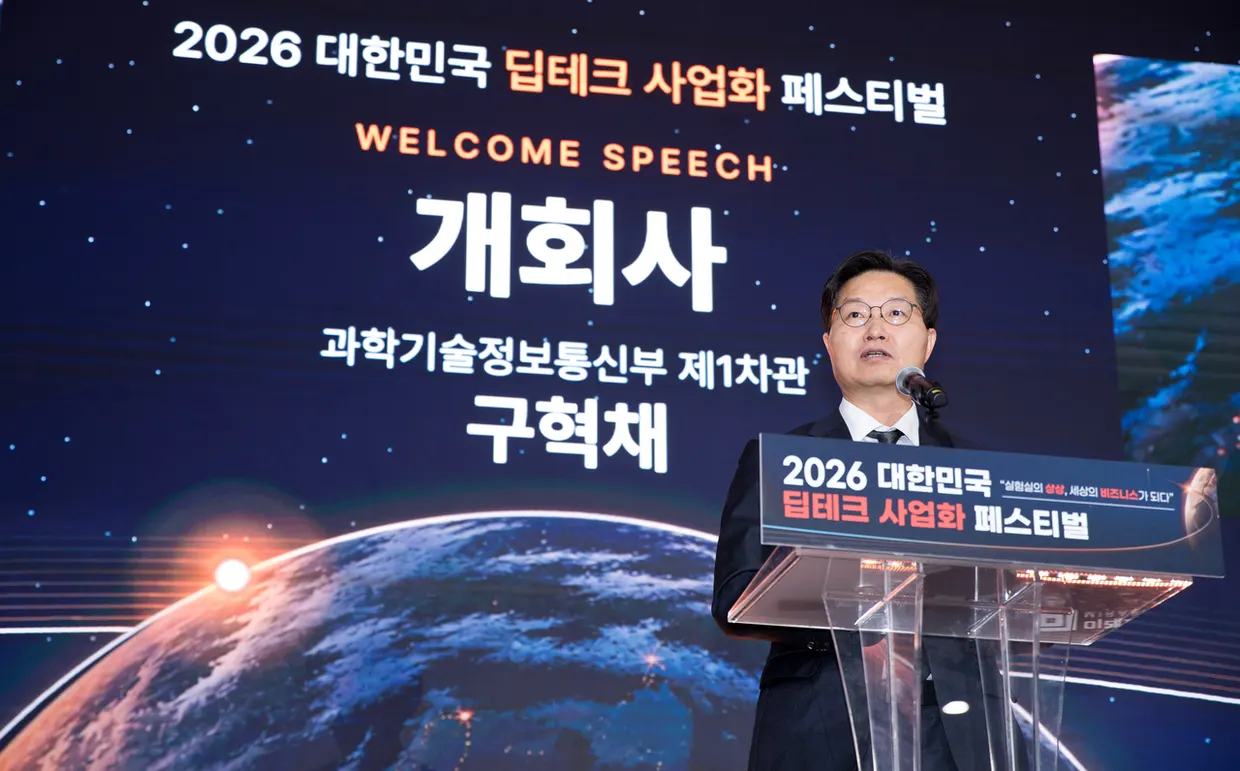
The Ministry of Science and ICT of Korea is holding the 2026 Korea Deep Tech Commercialization Festival on 12–13 November at Exhibition Hall 2 of the Daejeon Convention Center (DCC), biz.heraldcorp.com reports biz.heraldcorp.com
biz.heraldcorp.combiz.heraldcorp.comOpen source ↗. The event is meant to move advanced technologies developed at universities and government-funded research institutes into startups, investment and the market. The ministry is the organizer, and 11 institutions act as co-hosts.
Seven SEED fields and investor pitches
The festival focuses on commercialization in the 7 SEED fields that the government is developing as future growth engines. These are small modular reactors (SMR), fusion, renewable energy, quantum, space and aviation, advanced bio, and advanced supply chains. They require large R&D spending and long technology verification, but successful commercialization can create new industries and markets.
The investment program "Tu Jap" brought together 7 deep tech startups, one for each SEED field. The companies presented their technology, business model and growth potential to investors and sounded out the chances of attracting funding. Investment reviews worth 56억 원 in total were announced. Whether investments are actually made, and in what amount, will be decided after follow-up review.
Institutional changes and cooperation
The event also covered efforts to lower institutional barriers to startups founded by researchers. The Council of Heads of Government-funded Research Institutes presented plaques of appreciation to lawmakers Jo In-cheol and Hwang Jeong-a biz.heraldcorp.com
biz.heraldcorp.combiz.heraldcorp.comOpen source ↗. The council credited them with contributing to legal amendments that address conflict-of-interest concerns arising when researchers found companies or transfer technology. The two lawmakers were the lead sponsors of amendments to the institutional acts for the government-funded institutes and the 4 major science and technology institutes; the bills passed the National Assembly plenary session in August.
The 11 institutions declared a shared vision and signed a memorandum of understanding. They include the Korea Institute for Commercialization of Science and Technology, the Innopolis Foundation, the National Research Foundation of Korea, the startup institutes of KAIST, GIST, DGIST and UNIST, NST, KISTI, Korea Science and Technology Holdings and Future Science and Technology Holdings. They plan to strengthen a support system that runs from R&D through technology transfer, startups and investment to company growth.
First Vice Minister Koo Hyuk-chae said that the country's growth engines become stronger when technologies born in laboratories lead to startups and industry, and that deep tech needs a long time and large investment.