INCP RAS chemists show how a labile ligand controls palladium-catalyzed norbornene polymerization
Of 15 new palladium complexes tested, the easier the ligand leaves the metal, the faster chains start and the closer molecular mass is to the calculated value.
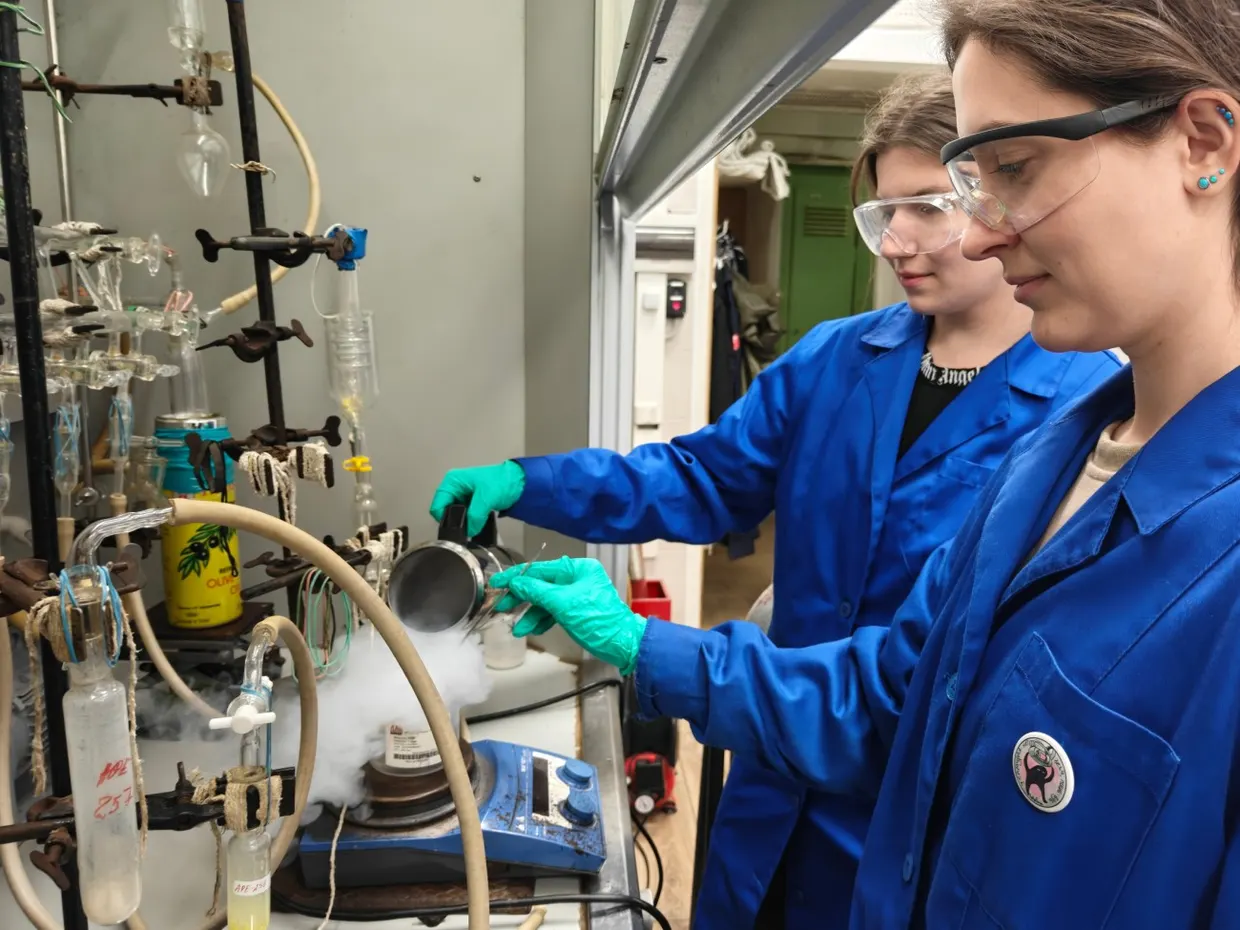
Chemists from the Topchiev Institute of Petrochemical Synthesis, Russian Academy of Sciences (Moscow), together with colleagues, synthesized 15 new palladium catalysts and tested them in the polymerization of norbornene and its derivatives, innovanews.ru reports. innovanews.ru
innovanews.ruinnovanews.ruOpen source ↗ The results were published in Journal of Catalysis, and the work was supported by the Russian Science Foundation. The authors found that the rate of chain formation and the chain length depend on how easily an auxiliary ligand detaches from the palladium center.
Polynorbornenes and the role of the catalyst
Polynorbornenes are strong, chemically resistant polymers that keep their working characteristics when heated and in contact with aggressive media. Some of them are transparent and show useful gas-transport properties, which interests makers of optics, electronics and gas-separation membranes.
Linking short monomers into a long chain requires a catalyst. Besides its activity, what matters is the fraction of catalyst molecules that actually start polymer growth: this value determines the chain length and the molecular mass of the product.
Ligand lability and molecular mass
All the compounds were palladium complexes with organic ligands. One ligand in each complex was labile: it left the metal easily and freed a site for the monomer. The researchers varied the leaving ligand (water, nitriles, pyridines, carbon monoxide, isocyanides and others) and found a direct link between how easily it detaches and how the catalyst behaves. innovanews.ru
innovanews.ruinnovanews.ruOpen source ↗
When the ligand left quickly, the reaction started almost instantly: most catalyst molecules began growing chains at the same time, and initiation efficiency reached 90–100%. The molecular mass of such polymers was close to the theoretically calculated value.
With a stronger bond between the ligand and palladium, the catalyst engaged more slowly. Fewer chains formed, but each could grow longer, which gave a polymer of higher molecular mass. Heating to 65°C accelerated such systems.
Thus the leaving ligand acts as a regulator: its nature sets the reaction rate, the number of growing chains and the molecular mass of the material. innovanews.ru
innovanews.ruinnovanews.ruOpen source ↗ Project leader Evgenia Bermesheva, Candidate of Chemical Sciences at the institute, compared the ligand to an adjustable starter, according to the RSF press service. She said the team plans to study the mechanism of these catalytic systems in more detail and to control molecular mass and chain structure more precisely.
The work also involved researchers from Sechenov First Moscow State Medical University, the Nesmeyanov Institute of Organoelement Compounds RAS, the Zelinsky Institute of Organic Chemistry RAS, ITMO University and the Enikolopov Institute of Synthetic Polymer Materials RAS.