Embrapa found 27 first records of bees on soybean and 53 bee species in Goiás fields and forests
In Rio Verde and Montividiu, researchers recorded 40 bee species in soybean crops, 27 of them new associations with the crop in Brazilian literature. Native bees made up 89% of those collected.
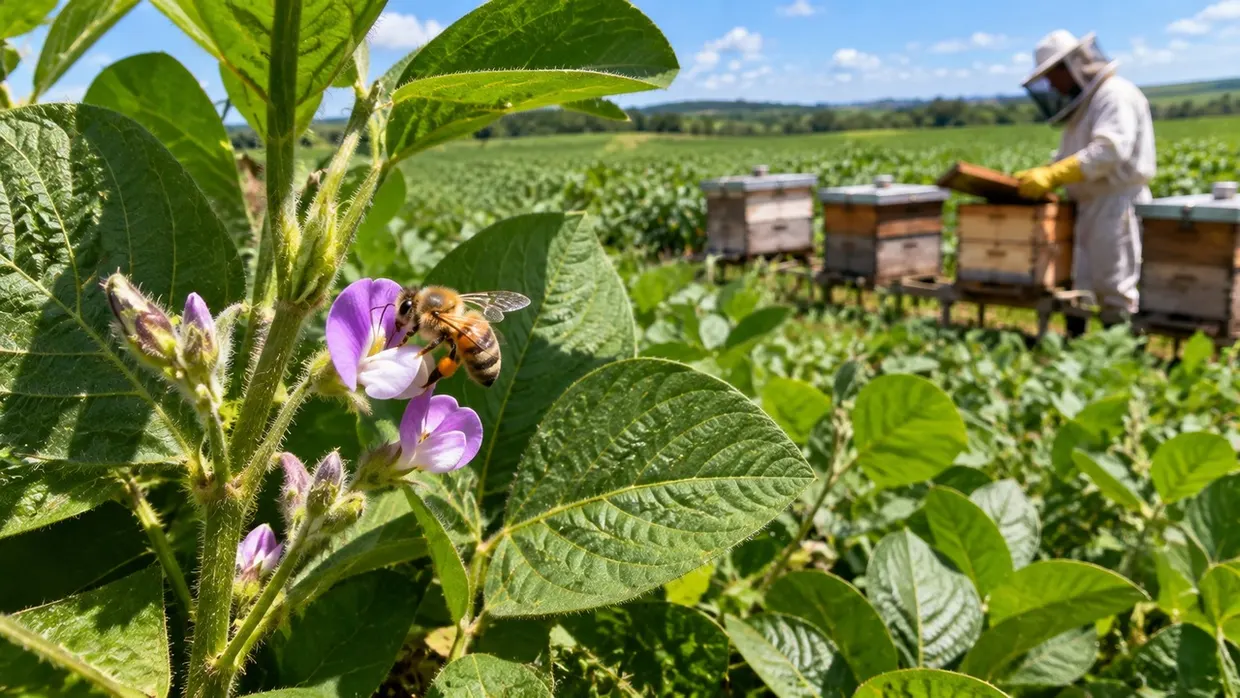
According to clickpetroleoegas.com.br, Embrapa and partner institutions surveyed bees in soybean fields in Rio Verde and Montividiu, in southwest Goiás. In August 2026 Embrapa reported 40 bee species in the crops, 27 of them first records of association with soybean in Brazilian scientific literature clickpetroleoegas.com.br
clickpetroleoegas.com.brclickpetroleoegas.com.brOpen source ↗. When patches of native vegetation near the farms were added, the total reached 53 species in five families.
The two counts should be kept apart. The figure of 53 was not found only inside the fields, and the 27 records are not 27 species unknown to science: they are associations with soybean that had not been documented before. In the general samples, 764 bees were collected, and 89% of the individuals belonged to species native to Brazil. Colored traps captured much of the catch, while entomological nets identified a smaller share of species, partly because small insects are hard to see among soybean plants.
Bees, crop management and native vegetation
Soybean is predominantly self-pollinated, but earlier Embrapa studies show that complementary pollination can improve the number and formation of grains under certain conditions. Embrapa cited research linking visits by wild bees to an average 7% increase in grain weight; the figure applies to the conditions of those studies.
A paper published in June 2026 in the Journal of Applied Entomology, with authors including Davi de Lacerda Ramos and Carmen Silvia Soares Pires, examined 599 specimens: 392 in soybean areas and 207 in native vegetation. More intensive use of fungicides and insecticides was associated with a less even distribution of individuals among species. The farther a field was from native vegetation, the lower the abundance and richness of native bees tended to be; the abundance of Apis mellifera did not show the same relation. These are field associations, not an experimental comparison.
Coexistence with beekeepers in the Pampa
In the Pampa gaúcho, the project Coexistência entre Agricultura e Apicultura – Mel de Florada de Soja brought together farmers and 23 beekeepers. According to BASF and the project partners, about 36 tonnes of honey were extracted in the 2025/26 season, 44% more than in the previous one clickpetroleoegas.com.br
clickpetroleoegas.com.brclickpetroleoegas.com.brOpen source ↗. The project is planned to continue in 2026/27.
A good-practice guide developed by Embrapa, BASF and Senar recommends constant communication between farmers and beekeepers, prior knowledge of apiary locations and planning of pest-control interventions. Its guidance includes warning neighboring beekeepers in advance, avoiding spraying when bees visit flowers most, watching wind conditions and using properly calibrated equipment. These recommendations do not replace product labels, legal restrictions or the advice of a qualified professional.
Sources · 1
Found a mistake?Read also