Meta-analysis of 34 studies links high CIP2A expression to poorer cancer survival
A University of Chester review of 34 studies found that higher CIP2A expression at diagnosis was associated with shorter overall and progression-free survival, with caveats.
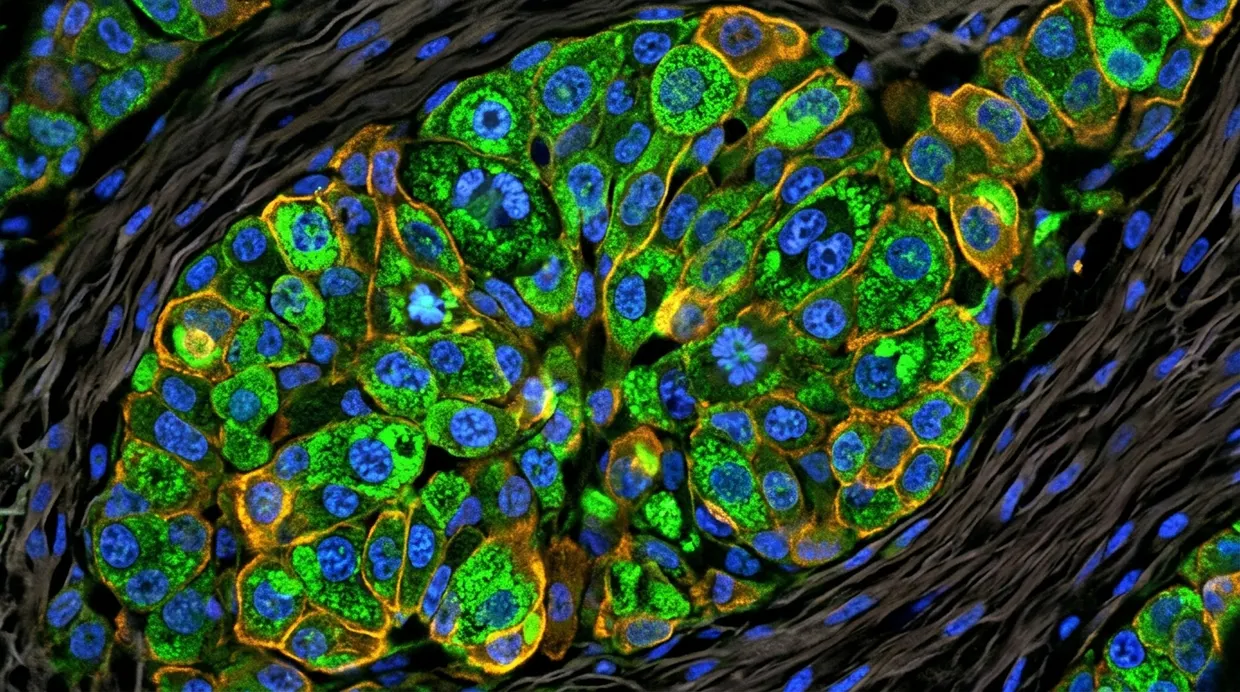
Researchers at the Division of Medical Sciences, Chester Medical School, University of Chester, published a systematic review and meta-analysis of cancerous inhibitor of PP2A (CIP2A) as a prognostic biomarker in the British Journal of Biomedical Science on 13 November 2026 (doi.org). The authors selected 34 studies published from 2013 to 2026, covering solid and hematological cancers. According to the authors, elevated CIP2A expression at diagnosis was associated with poorer overall survival and progression-free survival frontiersin.org
doi.orgfrontiersin.orgOpen source ↗.
Survival data and subgroups
The team searched PubMed, EBSCO (Medline) and Web of Science (core collection) and assessed risk of bias with the Newcastle-Ottawa scale. A random effects model showed a significant difference in overall survival at 5 years between low and high CIP2A expression (p < 0.001). For progression-free survival, differences were significant at one year (P = 0.001) and at 5 years (P < 0.001).
In subgroup analysis, the colorectal and breast cancer groups differed significantly between low and high CIP2A expression at the five-year milestone. In CML and AML the difference was significant at 1 year. The authors report that the association was stronger in specific cancers, such as leukemia, colorectal and breast cancer, than in several others.
The authors state that the association should be interpreted cautiously because of heterogeneity between cancer types, limited subgroup data and methodological limitations frontiersin.org
doi.orgfrontiersin.orgOpen source ↗. They note that earlier studies reported conflicting evidence on the prognostic value of CIP2A, which was the reason for the review.
CIP2A and the PP2A pathway
CIP2A is a trimeric protein phosphatase inhibitor. It acts on the tumor suppressor PP2A, which controls cell survival and proliferation. PP2A consists of a catalytic subunit, a scaffolding subunit and a regulatory subunit. CIP2A was first described as an autoantigen in gastric cancer.
CIP2A interacts directly with the transcription factor MYC. This inhibits PP2A activity toward phosphorylated MYC and prevents MYC from being degraded by proteolysis. Several studies have reported that CIP2A is aberrantly overexpressed in both hematological cancers and solid tumors.
The review notes that few of the many molecular biomarkers described in publications are currently used in clinical settings. The result is an association between CIP2A level and survival across pooled studies, not a test or a treatment.