SDARI's bubble lubrication system cut a 50,000-tonne tanker's net energy use by about 5% in five months
The Chinese institute's second-generation Bubble Lubrication System, run for five months on a new tanker, cut net energy use by about 5%, the developers report.
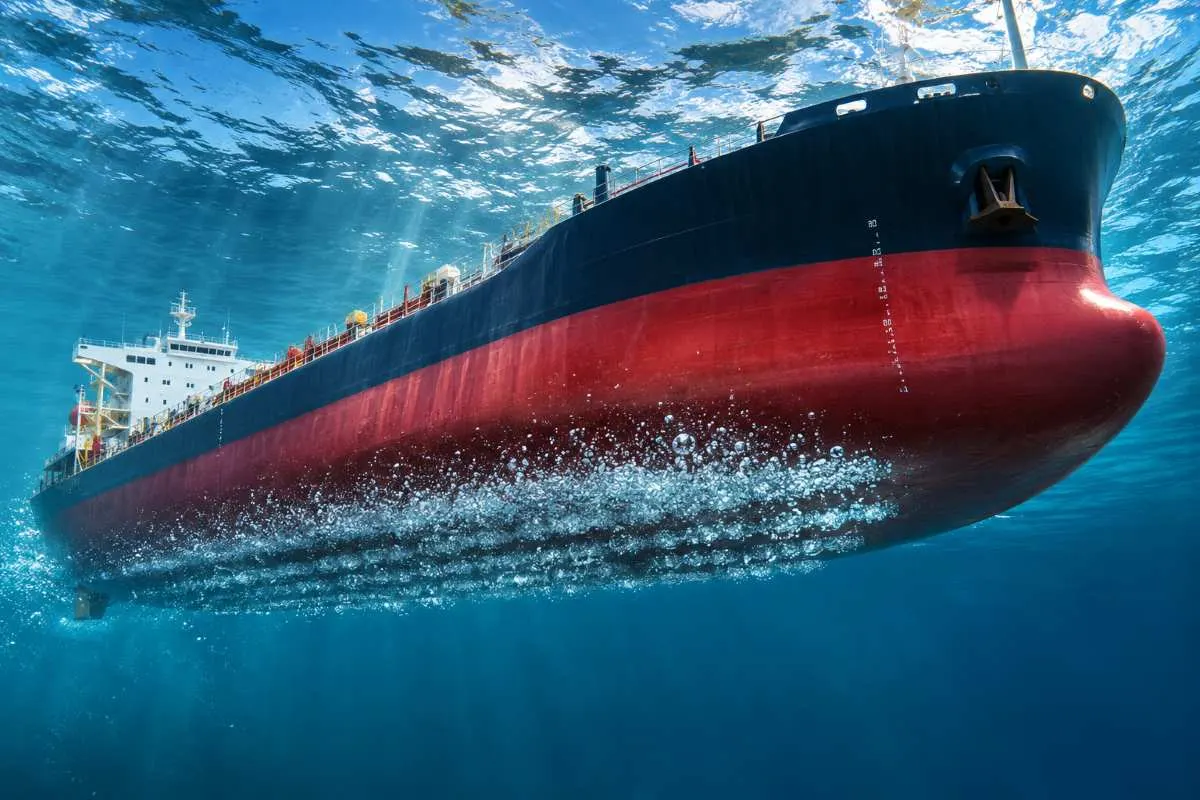
Researchers at the Shanghai Merchant Ship Design and Research Institute (SDARI), part of China State Shipbuilding Corporation, have tested the second generation of their Bubble Lubrication System (BLS) on a new tanker of about 50,000 tonnes. The vessel carries petroleum products and chemicals. According to the developers, over five months of operational trials the system reduced net energy consumption by roughly 5%, ecoinventos.com reports ecoinventos.com
ecoinventos.comecoinventos.comOpen source ↗.
How bubble lubrication works
The system injects compressed air under the hull while the ship is under way. The air forms a distribution of small bubbles, creating a mixed gas and liquid layer next to the hull with lower frictional resistance. With less resistance, the engines need to deliver less power to hold the same speed.
Compressed air itself requires electricity, so more bubbles do not automatically mean more savings. The gain appears only when the reduction in propulsion power exceeds the extra energy used by the compressors. The 5% figure is net: it is calculated after the energy consumed by the system itself. The installation combines compressed-air equipment, distribution devices and an automated control system. The principle is related to drag reduction in some high-speed underwater vehicles, but it is not the same phenomenon: supercavitating torpedoes travel inside a large gas cavity, while BLS uses a layer of small bubbles.
Second generation and next steps
The first generation was tested in April 2022 on an 1,800 TEU container ship and required the crew to adjust it manually ecoinventos.com
ecoinventos.comecoinventos.comOpen source ↗. The second generation has an improved air supply structure to lower compressor consumption and an intelligent control system that adjusts air injection automatically. It also includes a digital platform, DOSS, for real-time monitoring and analysis of the ship's energy performance.
The developers give an illustrative example: a tanker of this size burning about 20 tonnes of fuel a day could save about one tonne daily at a 5% reduction, or about 250 tonnes over 250 sailing days. This is an estimate, not a value measured during the trials.
The developers say the system can be adapted to different vessel types and to propulsion using liquefied natural gas, electricity, methanol or ammonia. The technology has been evaluated and inspected by the classification societies RINA and China Classification Society (CCS). The developers also announced an upcoming delivery of a 3,300 TEU container ship equipped with the second-generation BLS.