James Webb telescope's MIRI detects forbidden rotational lines of the H₃⁺ ion in Herbig-Haro object HH 168
Astronomers led by David Neufeld of Johns Hopkins University found 26 spectral lines of the H₃⁺ ion, predicted in 1986. The result bears on interstellar chemistry and star birth.
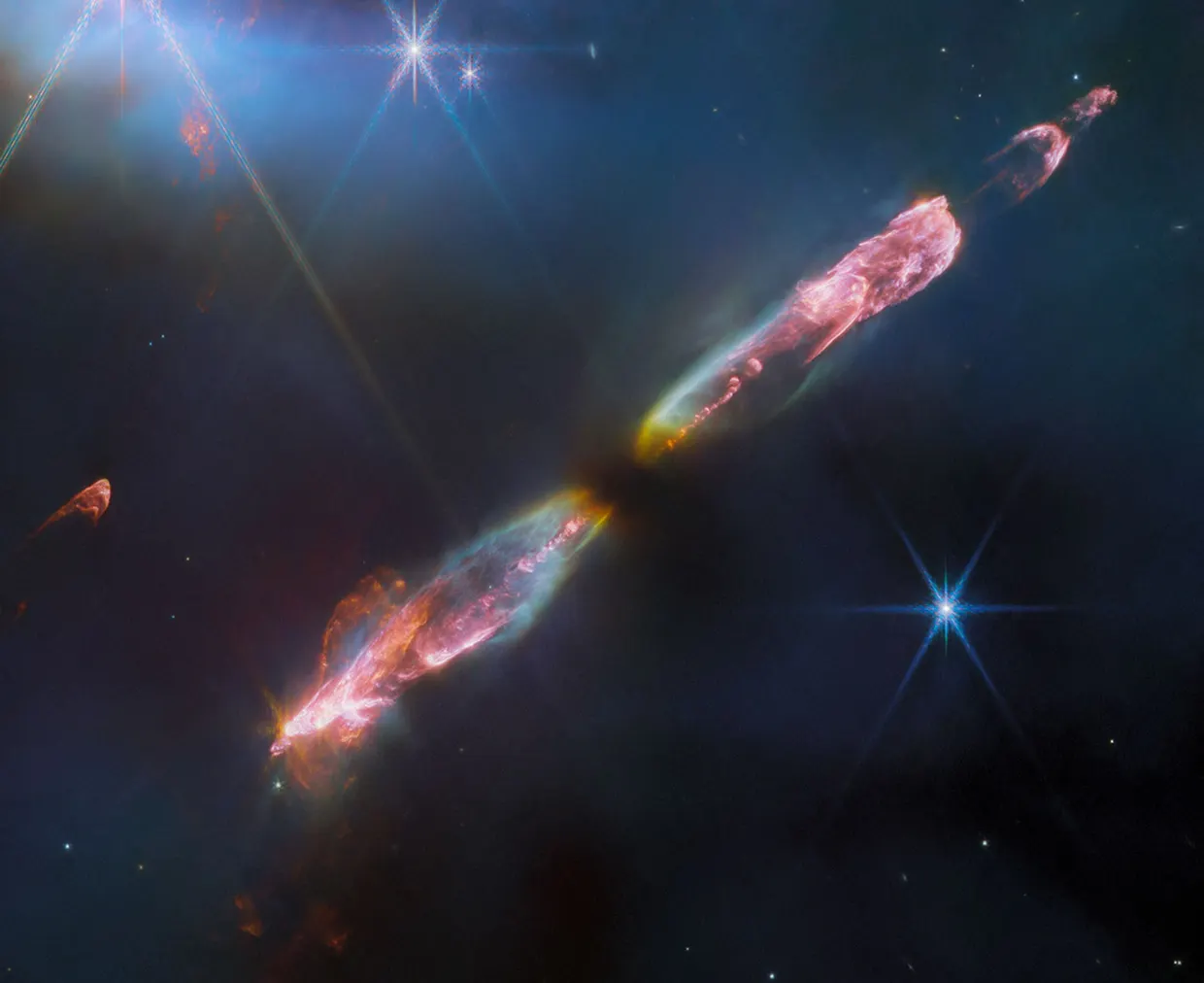
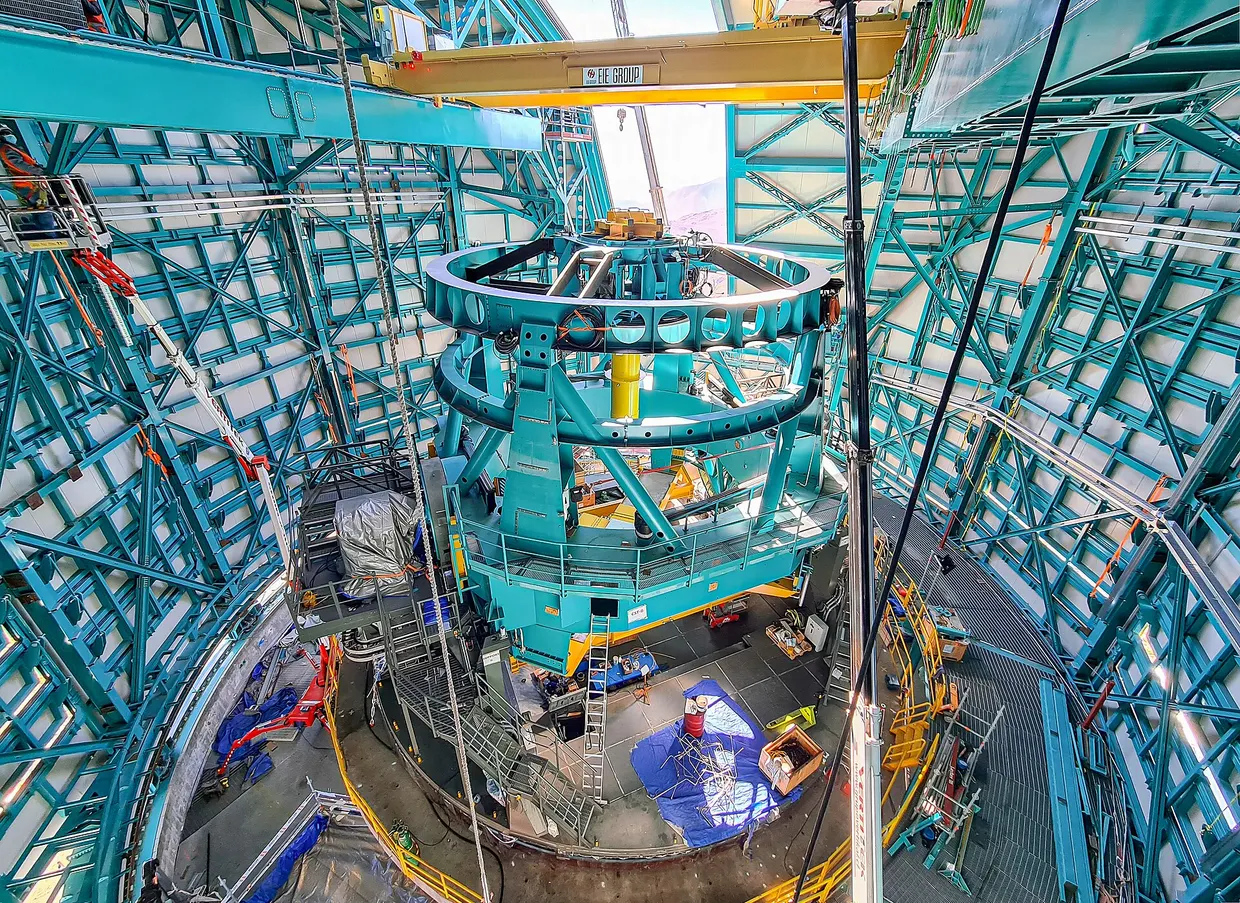
A team of astronomers led by David Neufeld of Johns Hopkins University analysed data from the MIRI instrument of the James Webb Space Telescope, which records infrared radiation. They detected rotational emission of the H₃⁺ ion in the Herbig-Haro object HH 168, according to chip.pl. chip.pl
chip.plchip.plOpen source ↗ The phenomenon was predicted in 1986, but modern telescopes needed many years to become advanced enough to confirm it.
The H₃⁺ ion and its forbidden transitions
The H₃⁺ ion consists of three hydrogen nuclei and only two electrons. Despite its simple structure, it plays a fundamental role in the chemistry of space. It takes part in reactions in interstellar clouds that lead, among other things, to increasingly complex organic molecules.
The three nuclei form an equilateral triangle. Because of this symmetry the molecule has no permanent dipole moment, so it should not emit radiation during ordinary rotational transitions.
In 1986 physicists Fu-Shih Pan and Takeshi Oka predicted an exception. During fast rotation, centrifugal forces slightly deform the molecule, and a very weak dipole moment appears that allows emission. Such transitions are called forbidden: they do not violate the laws of physics, but they are not allowed by the standard rules for molecular emission. Their intensity is so low that for four decades they could not be confirmed experimentally. chip.pl
chip.plchip.plOpen source ↗
Observations of HH 168 and HH 211
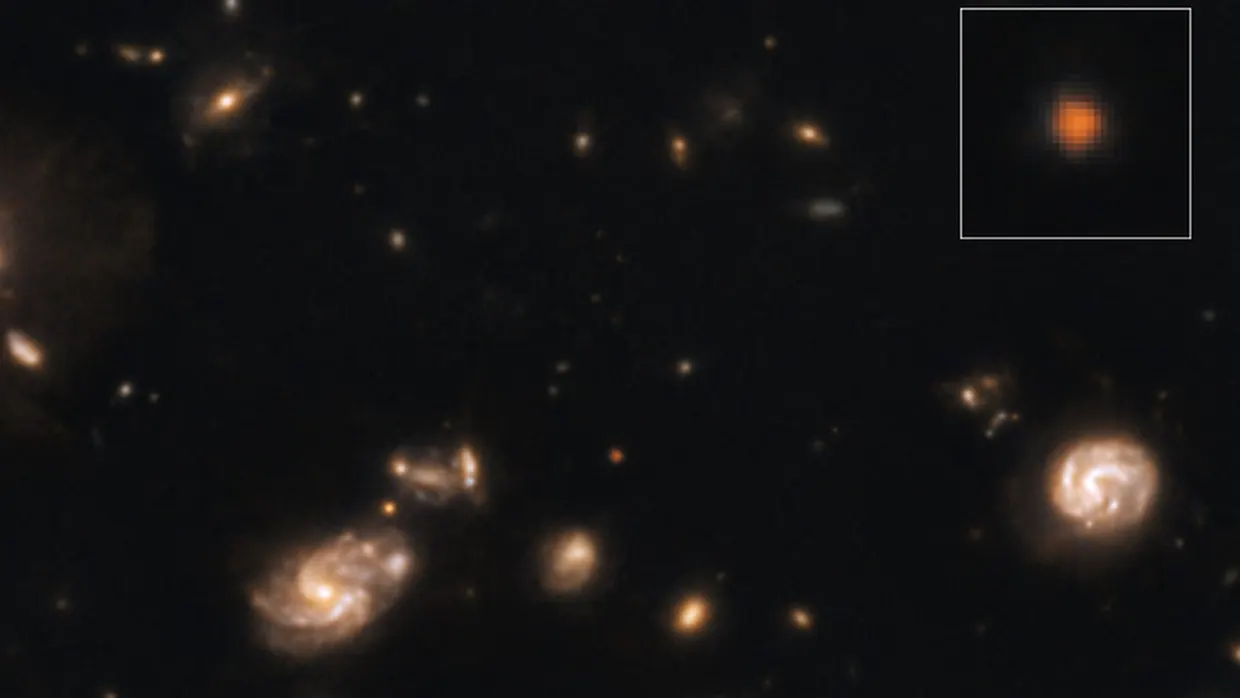
Herbig-Haro objects form when young stars are born. Strong magnetic fields eject part of the surrounding matter in narrow jets that can reach speeds of hundreds of kilometres per second. When the jets hit the surrounding gas clouds, shock waves heat the matter to thousands of degrees.
In the radiation emitted by this heated gas, the researchers identified 26 spectral lines corresponding to the predicted rotational transitions of H₃⁺. The strongest signal reached a statistical significance of 72 sigma.
A similar signal also appeared in archival data on another object, Herbig-Haro 211, which suggests the phenomenon is not limited to a single place in the universe. chip.pl
chip.plchip.plOpen source ↗
Besides confirming the prediction, the authors point out that H₃⁺ emission can serve as a new tool for studying temperature, ionisation and physical conditions in regions where young stars interact with the surrounding matter.