Upside Robotics: 80 autonomous robots applied 500 thousand liters of fertilizer on 31 Ontario farms
Small driverless machines worked in cornfields in southwestern Ontario in the 2026 season; full yield results were still under analysis at the time of reporting.
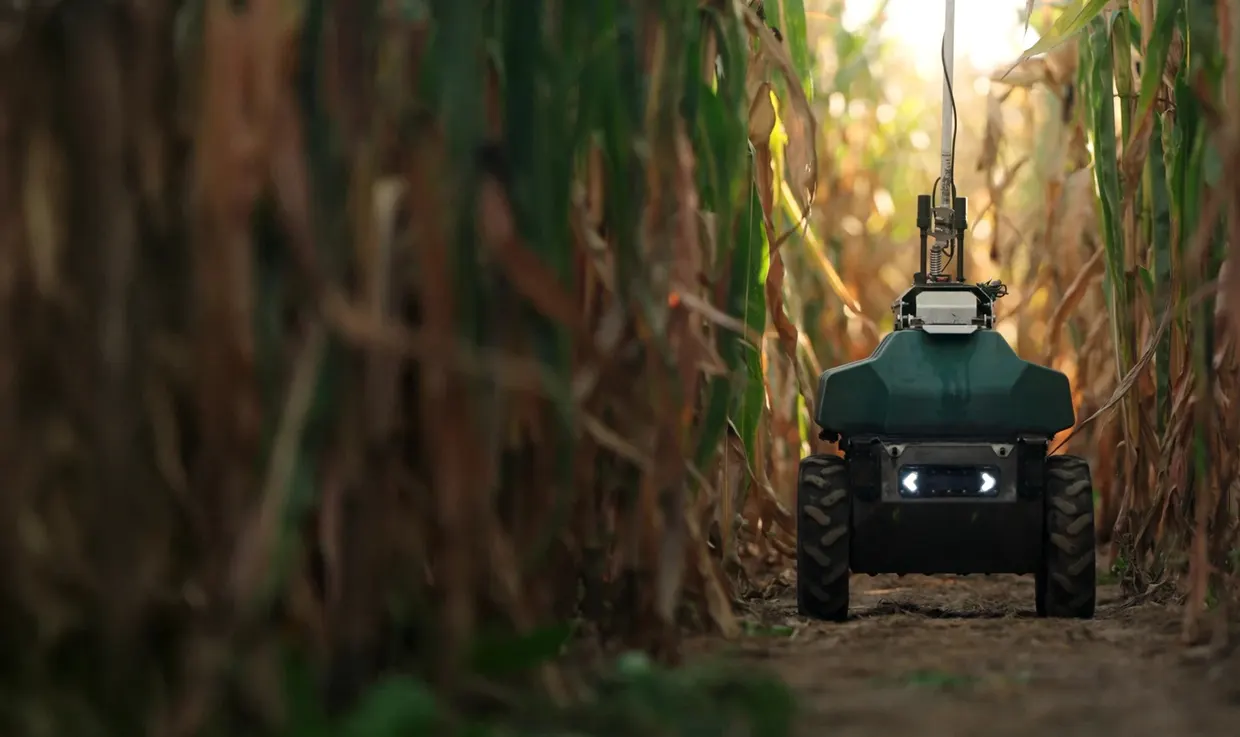
In the 2026 season, 80 small autonomous robots from Upside Robotics worked in cornfields on 31 farms in Ontario, Canada, and applied more than 500 thousand liters of liquid fertilizer. The figures were presented by co-founder Sam Dugan to the Farmers Forum and relayed by clickpetroleoegas.com.br clickpetroleoegas.com.br
clickpetroleoegas.com.brclickpetroleoegas.com.brOpen source ↗. The machines move between the rows without a driver and return automatically to a charging and refilling station.
The fleet operated from the Chatham area to the Owen Sound region in southwestern Ontario. Instead of spreading a large amount of fertilizer at once, the machines deliver small doses repeatedly while monitoring the condition of the plants. Growers reported seeing the robots' lights working at night.
Fleet growth and distance
Upside Robotics was founded by Jana Tian and Sam Dugan. In 2024, seven farmers took part in field trials; the next year there were 11 farms, according to Ontario Grain Farmer. The 2026 commercial operation reached 31 farms with a fleet of at least 80 units.
Dugan told the Farmers Forum, in a report published on 6 November 2026, that the fleet covered roughly 85 thousand kilometers combined. A company post about the same season gave almost 74 thousand kilometers. The totals differ, and both refer to the combined travel of all machines, not to a single robot.
Machine specifications and results
The latest model is called Maize Runner. According to the manufacturer, it is about 56 centimeters wide, enough for rows spaced about 76 centimeters apart. Its tank holds up to 50 liters of fertilizer, and its battery has a nominal range of about ten hours with roughly one hour to recharge. It weighs about 68 kilograms empty and 120 kilograms full, and can make up to 20 targeted applications per crop cycle, per Ontario Grain Farmer.
The manufacturer says tests in earlier years showed fertilizer use reductions of 50% to 70% without significant yield loss in certain conditions. Agronomist Tanya Franklin reported savings of about 80 to 100 dollars per acre in earlier trials. These are not final results for all 31 farms: when the Farmers Forum report appeared, corn harvest was only beginning and yield data were still being analyzed.
Ontario Grain Farmer reported technical problems in the first seasons, including corrosion near the fertilizer tanks, antennas damaged by tall corn and connectivity failures. On a sloped field, the navigation programming needed adjustment. In 2026 the company sold the work as a service charged by area; the price was not disclosed. In February it announced a US$ 7.5 million funding round, reported by the University of Waterloo.