HYAL1 nonsense variant in Holstein cattle linked to weaker bone structure, early culling and polysynovitis
A recessive HYAL1 variant, carried at 4.4% in Swiss and 8.4% in French Holsteins, lowers six-year survival; homozygous cows showed polysynovitis.
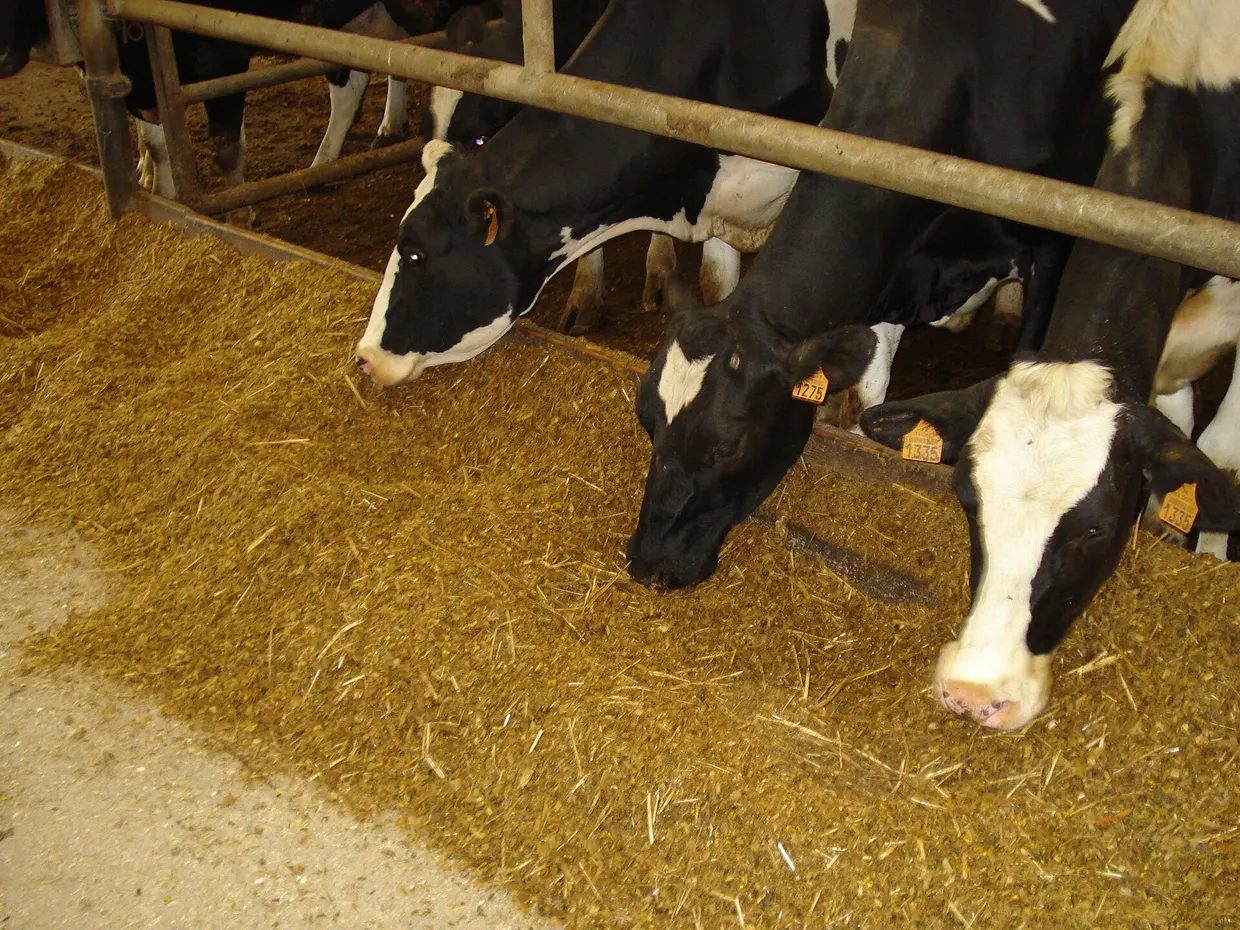
Researchers working with Swiss Holstein and Brown Swiss cattle have identified a recessive nonsense variant in the HYAL1 gene that affects bone structure, survival and joints in Holstein cows, according to a study in Genetics Selection Evolution. biomedcentral.com
Genetics Selection Evolutionbiomedcentral.comOpen source ↗ The analysis covered 21,535 Holsteins and 15,724 Brown Swiss with matched genomic and phenotypic records. The harmful allele frequency is 4.4% in Swiss and 8.4% in French Holsteins.
Heritability and genomic regions
Hoof and leg conformation was scored in first-lactation cows. Six traits were studied in Holsteins: bone structure, heel depth, foot angle, locomotion, rear leg rear view and rear leg set. Four were studied in Brown Swiss: heel depth, foot angle, hock quality and rear leg side view. Heritability ranged from 0.10 to 0.28 in Holsteins and from 0.10 to 0.26 in Brown Swiss, which the authors interpret as a predominantly polygenic architecture.
Additive and non-additive association analyses used imputed whole-genome sequence variants. They detected 25 significant regions (P ≤ 5 × 10^-8) for bone structure and locomotion in Holsteins and for heel depth and hock quality in Brown Swiss. Conditional analyses reduced these to 15 unique QTL. Bayesian fine-mapping prioritised 17 candidate variants, 3 in Holsteins and 14 in Brown Swiss: 15 additive, one dominant and one recessive.
The HYAL1 variant
The recessive effect was found on chromosome 22, at position 50,030,758 bp. A stop-gained variant, NP_001017941.1:p.(Gln93*), introduces a premature termination codon in the gene for the enzyme hyaluronidase. biomedcentral.com
Genetics Selection Evolutionbiomedcentral.comOpen source ↗ Its effect on bone structure was estimated at -1.594 phenotypic standard deviations (P = 1.62 × 10^-17), the largest allelic substitution effect among the loci tested. The authors note that this disorder was undetectable in standard additive screening.
In French Holsteins, the variant was associated with lower six-year survival, which indicates early culling after the first lactation. It also affected 14 routinely recorded conformation and production traits, most notably locomotion and rear leg rear view. Clinical examination of HYAL1-homozygous Holsteins revealed polysynovitis. The authors describe the finding as a previously hidden Mendelian disorder.