Stem-cell platform links in vitro diastolic function to age at onset in TNNI3 cardiomyopathy
A high-throughput platform on human iPSC-derived cardiomyocytes separated pathogenic and nonpathogenic TNNI3 variants in vitro; diastolic function correlated with age at onset (R2 = 0.6).
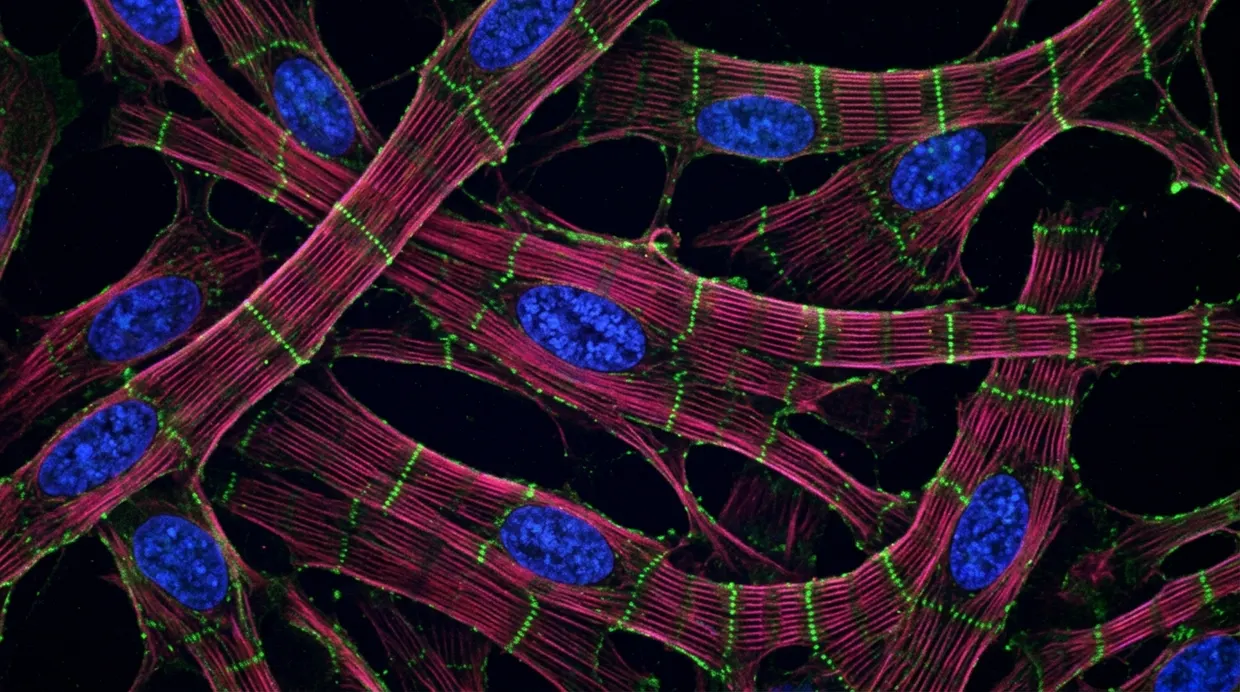
A team led by David W. Staudt, Peter P. Q. Tran and Mark Mercola has built a high-throughput platform on human induced pluripotent stem-cell-derived cardiomyocytes to measure the effects of variants in cardiac troponin I (gene TNNI3). According to the primary source on doi.org, the platform records systolic and diastolic force generation together with calcium handling. The work was reported in Nature Cardiovascular Research. All results are from cell cultures, not from patients' hearts. nature.com
doi.orgnature.comOpen source ↗
Why variant interpretation is hard
Routine genetic testing of patients with cardiomyopathy has identified many causative variants. In most cases, however, the effect of a variant on physiological function and clinical outcome remains unclear. The authors set out to close this gap with a functional measurement that can be applied variant by variant.
To do this, they introduced TNNI3 variants into cultured cardiac cells using a lentiviral delivery platform. Each variant was then described by a profile that combines contractility and calcium transient measurements.
Classifying variants and comparing with clinical data
Integrating contractility and calcium signaling, the authors report that they accurately distinguished pathogenic from nonpathogenic TNNI3 variants. Clustering analysis placed patient-derived variants of uncertain significance against benchmark pathogenic and nonpathogenic variants. This allowed the authors to characterize the pathogenic effects of such variants through specific abnormalities in contractility and calcium handling. nature.com
doi.orgnature.comOpen source ↗
The team then compared the in vitro measurements with clinical presentations of patients with TNNI3 cardiomyopathy from a single site. Diastolic function in vitro correlated with age at onset, a measure of disease severity, with a coefficient of determination R2 = 0.6.
The authors state that the ability to characterize variant effects in vitro in a way that correlates with clinical outcomes should help identify mechanisms behind variable disease severity and support the discovery of class-targeted treatments. The clinical data come from one site, and the platform is so far an experimental cell-culture system.
The raw contractility and calcium output, quality-control annotation and analysis scripts are deposited on Zenodo. Source image series are available from the authors on reasonable request. nature.com
doi.orgnature.comOpen source ↗