CNB-CSIC: chromosomal position alone reprograms function of 219 bacterial genetic circuits
Spanish researchers placed 219 engineered circuits of four types in bacteria and found that chromosomal position alone modulates performance and switches dynamics, via expression noise.
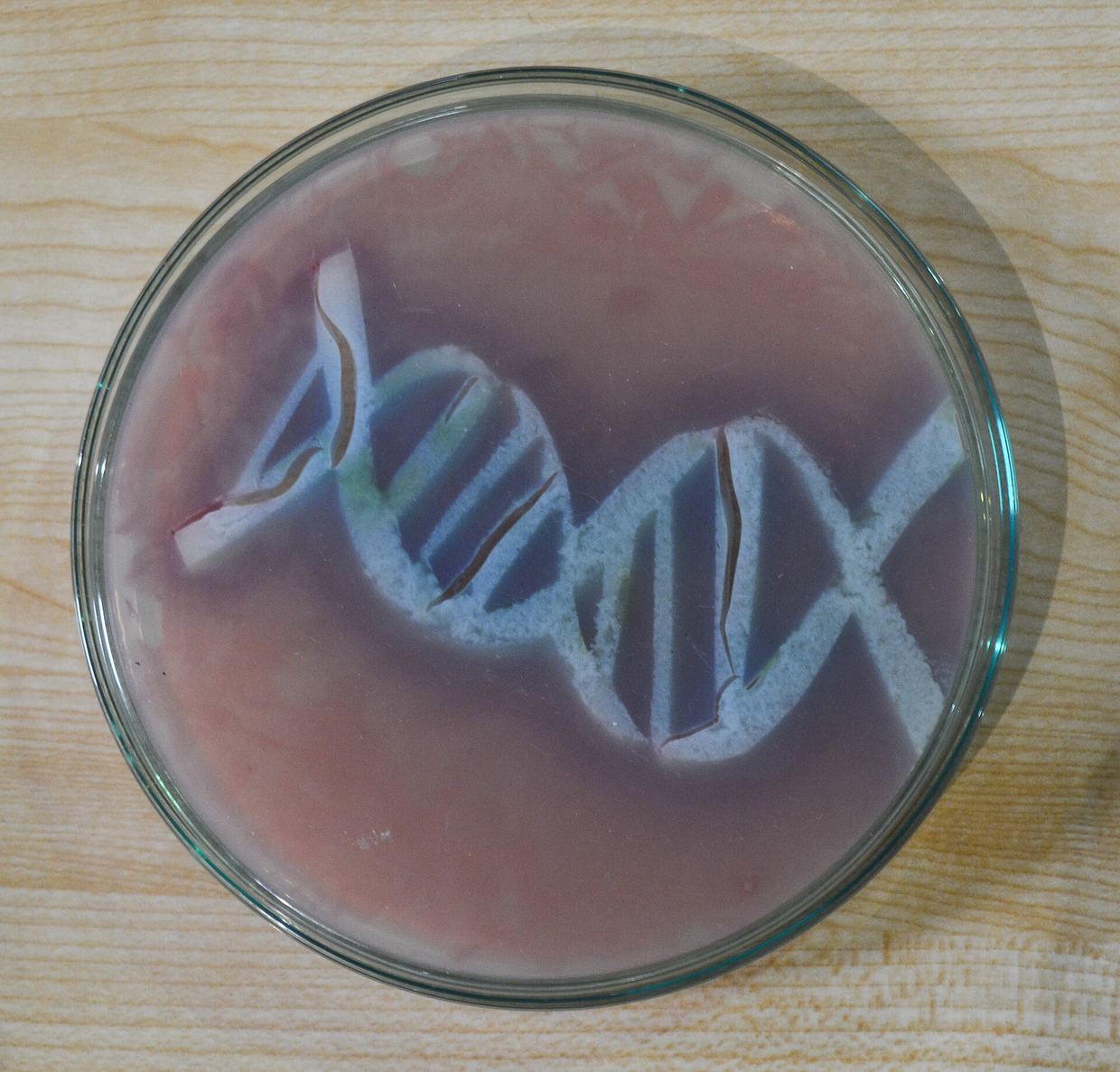
A team from the Centro Nacional de Biotecnología (CNB-CSIC) and the Universidad Politécnica de Madrid, with Ángel Goñi-Moreno as corresponding author, reported in Nature Communications that the function of a genetic circuit in bacteria can be reprogrammed solely through its spatial position on the chromosome. The authors engineered 219 spatially distinct genetic circuits of four types: three regulatory cascade circuits and a toggle switch. doi.org
Nature Communicationsdoi.orgOpen source ↗
Position changes circuit behavior
Chromosomal position is known to influence gene expression. According to the authors, its impact on the function of genetic circuits had remained largely unexplored. doi.org
Nature Communicationsdoi.orgOpen source ↗ In this work, bacteria served as a living chassis, and the circuits differed in where they were placed.
The authors report that spatial positioning can modulate circuit performance. It can also switch circuits between different dynamics. As circuit complexity increases, this gives rise to new operational modes. doi.org
Nature Communicationsdoi.orgOpen source ↗ Thus, the same circuit design behaved differently depending only on where it was located.
Model and expression noise
The team built a mathematical model parameterized from experimental data. The model predicts three distinct functional regimes for the toggle switch. It also links chromosomal position to switch stability through noise. doi.org
Nature Communicationsdoi.orgOpen source ↗
The authors state that this reprogramming is fundamentally mediated by changes in gene expression noise. In their interpretation, the result goes beyond simple Boolean (on/off) or analog (more/less) readings of gene regulation. They point instead toward stochastic and probabilistic principles for cellular computation. doi.org
Nature Communicationsdoi.orgOpen source ↗
The study describes laboratory experiments on engineered bacteria, together with modeling. The abstract of the paper does not report applications or tests outside this experimental system. The work was done at the Systems Biology Department of CNB-CSIC and at the Centro de Biotecnología y Genómica de Plantas in Madrid, and it was published in Nature Communications on 3 November 2026. doi.org
Nature Communicationsdoi.orgOpen source ↗