Mouse study: loss of hepatocyte IRE1α–XBP1s increases liver metastasis via glutamine and monocytes
In mice, deleting IRE1α or XBP1 in hepatocytes worsened liver metastasis, while the IRE1α inhibitor MKC8866 did not control metastases in the liver.
A study in Nature Communications reports that the IRE1α–XBP1s axis in hepatocytes restrains liver metastasis in mice. This runs against its known tumor-promoting role in cancer cells. Genetic deletion of IRE1α or XBP1 in mouse hepatocytes worsened liver metastasis, which the authors link to the accumulation of inflammatory monocytes (IMs) doi.org
Nature Communicationsdoi.orgOpen source ↗. The experiments used MC38 colon and LLC lung adenocarcinoma cells, with groups of six animals.
Inhibitor tests in liver metastasis models
The selective IRE1α RNase inhibitor MKC8866 (ORIN1001) is being assessed in phase 1/2 trials in patients with advanced solid tumors (NCT03950570). The authors note that the trial has not yielded encouraging results. In mice, MKC8866 significantly suppressed the growth of subcutaneous MC38 and LLC tumors doi.org
Nature Communicationsdoi.orgOpen source ↗.
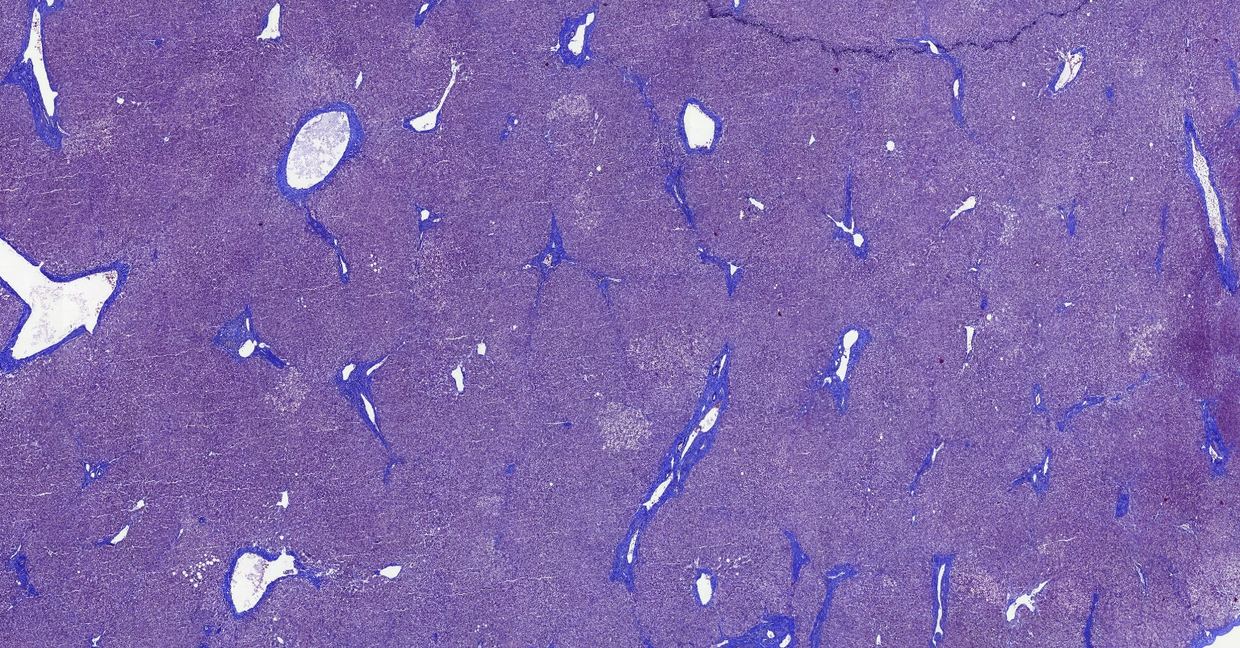
After intrasplenic injection of the same cells, the picture changed. Liver weights in MC38-bearing mice treated with MKC8866 were comparable to those in the vehicle group, and in LLC-bearing mice they were slightly higher. Counts of metastatic foci on H&E-stained liver sections, taken on day 14 or 17, confirmed that the inhibitor did not control liver metastasis doi.org
Nature Communicationsdoi.orgOpen source ↗. In a 4T1 orthotopic breast cancer model with spontaneous metastases at several sites, MKC8866 significantly reduced lung metastases but gave no benefit in the liver
doi.org
Nature Communicationsdoi.orgOpen source ↗.
Glutamine, monocytes and patient data
The authors describe a non-canonical FoxO1–glutamine synthetase pathway in IRE1α- or XBP1-null hepatocytes. It gives these cells the metabolic activity to secrete glutamine, which they report is necessary and sufficient for IM fitness doi.org
Nature Communicationsdoi.orgOpen source ↗. Reintroducing hepatocyte XBP1s or blocking glutamine metabolism reduced IMs and mitigated disease progression in the mouse models
doi.org
Nature Communicationsdoi.orgOpen source ↗.
The authors also report that survival of patients with liver metastases correlates positively with hepatocyte XBP1s expression, and that the protective axis is present in patients with colorectal cancer liver metastases doi.org
Nature Communicationsdoi.orgOpen source ↗. This is a correlation in patients. The interventions themselves were tested only in mice.