Kiel team finds a rare leprosy strain in a 5th-century boat grave at Fallward, Germany
Ancient DNA from a man buried at Fallward on the North Sea coast revealed a leprosy pathogen not previously found in Europe, and an origin in the Danube region.
Researchers at the Institute of Clinical Molecular Biology (IKMB) of Kiel University and the Lower Saxony Institute for Historical Coastal Research (NIhK) have identified a leprosy pathogen not previously detected in Europe. According to uni-kiel.de, it was found in a 5th-century burial ground at Fallward, in the present-day district of Cuxhaven uni-kiel.de
uni-kiel.deuni-kiel.deOpen source ↗. The study was funded by the ROOTS Cluster of Excellence and published in iScience (volume 29, issue 11, 2026). Its first author is Daniel Myburgh
uni-kiel.de
uni-kiel.deuni-kiel.deOpen source ↗.
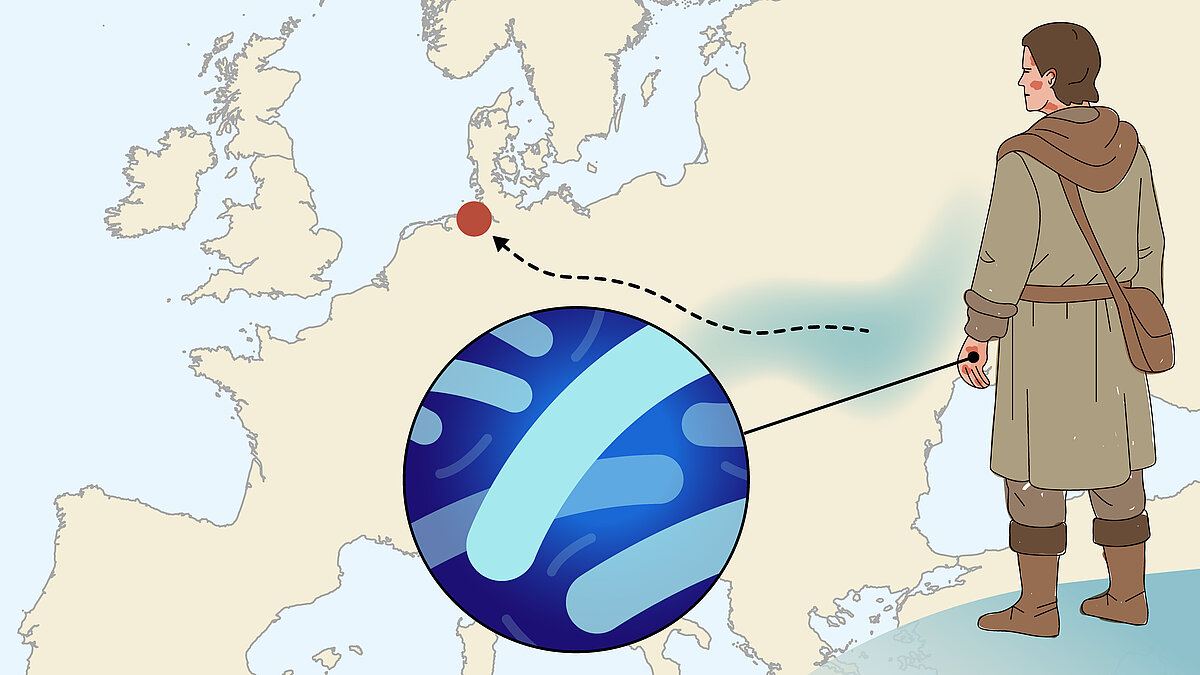
The man was buried in a boat together with numerous grave goods made of wood, ceramics and metal. According to the authors, genetic analysis indicates that he came from the Danube region uni-kiel.de
uni-kiel.deuni-kiel.deOpen source ↗.
Burial site and samples
The archaeological heritage service of the Cuxhaven district excavated the Fallward burial ground in the 1990s. The wet subsoil preserved wooden and textile grave goods completely. The finds are now being evaluated in full for the first time at the NIhK in Wilhelmshaven, in a project funded by the German Research Foundation uni-kiel.de
uni-kiel.deuni-kiel.deOpen source ↗.
The ancient DNA group at the IKMB received bone samples from eleven individuals, to clarify possible kinship and look for traces of infectious diseases. Three individuals yielded enough data for a population-genetic analysis, and the results for one of them stood out uni-kiel.de
uni-kiel.deuni-kiel.deOpen source ↗.
His grave contained an ornately decorated chair made from an alder trunk, known as the "Throne from the Marsh", and a late Roman military belt. Hauke Jöns of the NIhK says the belt points to long-distance connections uni-kiel.de
uni-kiel.deuni-kiel.deOpen source ↗.
The pathogen and its carrier
The strain belongs to a group whose earliest known representative comes from Egypt and dates to between the 4th and 2nd century BC. It had not previously been detected in central or northern Europe uni-kiel.de
uni-kiel.deuni-kiel.deOpen source ↗.
Leprosy is a chronic disease, and it can take years for clear symptoms to appear. The man showed no bone damage. Almut Nebel of the IKMB says he either had an asymptomatic form or the disease had so far affected only soft tissue, and that he may have travelled long distances while infected uni-kiel.de
uni-kiel.deuni-kiel.deOpen source ↗.
Ben Krause-Kyora, who led the study, suggests the man could have been a mercenary in the Roman army who later settled between the Elbe and the Weser, or a merchant who made long journeys. His exact origin remains unknown uni-kiel.de
uni-kiel.deuni-kiel.deOpen source ↗.