UC Riverside: lizard data suggest body-size change may start trait divergence before competition
Bryan Jennings proposes that a change in body size can alter trait proportions before related species compete. The theory draws on measurements of preserved lizards.
Evolutionary biologist Bryan Jennings of UC Riverside has published a study in the Evolutionary Journal of the Linnean Society describing a theory that changes in body size, rather than competition for food and habitat, may drive the earliest physical differences between species, according to news.ucr.edu ucr.edu
news.ucr.edunews.ucr.eduOpen source ↗. Traits such as beak size, tail length and body proportions may begin to diverge when a population evolves a different body size, even before closely related species compete for resources
ucr.edu
news.ucr.edunews.ucr.eduOpen source ↗.
A gap in the adaptive radiation framework
Adaptive radiation is the process in which a common ancestor gives rise to several closely related species that occupy different ecological niches. Darwin's finches of the Galápagos Islands are one of the best-known examples. Traditional explanations emphasize competition between species after they come into contact, which can increase differences in traits such as the size and shape of beaks, a process known as character displacement ucr.edu
news.ucr.edunews.ucr.eduOpen source ↗.
Jennings's theory focuses on scaling, the relationship between an organism's overall size and the size and shape of its individual traits. Traits generally do not grow at the same rate: a human baby's head is relatively large and becomes proportionally smaller with maturity. In lizards, Jennings found that body girth follows this pattern, while tail length can become proportionally larger as body size increases ucr.edu
news.ucr.edunews.ucr.eduOpen source ↗.
Jennings first hypothesized that a population evolving a different body size would change its associated traits proportionally. A larger dataset showed a more extreme decoupling between trait development and body-size evolution, which he calls disassociational scaling ucr.edu
news.ucr.edunews.ucr.eduOpen source ↗. In his model, this initial change can leave a trait functionally deficient, for example a tail that works less well. Natural selection then fine-tunes the trait over longer periods, a stage he calls re-adaptation. Competition can therefore occur later, while refining differences that already exist
ucr.edu
news.ucr.edunews.ucr.eduOpen source ↗.
Measurements of pygopodid lizards
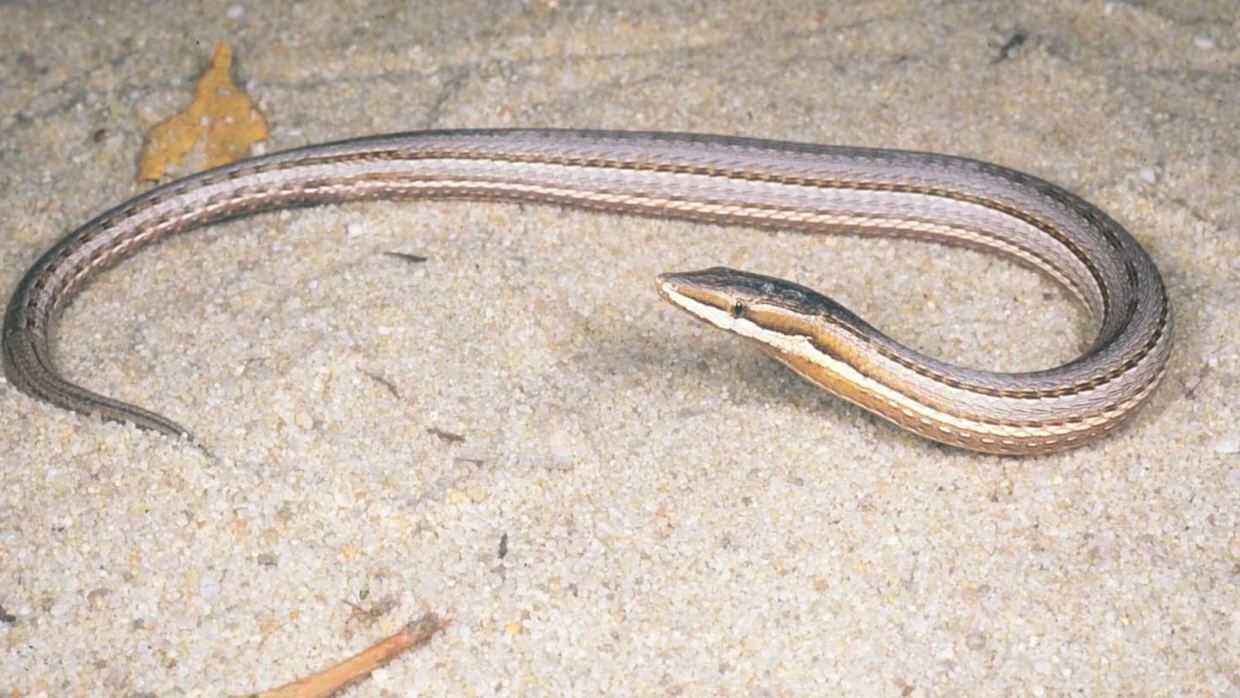
Jennings developed the theory in 2020 while revisiting data from his doctoral research on pygopodid lizards, snake-like lizards found mainly in Australia and New Guinea. They have elongated bodies and greatly reduced limbs. Tail length and body girth matter for their locomotion and for escaping predators ucr.edu
news.ucr.edunews.ucr.eduOpen source ↗.
During a 40-day trip in 2023, he visited six museums in Australia and collected body length, body girth and tail length from more than 1,000 preserved specimens. He then measured lizards in the collection of the Museum of Comparative Zoology at Harvard University ucr.edu
news.ucr.edunews.ucr.eduOpen source ↗. The data allowed comparisons between populations and among closely related species. The analysis supported the second stage, re-adaptation, while evidence from the first stage led him to replace geometric scaling with disassociational scaling
ucr.edu
news.ucr.edunews.ucr.eduOpen source ↗.
Jennings suggests that if body-size changes alter trait proportions, some resulting trait combinations could allow a population to use a different ecological resource. In the context of adaptive radiation he calls this proposed process niche scaling ucr.edu
news.ucr.edunews.ucr.eduOpen source ↗.