LHCb at CERN reports first evidence of Bd→μμ decay at 3.2 sigma, below the discovery threshold
After a 42-year search, the LHCb collaboration saw the rarest beauty-particle decay yet recorded at the LHC. The result is consistent with the Standard Model.
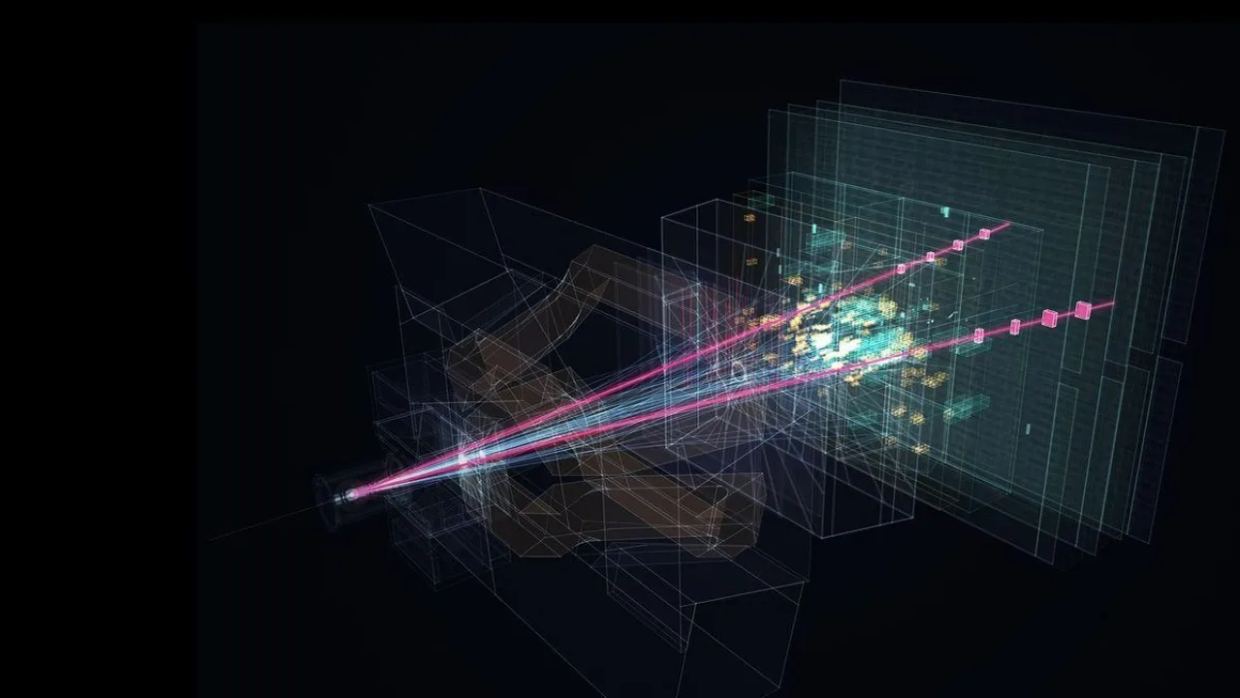
The international LHCb collaboration at CERN's Large Hadron Collider (LHC) has reported the first evidence of the rarest decay of a beauty particle seen at the LHC, following a 42-year search, according to news.liverpool.ac.uk liverpool.ac.uk
news.liverpool.ac.uknews.liverpool.ac.ukOpen source ↗. The decay, known as Bd to mu mu, turns a beauty particle into two muons, heavier relatives of the electron
liverpool.ac.uk
news.liverpool.ac.uknews.liverpool.ac.ukOpen source ↗.
The Standard Model predicts this process for only about one in every ten billion beauty particles liverpool.ac.uk
news.liverpool.ac.uknews.liverpool.ac.ukOpen source ↗. The result has a statistical significance of 3.2 sigma. That is enough to count as first evidence, but below the five-sigma threshold required to claim a discovery in particle physics
liverpool.ac.uk
news.liverpool.ac.uknews.liverpool.ac.ukOpen source ↗.
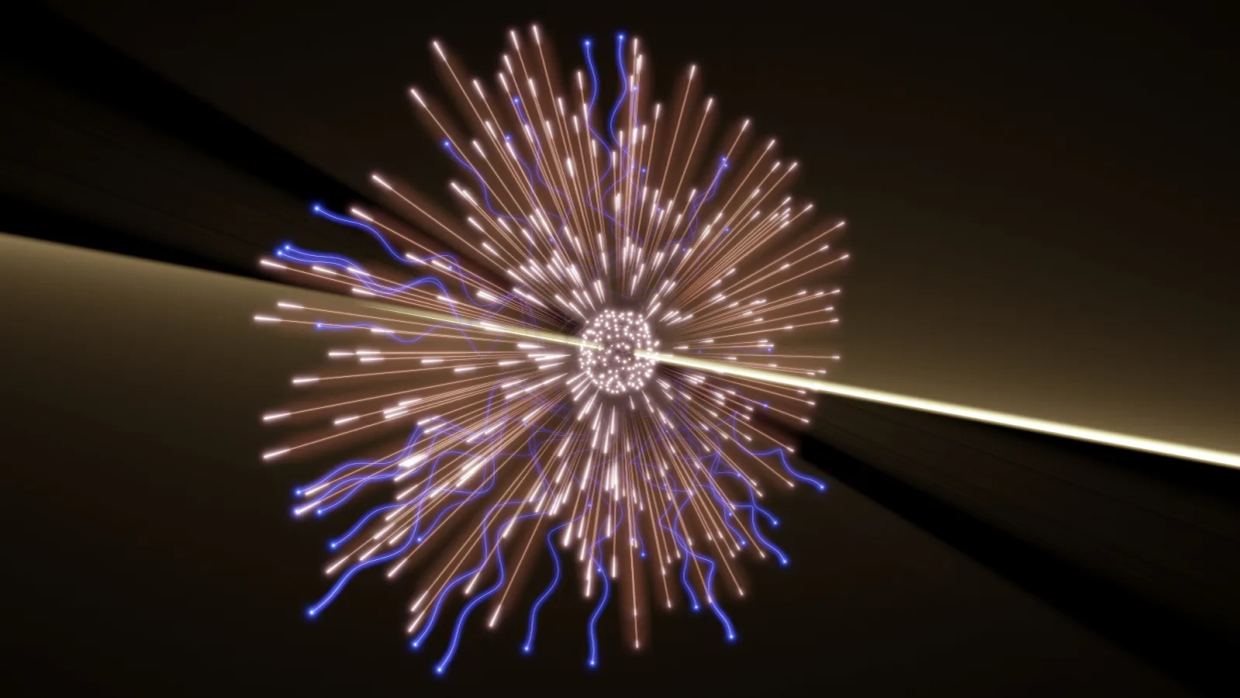
Beauty quarks are produced in huge numbers in LHC collisions, but each exists for only a fraction of a second before decaying. LHCb studies the short-lived particles that contain them liverpool.ac.uk
news.liverpool.ac.uknews.liverpool.ac.ukOpen source ↗.
Measurements and numbers
According to the scinexx retelling, the new 2024 and 2025 data sample alone reaches 3.0 sigma, and the value rises to 3.2 sigma when older measurements are included. The results are so far available as a preprint and have not been peer reviewed.
Across all data-taking periods, the B0 decay occurs about 1.14 times per ten billion B0 mesons. The Standard Model predicts about 1.03 per ten billion. Given the still considerable uncertainty, the two values agree well.
The analysis also produced the most precise measurements yet of another rare decay, Bs to mu mu, first observed by LHCb in 2015 liverpool.ac.uk
news.liverpool.ac.uknews.liverpool.ac.ukOpen source ↗. The combined evaluation gives a rate of about 3.25 per billion and an effective lifetime of 1.60 trillionths of a second for this decay channel.
The detector behind the result
The upgraded LHCb experiment includes the Vertex Locator (VELO), a silicon pixel detector assembled by researchers at the University of Liverpool liverpool.ac.uk
news.liverpool.ac.uknews.liverpool.ac.ukOpen source ↗. It sits five millimetres from the LHC beams and forms the first layer of the particle-tracking system. It is used to reconstruct particle paths and to locate where short-lived particles decay
liverpool.ac.uk
news.liverpool.ac.uknews.liverpool.ac.ukOpen source ↗.
Since the upgraded detector began collecting data in 2024, the experiment has recorded collisions at up to five times its previous rate liverpool.ac.uk
news.liverpool.ac.uknews.liverpool.ac.ukOpen source ↗. Tara Shears of the University of Liverpool, LHCb-UK spokesperson, said that seeing such a rare decay is a testament to the skill of the staff who built the VELO
liverpool.ac.uk
news.liverpool.ac.uknews.liverpool.ac.ukOpen source ↗.
The new measurements agree with Standard Model predictions. Studying such rare processes with increasing precision could help physicists identify signs of previously unknown particles or forces, including in the 'Zeptoverse', distances of around a billionth of a trillionth of a metre liverpool.ac.uk
news.liverpool.ac.uknews.liverpool.ac.ukOpen source ↗.