CNPEM built a holder for operando X-ray imaging of whole solar cells at the Sirius synchrotron
The holder keeps a 3 × 3 mm area of a working cell stable under the X-ray beam while heat, light and bias are controlled. Vertical drift was 5 μm over a 120 °C range.

Researchers at the Brazilian Center for Research in Energy and Materials (CNPEM) in Campinas, São Paulo state, designed, built and commissioned a photovoltaic holder for the TARUMÃ end station of the CARNAÚBA X-ray nanoprobe at the SIRIUS synchrotron light source (LNLS/CNPEM). The work was published in August in Photon Science, and a news release followed on 4 November 2026. The holder allows complete solar cells to be studied with X-ray microscopy during operation doi.org
Photon Sciencedoi.orgOpen source ↗.
Design and operating conditions
The holder was designed with precision-engineering principles to give nanometer-level position stability and minimal thermal drift. It controls temperature in the target area, atmosphere, illumination and bias, which makes it possible to simulate real cell operation doi.org
Photon Sciencedoi.orgOpen source ↗. It supports nanoscale X-ray fluorescence, X-ray diffraction and X-ray absorption spectroscopy
doi.org
Photon Sciencedoi.orgOpen source ↗.
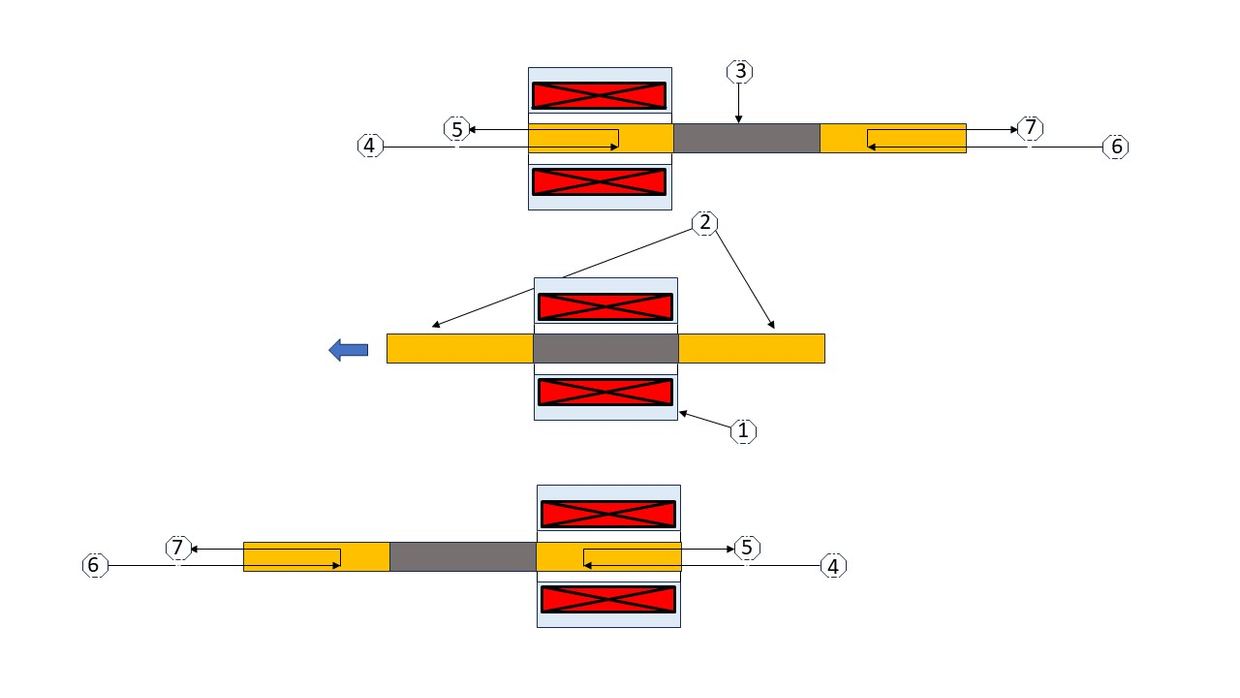
According to the release, the platform is intended mainly for perovskite cells. The cell is built on a glass chip coated on one side with indium tin oxide. The other side carries two thin platinum circuits: one is a heater, the other a temperature sensor. Heating is confined to a 3 × 3 mm area. The mount uses a titanium alloy with low thermal expansion and flexible elements that let the glass expand, and it is thermally decoupled from the sample-positioning stages.
Test results
Infrared images showed a homogeneous temperature distribution inside the 3 × 3 mm target area doi.org
Photon Sciencedoi.orgOpen source ↗. Lead author Rodrigo Szostak reported a relative variation of 0.85 °C at 150 °C.
In tests at Sirius, the sample was cycled between 30 °C and 150 °C for about 20 hours. Horizontal displacement was minimal, about 1 μm according to the release. Vertical displacement reached 5 μm over the 120 °C range and was reversible on return to room temperature doi.org
Photon Sciencedoi.orgOpen source ↗. At stable temperatures, the holder's position stability was better than the beam size
doi.org
Photon Sciencedoi.orgOpen source ↗; the beam is about 200 nm wide.
The set temperature was reached in under two minutes. At 150 °C it held with fluctuations below 0.1 °C for 50 minutes. The indium tin oxide chip can be used up to 150 °C. The authors demonstrated photovoltaic characterization together with chemical and structural mapping by several X-ray microscopy techniques doi.org
Photon Sciencedoi.orgOpen source ↗. Szostak said that, as far as he knows from the literature, the holder likely offers the best positional stability achieved for this type of experiment.