Infernogallus jamesi Identified as First Known Fruit-Eating Dinosaur in US
Paleontologists have described fossil remains from Montana and North Dakota showing anatomical adaptations for a specialized frugivorous diet.
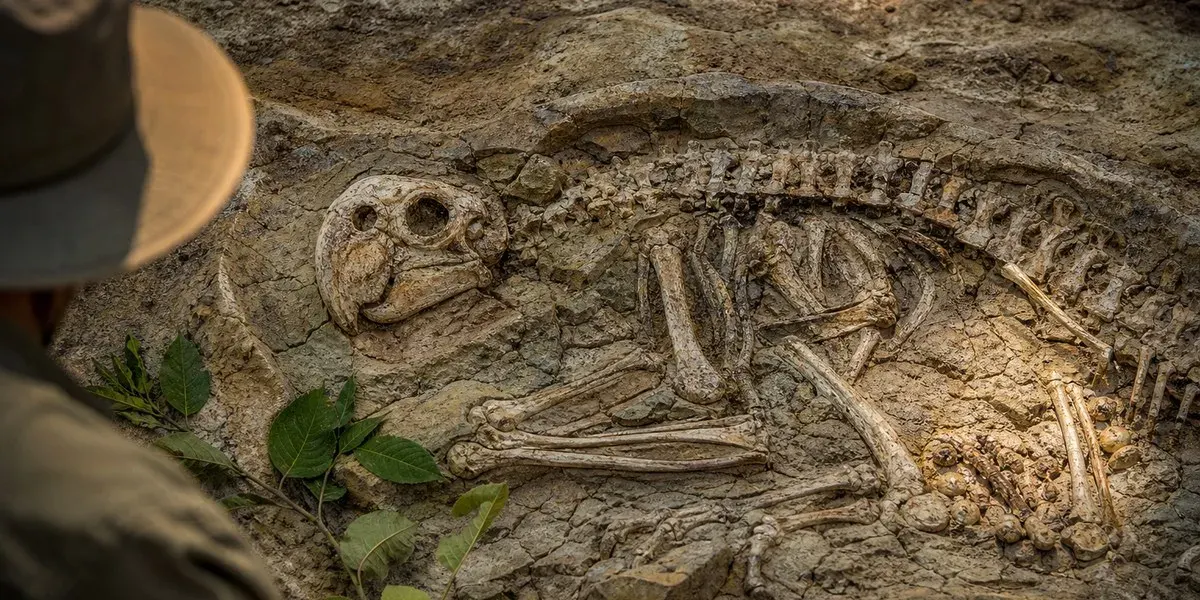
Paleontologists have described the fossil remains of Infernogallus jamesi, the first known dinosaur with specialized adaptations for feeding on fruit, according to ua.news. The animal lived approximately 66 million years ago at the end of the Cretaceous period. Its fossilized remains were recovered from the Hell Creek Formation in Montana and North Dakota, yielding an almost complete skeleton along with separate jaw and palate bones ua.news
ua.newsua.newsOpen source ↗.
Infernogallus jamesi was a toothless theropod measuring roughly 1.5 meters in length and weighing about 11.3 kg, comparable in size to a modern turkey. While the recovered bones did not preserve direct traces of feathers, researchers infer that the dinosaur had plumage based on known specimens of close relatives.
Specialized Cranial Adaptations
Lead author Greg Funston of Stony Brook University identified three distinct biomechanical features associated with soft plant consumption in the journal Nature Communications. The species possessed jaw muscle architecture suited for forward-and-backward movements during chewing, a mobile joint enabling the lower jaw to protrude forward, and specialized ridges and grooves on the beak for mashing and cutting tissue.
While modern species such as parrots and green sea turtles exhibit some of these individual traits, the researchers noted that no living animal combines all three mechanical adaptations. The findings indicate a complex feeding apparatus specialized for processing soft food sources ua.news
ua.newsua.newsOpen source ↗.
Ecological Role in the Cretaceous
During the Cretaceous period, the species inhabited a subtropical coastal floodplain alongside larger dinosaurs including tyrannosaurs, triceratops, and ankylosaurs. The rise of flowering plants during this epoch created new ecological niches, allowing the animal to feed on berries and drupes resembling modern stone fruits.
Unlike many herbivorous theropods that processed vegetation using ingested gastroliths, Infernogallus and related caenagnathids chewed their food directly. The study notes that while these animals could have served as early seed dispersers, additional fossil evidence is required to confirm that ecological interaction.