Aarhus University Team Shows Europe Was Dominated by Open Habitats for 20 Million Years
Researchers found Europe was a mosaic of woodlands and meadows for over 20 million years, challenging the closed-forest baseline for reforestation.
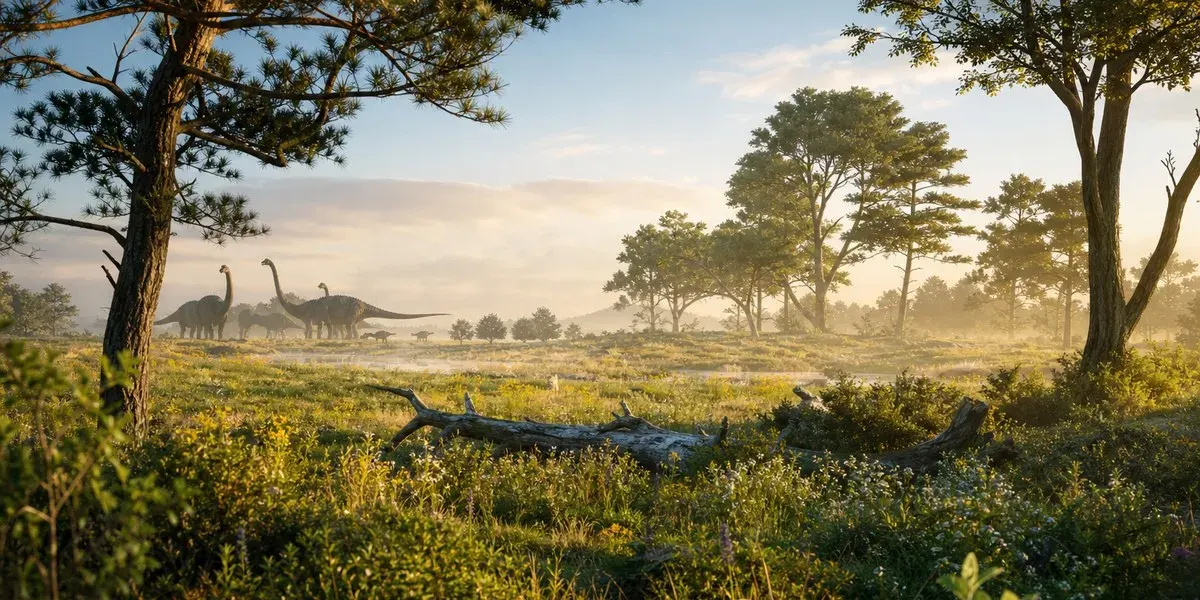
A research team led by Aarhus University has established that open and semi-open landscapes, rather than continuous dense forests, dominated Europe for more than 20 million years. According to a study published in Biological Conservation and reported by sciencedaily.com, the findings challenge the long-standing ecological paradigm that dense canopies covered Europe prior to human expansion sciencedaily.com
sciencedaily.comsciencedaily.comOpen source ↗.
To reconstruct the continent's prehistoric ecosystems, the researchers evaluated paleoecological records from the Miocene epoch—beginning roughly 23 million years ago—up to the pre-industrial period. The team combined multiple independent proxies, analyzing fossilized pollen, macro-plant remains, wildfire charcoal, and environmental DNA preserved in sediments. They also evaluated fossil insects, mammal remains, and stable isotopic signatures preserved in the bones and teeth of extinct and extant herbivores.
Long-Term Vegetation Dynamics
The synthesis of multiple datasets showed that Europe maintained a shifting mosaic of sparse trees, open grasslands, and shrublands across varying climatic phases. These mixed ecosystems persisted through temperate periods comparable to modern European weather, as well as during historically warmer and colder cycles. The authors stated that dense, dark canopies are a relatively recent ecological development rather than the default baseline condition under which native species evolved.
Herbivore Activity and Habitat Structure
The presence of megaherbivores was critical to maintaining non-forested zones over deep time sciencedaily.com
sciencedaily.comsciencedaily.comOpen source ↗. Large mammals including prehistoric elephants, rhinoceroses, bison, and aurochs continually fed on woody plants and disturbed the soil, preventing trees and shrubs from closing the canopy. This mechanism allowed grasses and wildflowers to persist alongside forest patches, establishing environments favored by diverse birds, insects, and small vertebrates.
The authors pointed out that modern reforestation policies routinely incentivize planting high-density timber stands to maximize carbon capture. Lead author Szymon Czyzewski and senior author Jens-Christian Svenning emphasized that continuous tree cover conflicts with the evolutionary background of European flora and fauna. They noted that current initiatives should incorporate open habitats, scrubland, and natural grazing regimes to preserve regional biodiversity.