Serum SLIT1 linked to resistance to PD-1/PD-L1 inhibitors in non-small cell lung cancer patients
In patient cohorts, serum SLIT1 was higher in those resistant to PD-1/PD-L1 inhibitors. The authors propose it as a candidate predictive marker, not yet a clinical test.
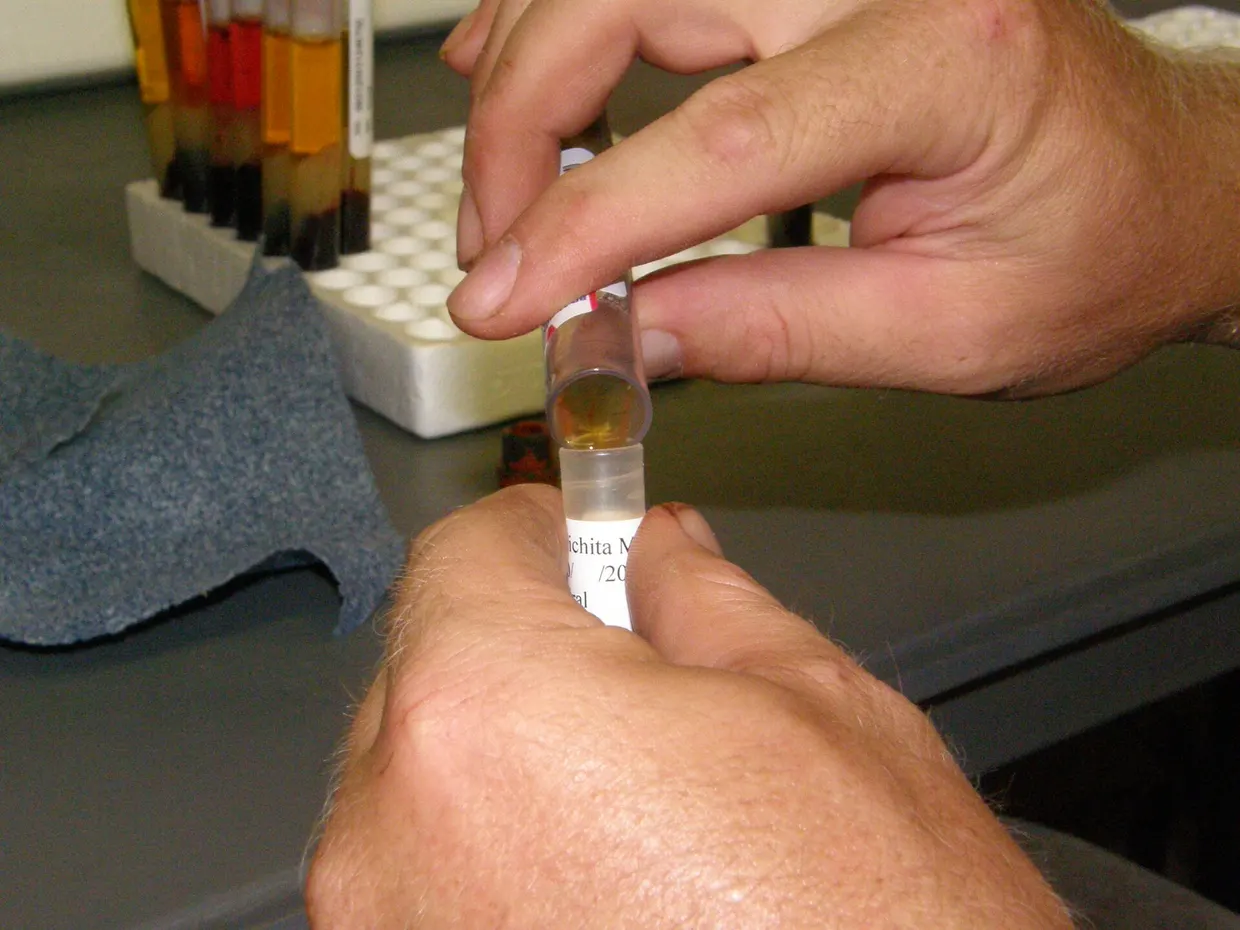
Researchers compared serum protein profiles of patients with non-small cell lung cancer (NSCLC) who responded differently to PD-1/PD-L1 inhibitors. They identified Slit Guidance Ligand 1 (SLIT1) as a candidate predictor of resistance, according to a study in Biological Procedures Online biomedcentral.com
Biological Procedures Onlinebiomedcentral.comOpen source ↗. The team used four-dimensional data-independent acquisition (4D-DIA) proteomics integrated with the DB4000 platform, then checked the finding in an independent validation cohort.
NSCLC is the predominant subtype of lung cancer and contributes greatly to cancer-related mortality worldwide. Inhibitors of PD-1 and its ligand PD-L1 have markedly improved patient outcomes, but treatment resistance remains a substantial clinical challenge. This is why the authors look for more effective predictive biomarkers.
Proteomic screening and validation
The screen found 49 differentially expressed proteins between treatment-resistant and treatment-sensitive patients. SLIT1 showed the most pronounced downregulation, with a log₂ fold change of about −2.29 (P = 0.0419). In the independent validation cohort, an enzyme-linked immunosorbent assay indicated that SLIT1 was significantly higher in resistant patients than in sensitive ones (P < 0.0001). The abstract reports both results as given and does not discuss the difference in direction between the two stages.
The authors also report that elevated SLIT1 was independently associated with shorter progression-free survival biomedcentral.com
Biological Procedures Onlinebiomedcentral.comOpen source ↗. A prognostic model that combined SLIT1 with other clinical variables reached an area under the curve of 0.964 (95% confidence interval: 0.929–0.998).
Link to the tumor microenvironment
Single-cell transcriptomic analysis showed a significant enrichment of SLIT1 expression in myeloid-lineage cells, particularly in M2-polarized macrophages (P = 0.0396). The authors suggest that SLIT1 may be involved in shaping an immunosuppressive tumor microenvironment that could underlie treatment resistance. This is an interpretation of the data, not a demonstrated mechanism.
In their conclusions, the authors describe serum SLIT1 as a biomarker for predicting resistance to PD-1/PD-L1 inhibitors in NSCLC. They say the findings offer a potential predictive tool and lay the groundwork for mechanistic studies and for optimized therapeutic strategies.
Sources · 2
Found a mistake?Read also