Tolyatti State University: Mg–Zn–Ca alloy composition and heat treatment set implant dissolution time in vitro
Researchers at Tolyatti State University showed that zinc content and heat treatment control how magnesium alloys dissolve in saline, without protective coatings. Tests were done on alloy samples in solution.
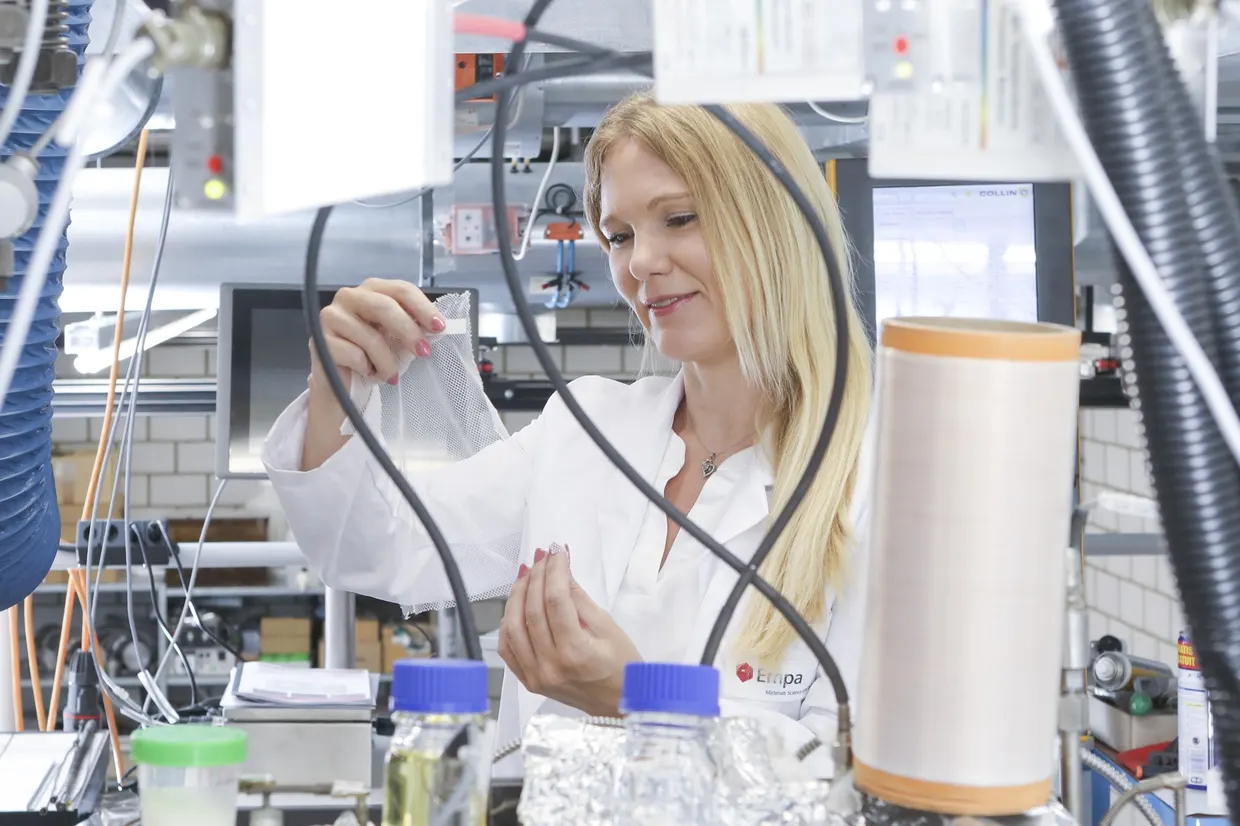
Researchers at Tolyatti State University (TSU) found how alloy composition and heat treatment can set the service life of magnesium implants and the rate at which they dissolve, without protective coatings, the newspaper Poisk reports, citing the Russian Ministry of Science and Higher Education. The work was done on alloy samples in saline solution; no implants were tested in an organism poisknews.ru
Поискpoisknews.ruOpen source ↗.
The results are meant to support bioresorbable magnesium plates for osteosynthesis. According to TSU, no one in the world has yet registered such plates as a medical device.
Why dissolution rate matters
Titanium and stainless steel implants used to join bones usually require a second operation for removal after healing. Magnesium is compatible with the body, dissolves gradually and is excreted. Its elasticity is closer to that of bone, so the implant takes less of the load.
The difficulty is that magnesium can degrade too quickly and unevenly. Evgeny Merson, head of the bioresorbable alloys laboratory at TSU's research institute of advanced technologies, said the ideal implant would dissolve in two stages: slowly while tissue is healing, then faster once support is no longer needed. According to him, a coating cannot be relied on for plates, because a plate is bent to the shape of the bone and the coating cracks poisknews.ru
Поискpoisknews.ruOpen source ↗.
What the tests showed
The team studied five magnesium alloys with zinc and calcium. Calcium content was 0.1%, zinc ranged from 0.5 to 7.6%. Aluminium was not used because of possible neurotoxicity. Two heat treatments were applied: homogenization, which increased the amount of second-phase particles, and solution treatment, which dissolved them and kept more zinc atoms in the crystal lattice.
Samples were kept in physiological saline at 37 ± 0.5 °C, and dissolution was tracked by hydrogen release. In most alloys it proceeded in two stages. First the corrosion rate fell as a protective film formed on the surface. Then it rose quickly once deep pitting appeared. The first, incubation stage lasted longer the less zinc and zinc-rich second-phase particles the alloy contained.
After one day, alloys with 0.5–1% zinc had the lowest corrosion rate. After a week the rate grew with zinc content, as pitting played a larger role. The authors conclude that a short test is not enough to judge an alloy's durability poisknews.ru
Поискpoisknews.ruOpen source ↗.
The next step is to check the findings in more complex, body-like media and to evaluate the strength and ductility of future implants. The results are published in Journal of Alloys and Compounds (DOI: 10.1016/j.jallcom.2026.191590).