Malaria rapid tests in Malawi showed 67% sensitivity versus PCR, only 33–38% in some age groups
In 1,108 visits to rural Malawian health centers, rapid tests for Plasmodium falciparum missed most PCR-confirmed cases in infants under one year and adults aged 25–40.
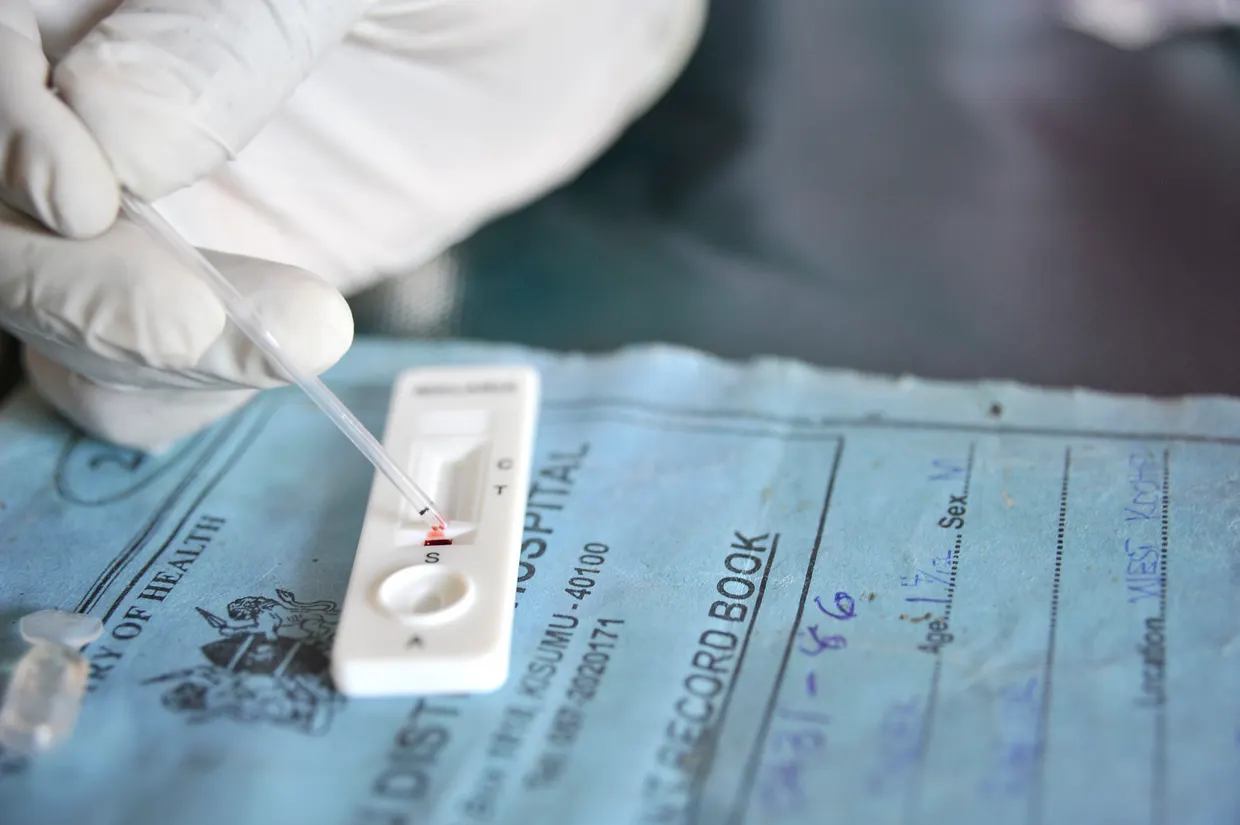
A study published in PLOS Global Public Health compared point-of-care malaria rapid diagnostic tests (MRDTs) for Plasmodium falciparum with quantitative polymerase chain reaction (PCR). The analysis covered 1,108 patient visits to rural health centers in Malawi between 2019 and 2021. plos.org
PLOS Global Public Healthplos.orgOpen source ↗ The authors aimed to identify population subgroups in which MRDT performance is reduced, in order to improve the accuracy of MRDT-based diagnosis. About 48% of PCR tests and 37% of MRDTs were positive.
Sensitivity and specificity by age
Overall, 67% of participants with a positive PCR also had a positive MRDT, which is the sensitivity of the test. Among participants with a negative PCR, 91% had a negative MRDT, which is the specificity.
Sensitivity depended on age. It was lowest in the 25–40 years group (38%) and in children under one year (33%), and highest at 5–8 years (86%). Nearly all cases where the MRDT was negative and the PCR positive, that is, false negative MRDTs, had fewer than 200 parasites per µl of blood. Age and parasite density were negatively correlated.
Clinical and demographic predictors
In regression models, male sex, younger age, and the presence of fever, headache, chills, and vomiting reduced the likelihood of a false negative result. plos.org
PLOS Global Public Healthplos.orgOpen source ↗ The same symptoms (fever, headache, chills, and vomiting) were more likely to accompany a false positive result.
Classification tree analysis showed that combinations of clinical and demographic characteristics predicted true positive and true negative MRDT results with overall accuracy of 79% and 84%, respectively. Age was included in the regression models and classification trees instead of parasite density, because age is information readily available to clinicians.
The authors noted several possible explanations for discordance between PCR and MRDT, including incidental malaria infections. They concluded that MRDTs performed less well in certain subgroups, and that this may inform the deployment and development of these tools in clinical settings and for malaria surveillance.
Sources · 2
Found a mistake?Read also