Fibroblast miR-486-3p suppresses bladder cancer via HER-2 in tissue and cell studies
Authors report that miR-486-3p, localized to cancer-associated fibroblasts, targets HER-2 in bladder cancer; low levels predicted resistance to PD-1/PD-L1 blockade.
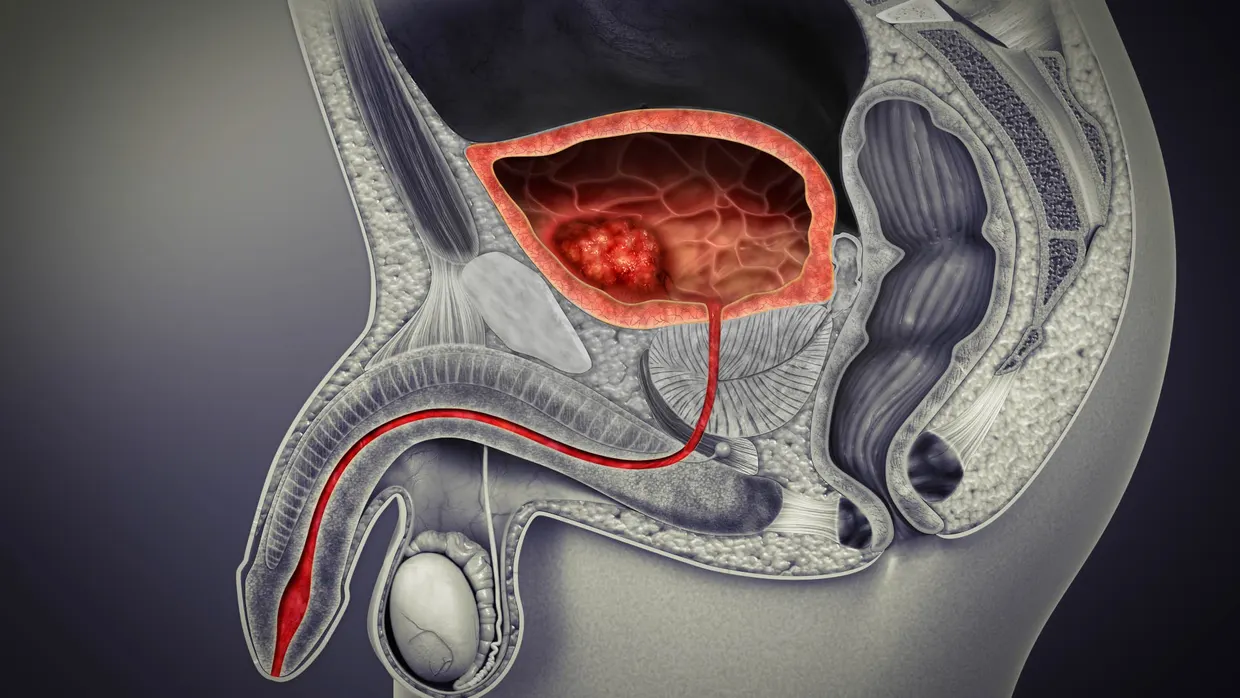
In a study published in Biology Direct in 2026, Li, Dong, Zhu, Sun, Zuo and Liu identified miR-486-3p as a suppressor of bladder cancer (BLCA) progression biomedcentral.com
Biology Directbiomedcentral.comOpen source ↗. The microRNA is localized to cancer-associated fibroblasts (CAFs) and its expression pattern is consistent with exosomal delivery. The result comes from integrative single-cell and transcriptomic analyses.
CAFs are key stromal components of the tumor microenvironment, but their capacity to deliver tumor-suppressive signals had remained unclear. The authors describe miR-486-3p as part of a stromal-epithelial checkpoint that acts on the HER-2/MDK-NCL axis.
miR-486-3p and HER-2 in bladder cancer
miR-486-3p was consistently downregulated in BLCA tissues and correlated with favorable overall survival. Its direct target, HER-2, was upregulated and linked to poor prognosis.
miR-486-3p bound the 3′-UTR of HER-2 mRNA directly. In cell experiments, reconstitution of HER-2 abrogated the tumor-suppressive effects of miR-486-3p on proliferation, migration, invasion and apoptosis biomedcentral.com
Biology Directbiomedcentral.comOpen source ↗.
Single-cell RNA sequencing of 58,982 cells localized HER-2 and related targets exclusively to malignant cell populations. Within them, the analysis resolved a HER-2-high subpopulation with hyper-proliferative expression signatures.
Immunotherapy cohorts and inhibitor screening
In immunotherapy cohorts, low miR-486-3p or high HER-2 expression predicted immune-cold phenotypes and resistance to PD-1/PD-L1 blockade.
The authors also ran a computational screen for HER-2-directed agents. It identified zongertinib as a high-affinity HER-2 inhibitor with favorable pharmacokinetics biomedcentral.com
Biology Directbiomedcentral.comOpen source ↗. This is a computational result; the source does not describe experimental testing of the compound in this work.
The authors conclude that the findings have implications for prognosis, immune evasion and HER-2-directed therapy. The work rests on tissue data, cell assays, single-cell sequencing and computational analysis, and the delivery of miR-486-3p by exosomes is described as likely rather than shown directly.