Palaeoproteomics links two Xujiayao fossils from China to Denisovans: 18 ancient proteins identified
Proteins from a skull bone and a jaw fragment dated to 199–138 thousand years ago carry a Denisovan-specific collagen variant, the authors report.
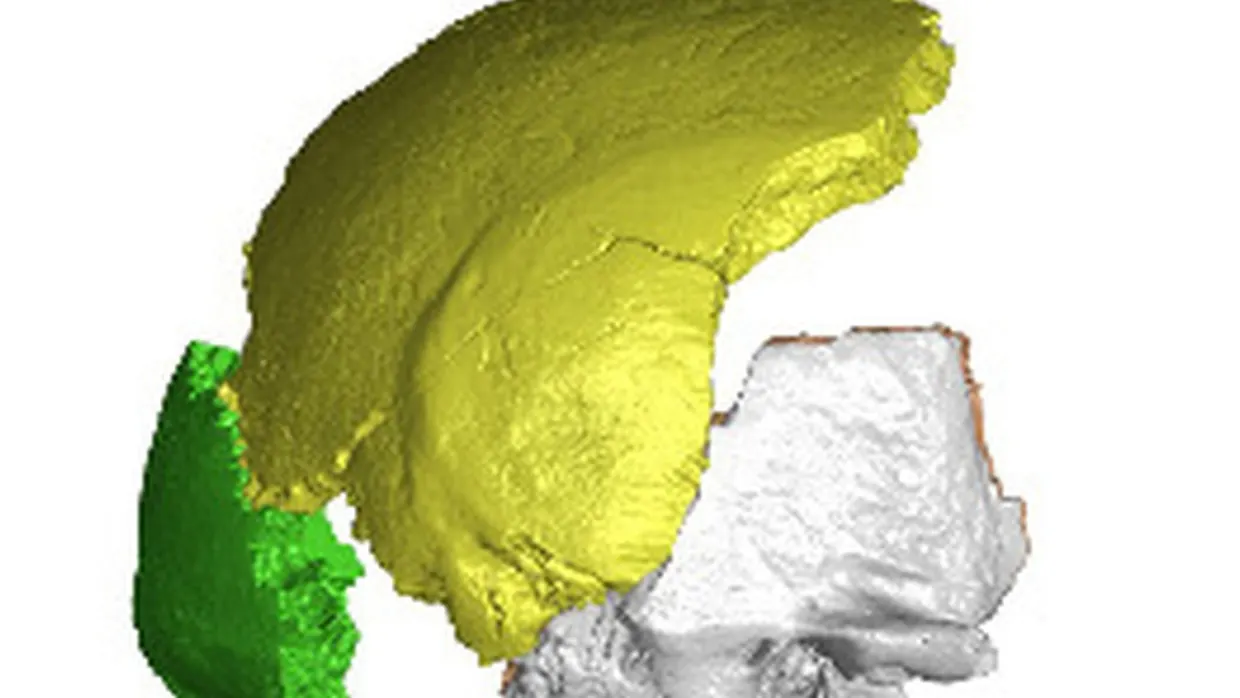
A team that includes Song Xing and Qiaomei Fu of the Institute of Vertebrate Paleontology and Paleoanthropology in Beijing has analysed two human fossils from Xujiayao, in the Nihewan Basin of northern China. The bones were excavated in 1976–79 and dated to about 199–138 thousand years ago. According to the study in Nature, they yielded 18 endogenous proteins, and the Denisova-specific COL1A2-996 R>K mutation supports their affiliation with the Denisovan lineage nature.com
Naturenature.comOpen source ↗.
Protein evidence
The samples were a right parietal bone from the Xujiayao 6 skull and a piece of the Xujiayao 14 mandible. Each bone was drilled in a clean room, with blanks and a modern Bactrian camel bone processed in parallel. Two laboratories read the fragments on mass spectrometers. The search returned 15,194 unique peptides, and deamidation was used to separate ancient material from modern contamination. After filtering, 18 proteins remained: 13 in the skull bone and 15 in the jaw.
The key signal is at position 996 of COL1A2, a chain of type I collagen. Neanderthals and modern humans carry arginine there, while every Denisovan tested so far carries lysine. Both Xujiayao bones showed lysine: 57 peptides with the variant in the skull bone and 61 in the jaw, against one low-quality arginine peptide in each. A tree built from 2,074 amino acid positions in eight proteins grouped Xujiayao with Denisova 3 and other Denisovan-related individuals with a probability above 99 percent.
Morphology of the Denisovan lineage
The authors compared Xujiayao with other East Asian late Middle Pleistocene archaic Homo, including the Harbin, Jinniushan, Dali and Hualongdong fossils. They report shared traits and conclude that all of them belong to the Denisovan lineage. The set combines features reminiscent of Homo erectus, such as a thick cranial vault, with a strongly arched temporal squama known in modern humans. Features shared with late Neanderthals include the structure of the temporal labyrinth and a suprainiac fossa nature.com
Naturenature.comOpen source ↗.
The distinctive combination is a low cranial profile with near-parallel lateral walls, a massive supraorbital torus, a flat zygomaxillary region and weak prognathism.
The evidence has limits. The protein result rests on one reliable variant and on two of the 20 Xujiayao fossils. Jinniushan, Dali and Hualongdong are assigned to the lineage on shape alone. A test for a variant specific to the Penghu mandible gave no reliable result, so Xujiayao is placed only within a late Middle Pleistocene East Asian Denisovan population. Within the Denisovan branch, the arrangement of individuals was unstable, with probabilities below 50 percent.