Grx2 deficiency accelerates bone stem cell senescence and bone loss in mice via CD36 S-glutathionylation
In Grx2-knockout mice, bone marrow stem cells senesced faster and bone loss accelerated; the authors link this to CD36 S-glutathionylation. Work in mice and cell culture.
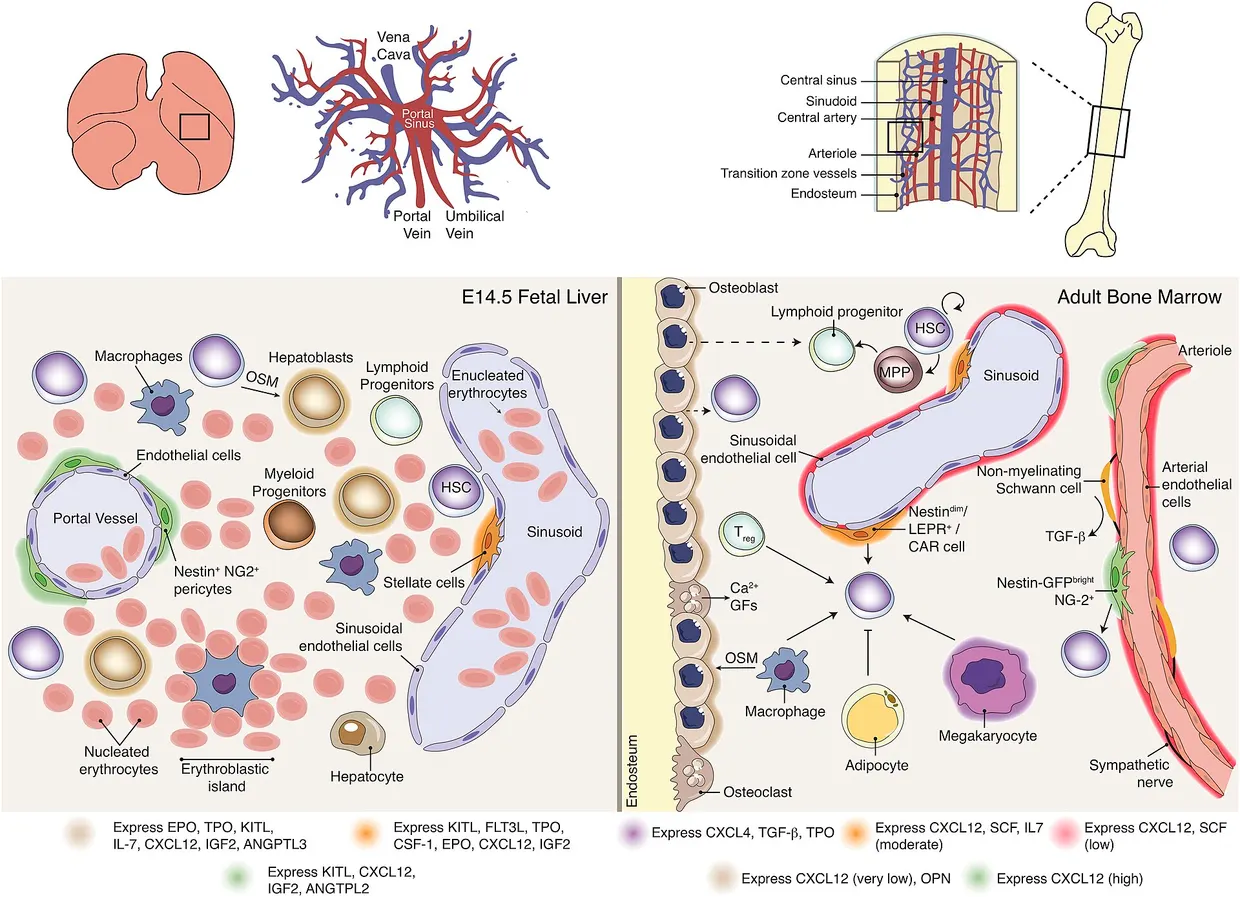
A research team reported in Cellular & Molecular Biology Letters that deficiency of glutaredoxin 2 (Grx2) drives senescence of bone marrow mesenchymal stem cells (BMSCs) and age-related bone loss in mice. Senile osteoporosis is driven largely by BMSC senescence and mitochondrial dysfunction. The role of S-glutathionylation, a redox modification that regulates mitochondrial homeostasis, in skeletal aging had remained unclear. biomedcentral.com
Cellular & Molecular Biology Lettersbiomedcentral.comOpen source ↗
The authors set out to test how Grx2 deficiency, acting through S-glutathionylation of the protein CD36, affects BMSC senescence and osteoporosis development.
Grx2 loss and bone loss in mice
Expression of Grx2, p53 and p21 was analyzed in human and mouse BMSCs. According to the journal's retelling, Grx2 levels fall in osteoporotic bone tissue from human donors undergoing hip arthroplasty. Aging-related and ovariectomy-induced osteoporosis models were established in Grx2 knockout mice.
In both male mice and ovariectomized female mice, Grx2 deficiency accelerated bone loss and inhibited osteoblast formation, while osteoclast function did not change. It also exacerbated BMSC senescence, the authors reported. biomedcentral.com
Cellular & Molecular Biology Lettersbiomedcentral.comOpen source ↗
Senescence, osteogenesis and adipogenesis of the cells were assessed with SA-β-Gal, ALP/ARS and Oil Red O staining and western blotting. Per the retelling, lentiviral overexpression of Grx2 restored osteogenic capacity in cultured cells and suppressed senescence markers.
CD36 as the downstream target
Integrated transcriptomic and S-glutathionylated proteomic analysis identified the fatty acid transporter CD36 as a key downstream target of Grx2. Grx2 deficiency markedly increased CD36 S-glutathionylation. Co-immunoprecipitation confirmed this modification, and molecular docking predicted C272 as the key site.
According to the authors, the modification enhances fatty acid uptake, which leads to accumulation of toxic lipid metabolites and oxidative damage. Lipid overload and oxidative injury were assessed by DAG and MDA levels. In addition, mitochondrial energy metabolism is impaired through inhibition of the PI3K/AKT signaling pathway. biomedcentral.com
Cellular & Molecular Biology Lettersbiomedcentral.comOpen source ↗
Overexpression of Grx2, or the C272S mutation in CD36 that disrupts its S-glutathionylation, broke this cycle and inhibited BMSC senescence, in vitro and in vivo. The authors conclude that CD36 S-glutathionylation mediated by Grx2 deficiency drives BMSC senescence and senile osteoporosis in these models. The data come from mice and cell cultures.