JWST finds 27 trans-Neptunian objects in the deepest solar system survey to date
Near-Infrared Camera data from JWST yielded 27 trans-Neptunian objects, the faintest about 10 km across; hot and cold populations show consistent magnitude distributions.
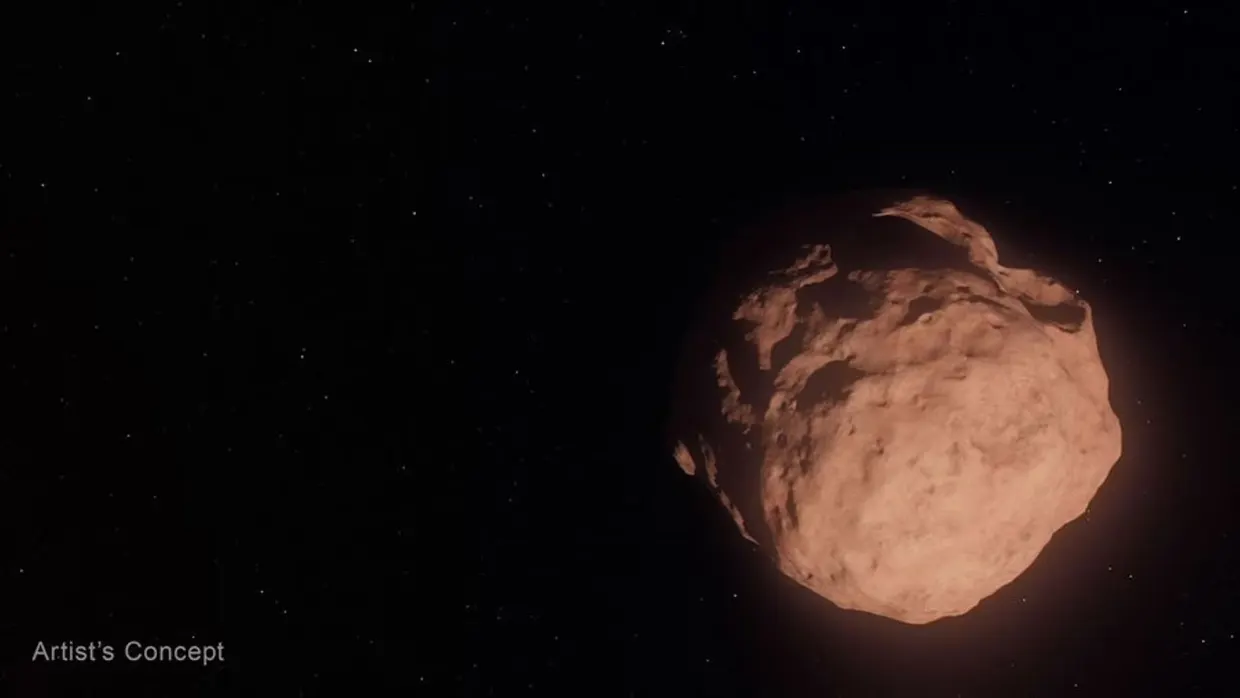
A team of astronomers reported the definitive discovery of 27 trans-Neptunian objects (TNOs) in images from the Near-Infrared Camera aboard the James Webb Space Telescope (JWST). The results are published in The Astronomical Journal. The survey covers a sky area of 0.05 deg², and the authors describe it as the deepest solar system survey to date. iop.org
The Astronomical Journaliop.orgOpen source ↗
Shift-and-stack search and detection depth
The objects were found with a shift-and-stack technique. The authors also used a dedicated algorithm trained to identify false-positive detections in JWST images produced by this process.
The 40% detection threshold is m F150W2 = 28.8 mag, which corresponds to m r ∼ 29.8 mag. According to the authors, this depth makes it possible to explore regions of the TNO size distribution that had not been reached before.
The faintest detection has m F150W2 = 29.3 mag and a diameter of about 10 km, assuming a 15% albedo. iop.org
The Astronomical Journaliop.orgOpen source ↗
Hot and cold populations: the same power law
In the sample, both the cold and hot TNO subpopulations show a power-law slope. The terms "hot" and "cold" describe the character of the orbits, not temperature.
The distribution of apparent magnitudes of the nominal sample, meaning detections at all epochs, is well fit by a single power law. The dynamically hot and cold subsamples in the discovery set are consistent with the same power law.
The authors suggest that the planetesimal formation process yields similar slopes despite the differing disk conditions at the presumed formation regions of the two populations, about 25 and about 45 au. iop.org
The Astronomical Journaliop.orgOpen source ↗
Popular coverage of the work also notes that these small icy bodies preserve traces of the early solar system. The paper itself reports the discovery, the detection limits and the fitted distributions of the sample.