High-temperature experiments show silicate pebbles can produce water
Research indicates that dry silicate pebbles may have generated water on early Earth, potentially influencing conditions for life.
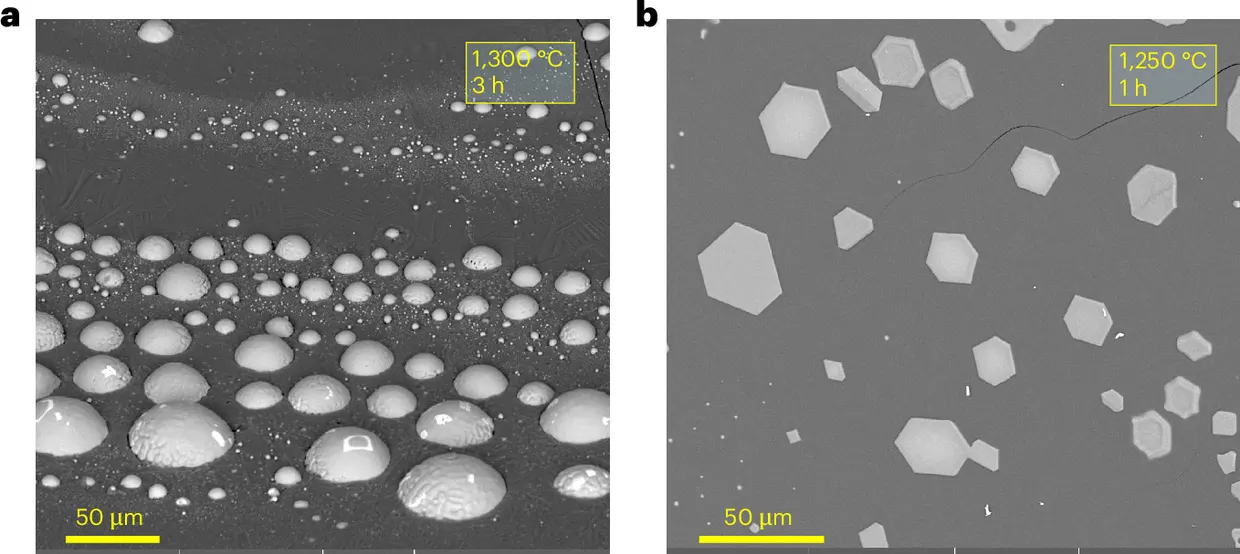
High-temperature experiments have demonstrated that much of the water on Earth could have originated from dry silicate pebbles falling through a hydrogen-rich primordial atmosphere. Conducted by researchers including Susmita Garai and Zachary Sharp, these experiments revealed that the reduction of iron oxide in silicates can produce water vapor in a matter of minutes or hours. This finding suggests that water production may be widespread on Earth-sized exoplanets as well. The study was published in Nature Geoscience.
Experimental Setup
The researchers subjected iron-rich silicate samples to extreme temperatures ranging from 1200 to 1400 degrees Celsius, simulating conditions of early Earth. The experiments were conducted in two different gas environments: a helium stream as a control and a pure hydrogen atmosphere, mimicking the dense primordial gas layer of a young protoplanet. Results showed that nearly 80% of the iron oxide in the minerals was reduced to metallic iron within minutes in the presence of hydrogen, releasing significant amounts of water vapor. In contrast, no reaction occurred in the helium environment.
Implications for Earth's Water Sources
This research challenges the previous paradigm that Earth's water was delivered externally by comets or icy bodies from distant regions of the solar system. Instead, the concept of pebble accretion provides an endogenous source of water, eliminating the need for long-distance transport of icy materials. While further geochemical analyses are required to quantify the proportion of water produced through this process compared to other sources, the findings support the idea that the extreme conditions of 4.5 billion years ago created an ideal chemical reactor for the formation of Earth's oceans.