Ottawa physicists propose universe age of 26.7 billion years
A new model suggests the universe is nearly twice as old as previously estimated, passing tests on early light elements.
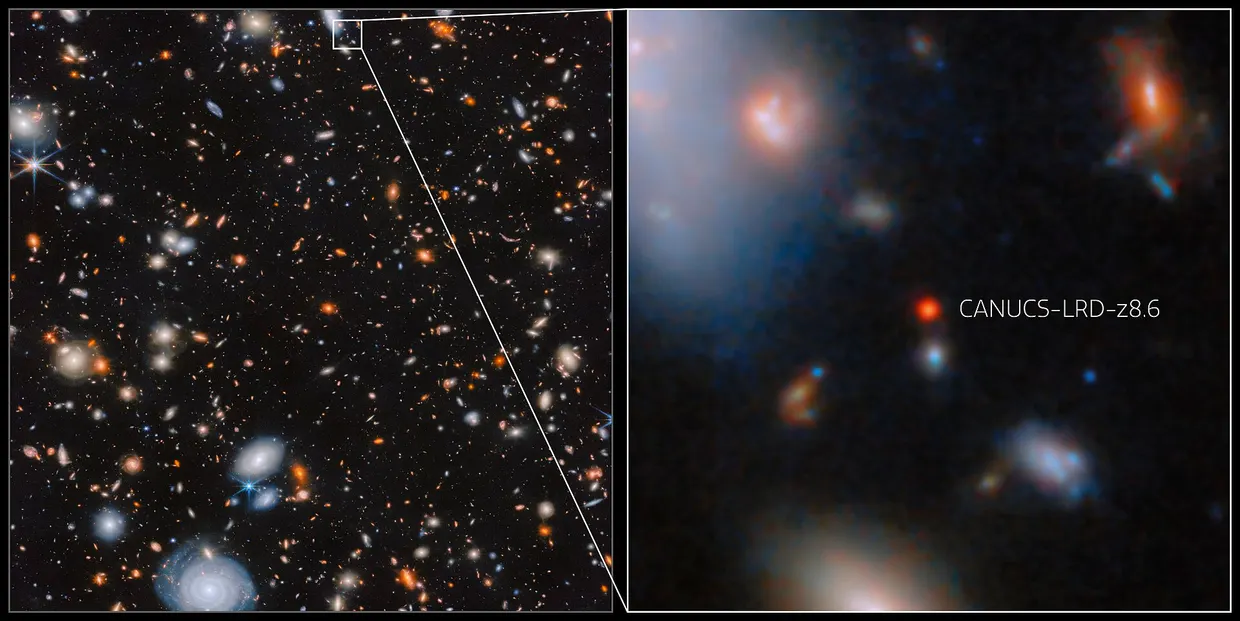
A model that puts the age of the universe at 26.7 billion years has passed a test based on the first elements formed after the Big Bang. This result provides astronomers with another method to verify the proposal, which suggests the universe is almost twice as old as the standard estimate of 13.8 billion years, according to knowridge.com.
New Model Overview
Physicists Rajendra Gupta and Nikolaos Samaras from the University of Ottawa explored whether their model of cosmic history could explain the early supply of light elements. Any model that alters the rate of the universe's expansion must also account for the time available for the formation of the first atomic nuclei. The standard model incorporates dark matter and dark energy to explain the universe's expansion dynamics.
The Ottawa model diverges by allowing the quantities that describe the strength of physical interactions to change over time. It also suggests that light loses energy during its journey, contributing to the observed redshift from distant objects. This shift is crucial for astronomers to correlate observations with the timing of events in the universe.
Implications and Future Tests
The researchers adapted equations for their model to predict light element formation during the cooling phase of the young universe. Their predictions align with results from the standard model. Additionally, they examined galaxy rotation and the changing expansion rate to see if their model could explain observations typically used to estimate dark matter and dark energy.
Several significant tests remain, including analyzing the cosmic microwave background radiation. A comprehensive comparison could help astronomers assess whether this new model can explain the same range of evidence as the standard model. The study indicates that an older universe can be consistent with one key aspect of the evidence, and further tests will clarify the model's validity across cosmic history.