May 2024 Superstorm Breaches Inner Radiation Belt, Generating Multi-MeV Electrons
A superstorm in May 2024 disrupted the inner radiation belt, allowing the generation of multi-MeV electrons, previously thought impossible.
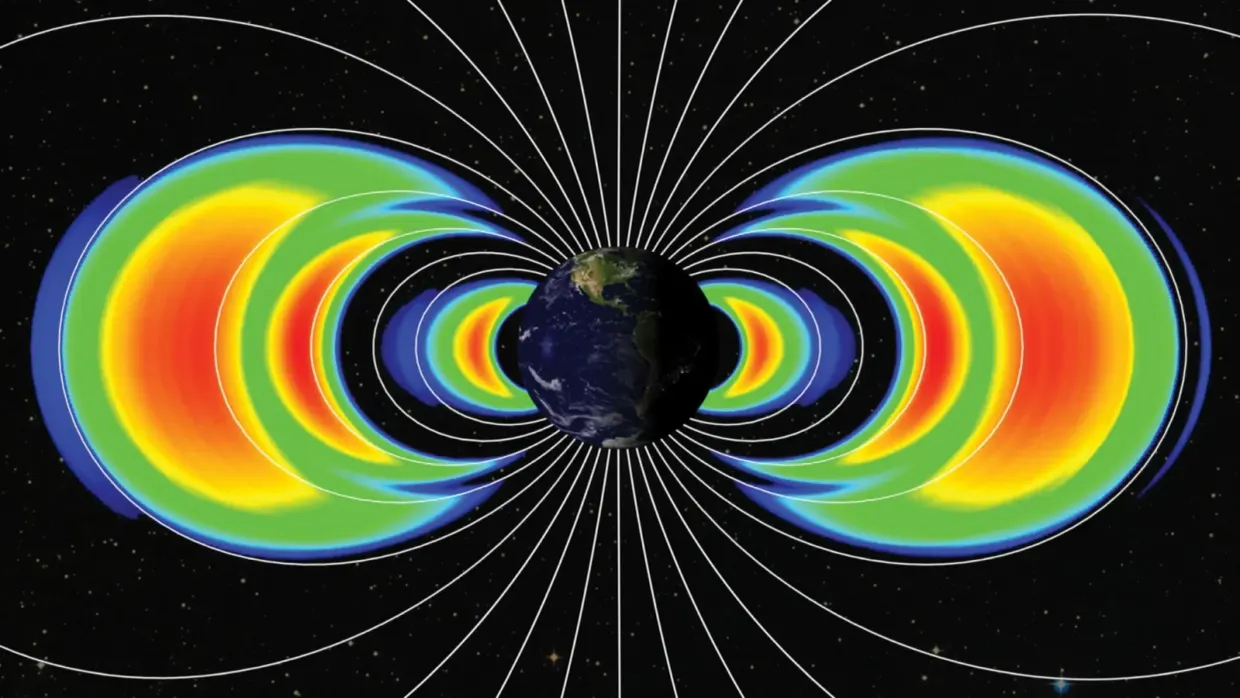
The inner radiation belt, previously considered an impenetrable barrier to ultra-relativistic electrons, was breached during a superstorm in May 2024. Observations from the Arase satellite revealed that this event generated multi-MeV electrons deep within the inner magnetosphere. The findings were published in Geophysical Research Letters.
Extreme Space Weather Conditions
The superstorm was triggered by a series of powerful solar flares and coronal mass ejections (CMEs), which released billions of tons of magnetized plasma into space. This led to a G5 geomagnetic storm on Earth, the most intense category, with effects recorded even at the ocean floor. The impact drastically reduced the cold plasma in the Earth's plasmasphere, creating an environment dominated by specific electromagnetic waves known as chorus waves.
Instead of dispersing particles, these waves acted as a cosmic accelerator, driving electrons to high energies within the previously protected zone. The Arase satellite, which has been monitoring radiation belts since 2017, recorded a more than 5000-fold increase in the flux of ultra-relativistic electrons with energies around 3 MeV inside the former barrier.
Local Acceleration Mechanism
The dynamics of this process were crucial: lower-energy electrons appeared first, followed by faster particles after about half a day, and a sharp increase in the population exceeding 3 MeV occurred after one day. This sequence, combined with a clear peak in density near the boundary, ruled out simple transport of particles from outside, demonstrating that acceleration occurred locally. The return of the magnetosphere to equilibrium took months, with the declining flux of particles tracked by Arase until October 2024, when another solar storm occurred. Understanding these extreme acceleration processes is essential for accurate modeling of space weather and protecting future crewed missions from sudden radiation waves.