Self-charged PVDF toothbrush from Peking University acts on oral bacteria with piezoelectric charge
Bristles made of piezoelectric PVDF generate charge while brushing and produce reactive oxygen species in saliva; the concept was tested in a clinical evaluation, the authors report.
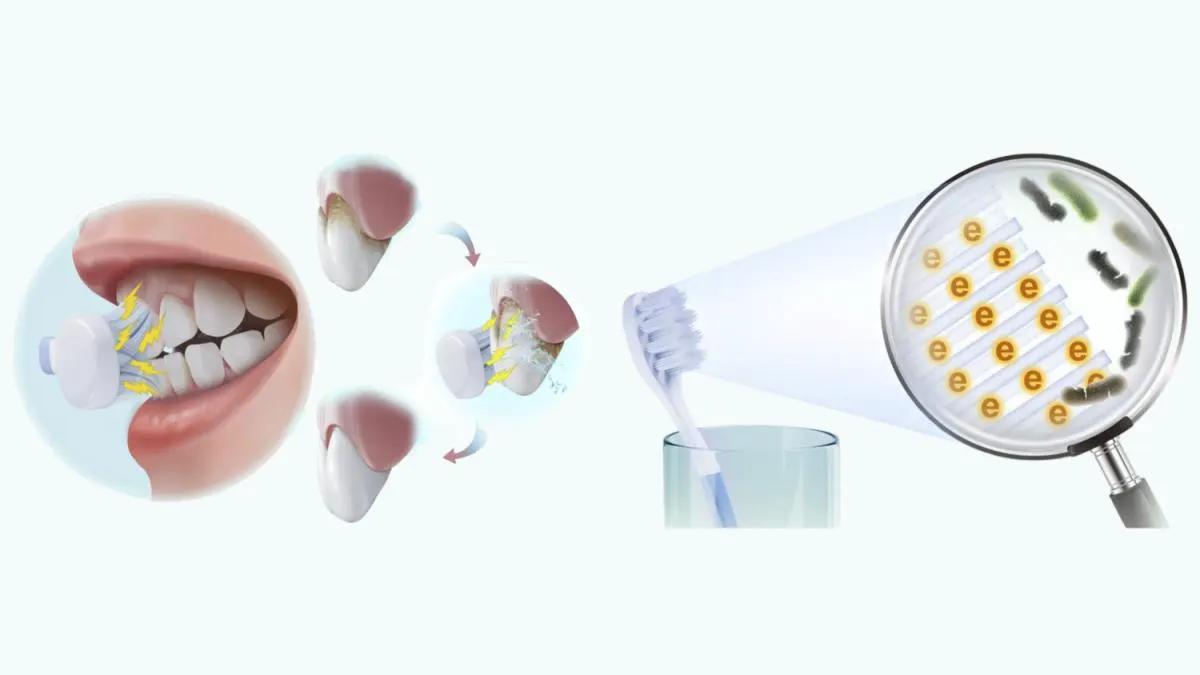
Researchers from Peking University have developed a self-charged toothbrush that uses electricity generated by the movement of its bristles during brushing to act on bacteria. The work was published in Science Advances. science.org
Science Advancesscience.orgOpen source ↗ The bristles are made of polyvinylidene fluoride (PVDF), a material with piezoelectric properties, so the brush needs neither a battery nor an external power source.
How the piezoelectric brush works
When the bristles bend mechanically, voltage forms in them, and reactive oxygen species appear in the surrounding saliva. These species damage the membranes of microorganisms. After the bristles are released, they absorb the charge again.
The authors describe two effects: static antibacterial inhibition through the surface potential and dynamic piezoelectric stimulation during brushing. Together they disrupt bacterial membrane integrity and reduce bacterial adhesion. Mechanistic studies showed oxidative damage to the membranes of oral pathogenic bacteria, which impaired the ATP-binding cassette transporter pathway.
Clinical evaluation and limits
According to the authors, a clinical evaluation showed that localized piezoelectric stimulation mitigated plaque formation and gingival inflammation. In the retelling by WIRED CZ & SK, volunteers using the piezoelectric brush showed a more pronounced reduction in plaque, gum bleeding and inflammation, and fewer bacteria that cause tooth decay, compared with ordinary brushes. Laboratory tests, as reported, found no damage to the tooth surface and no toxicity to human cells.
Experts cited by Nature note that the study has not verified long-term safety or the price of the product. They also object to how the results are presented, which makes comparison with other studies harder. Further studies will be needed to confirm efficacy and safety.
The publication presents the work as a concept of piezoelectric PVDF toothbrushes that combine physical cleaning with a sustained antibacterial effect. This is a demonstration of the approach rather than a finished consumer product. science.org
Science Advancesscience.orgOpen source ↗