Altos Labs' RETrace2 traces cell lineages with homopolymers in Msh2-deficient mice
Authors report a single-cell method that reads mutable homopolymers and methylation in the same cells, resolving lineages to under five cell divisions in microsatellite-unstable organisms.
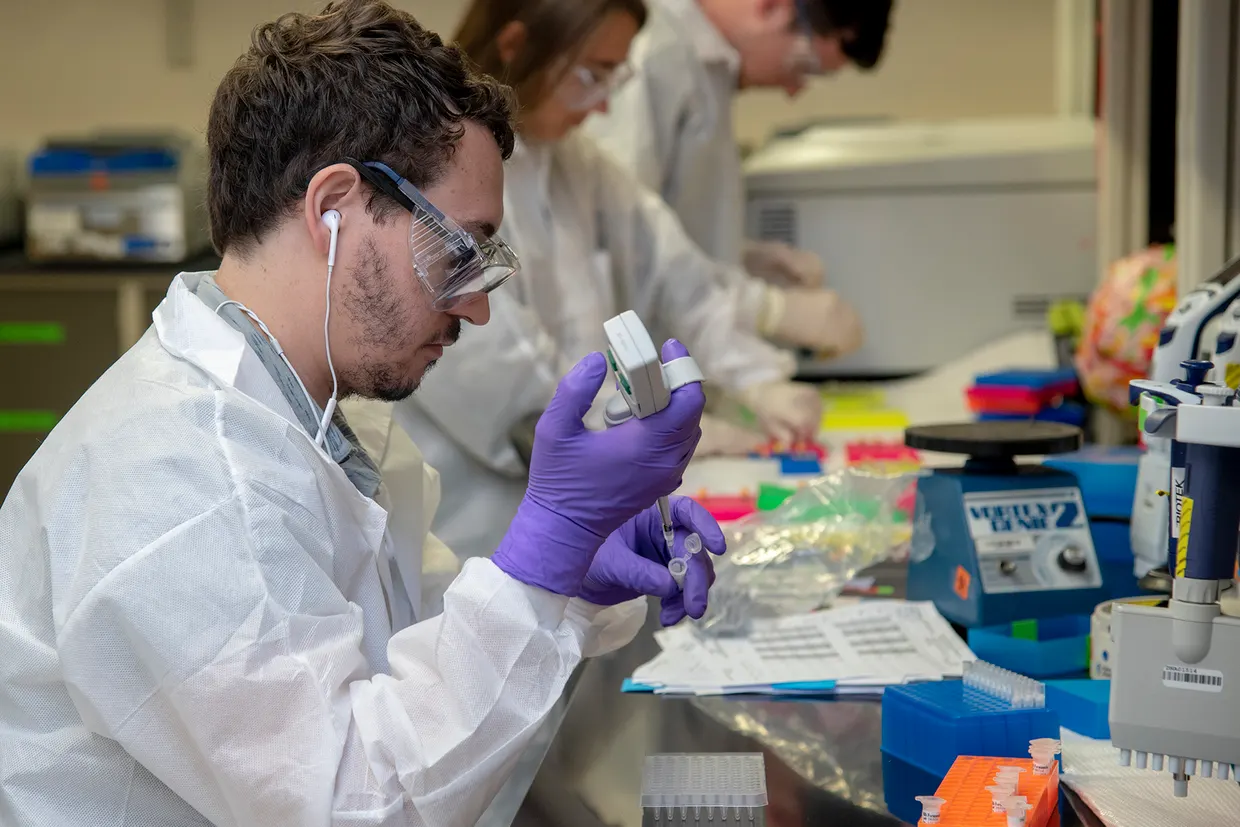
A team from Altos Labs, the University of California San Diego, the Medical University of Vienna and other institutions has described RETrace2, a single-cell dual-omic method for simultaneous lineage tracing and cell-type identification. The paper was published on 7 November 2026 in Nature Communications; the corresponding author is Kun Zhang. nature.com
Nature Communicationsnature.comOpen source ↗ The authors tested the method in vitro and in Msh2-deficient mice.
Homopolymers as lineage markers
Reconstructing cell lineages retrospectively from somatic mutations is useful for studying development, tissue homeostasis and disease. According to the authors, current approaches are limited by low marker density, technical noise and incomplete molecular readouts, which restrict the resolution and accuracy of inferred lineages.
RETrace2 targets highly mutable homopolymers. The authors show that these are approximately twice as informative as conventional microsatellite repeats. The method also includes technical improvements that increase marker coverage and reduce experimental errors in reading and amplifying homopolymers.
With these changes, the authors estimate that RETrace2 can trace lineage continuously at a resolution of fewer than five cell divisions in microsatellite-unstable organisms. nature.com
Nature Communicationsnature.comOpen source ↗
Validation and methylation readout
From the same cells, the method also obtains sparse methylation profiles, which are used to identify cell types. Lineage and cell type are therefore read in each individual cell.
The authors validated RETrace2 using in vitro ground-truth models. In vivo, they reconstructed multi-organ lineage trees from the brain, kidney and liver of Msh2-deficient mice.
The reported resolution is an estimate for microsatellite-unstable organisms, and the in vivo demonstration was carried out in a mouse model with a defect in the Msh2 gene. nature.com
Nature Communicationsnature.comOpen source ↗