Local visual reads of 1,497 amyloid PET scans match expert consensus with κ = 0.76
A representative evaluation from the IDEAS study shows clinical radiologists interpret amyloid PET scans with high accuracy.
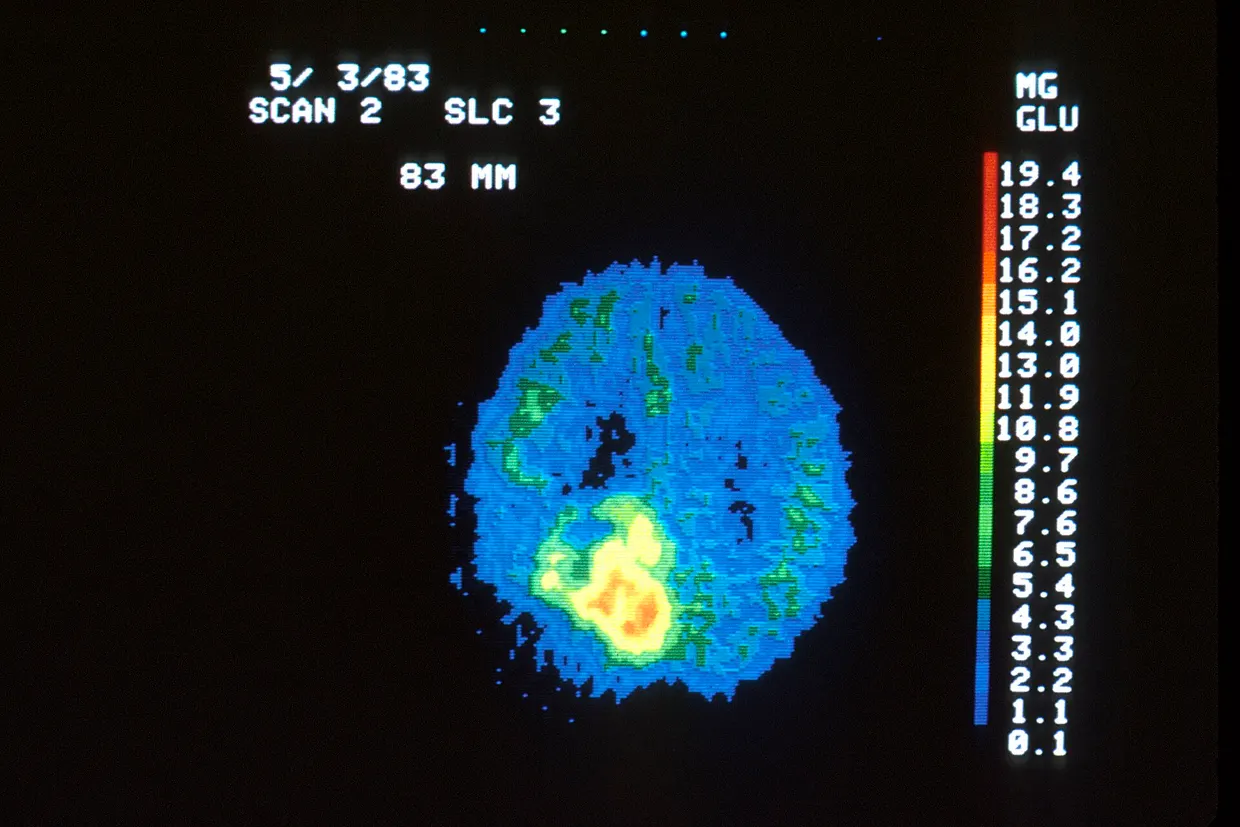
In a study published in the Journal of Nuclear Medicine, researchers analyzed 1,497 amyloid positron emission tomography (PET) scans from the United States Imaging Dementia—Evidence for Amyloid Scanning (IDEAS) cohort to assess the clinical reliability of local interpretations doi.org
Journal of Nuclear Medicinedoi.orgOpen source ↗. Local radiologists and nuclear medicine physicians originally evaluated the scans during routine practice. These findings were compared retrospectively to blinded consensus reads by panels of three expert readers per radiotracer.
Multicenter stratification and expert evaluation
The subset was stratified to match the broader IDEAS cohort across patient age, degree of cognitive impairment, PET facility type, and initial scan outcome. The evaluated cohort had a median age of 75 years, 51.4% were female, and 60.5% presented with mild cognitive impairment. The analysis covered three radiotracers approved by the Food and Drug Administration: 18F-florbetaben, 18F-florbetapir, and 18F-flutemetamol, with roughly 500 scans assessed per tracer group. Expert readers performed visual reads blinded to clinical and demographic details.
Concordance rates and reader confidence
Local readers initially categorized 60.9% of scans as positive and 39.1% as negative. Across all radiotracers, agreement between local readers and the expert panel majority was good, achieving a Cohen's kappa of 0.76 (95% CI, 0.73–0.80). Concordance reached 86.6% (790 of 912) for positive scans and 91.5% (535 of 585) for negative scans. Results did not vary significantly among the three radiotracers, which ranged from κ = 0.73 to 0.78.
Agreement among experts remained high with a Fleiss kappa of 0.79, while pairwise metrics between individual experts and local readers ranged between κ = 0.61 and 0.78 doi.org
Journal of Nuclear Medicinedoi.orgOpen source ↗. Lower diagnostic concordance between local practitioners and panels correlated with lower confidence reported by the local readers (P < 0.001). The authors concluded that routine visual interpretation of amyloid PET scans in community settings demonstrates substantial reliability.