Tsinghua and Zhejiang engineers propose Which2comm for connected vehicle perception
The Which2comm collaborative perception framework uses sparse semantic detection boxes to lower data transmission volume while maintaining 3D detection precision.
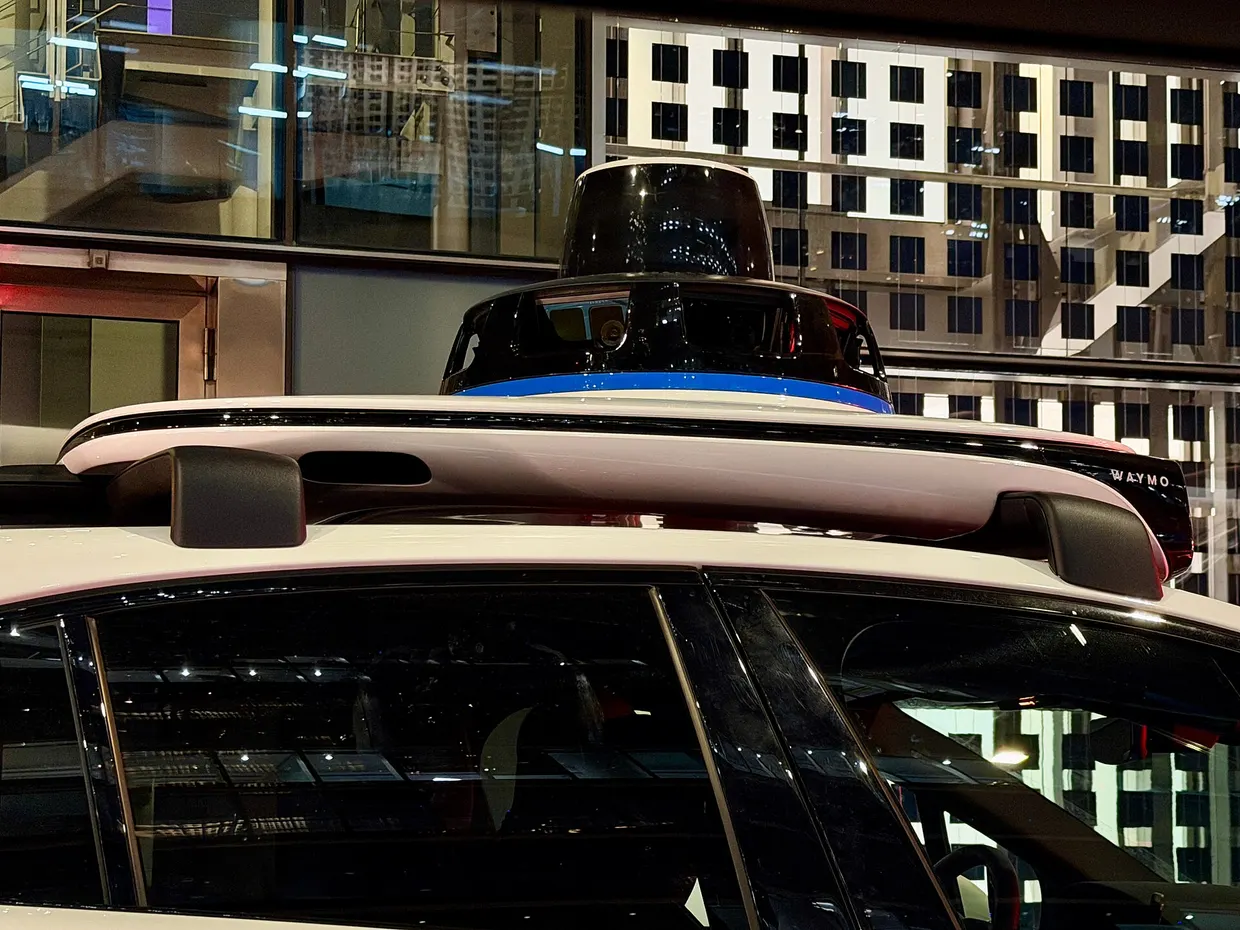
Researchers from Tsinghua University and Zhejiang University have developed Which2comm, a collaborative perception framework for connected and automated vehicles designed to operate under restricted communication bandwidth. As reported in Communications in Transportation Research, the system exchanges object-level sparse features rather than broad spatial feature maps or raw sensor streams, reducing the volume of data shared between moving units doi.org
Communications in Transportation Researchdoi.orgOpen source ↗.
Sparse features and adaptive selection
Standard multi-agent perception pipelines frequently transmit dense feature maps, which introduces severe overhead across vehicular networks. To address this trade-off between performance and bandwidth, Which2comm integrates semantic data directly into bounding geometries called Semantic Detection Boxes (SemDBs). The framework processes LiDAR point clouds through an extractor to obtain SemDBs, applying relative time encoding and temporal feature fusion to handle asynchronous signals and transmission latency.
When dense traffic presents multiple cooperative agents, Which2comm uses an adaptive selection mechanism that limits communication strictly to safety-critical vehicles. This method prioritizes data transmission according to collision and maneuvering risks, maintaining bounded communication costs regardless of total agent density.
Validation across multi-agent benchmarks
To evaluate the method, the researchers constructed Multi-V2X, a multimodal dataset comprising 146,000 LiDAR frames, 549,000 RGB images, and over 4.2 million 3D annotations across scenarios containing up to 31 connected agents with penetration rates reaching 86.21% doi.org
Communications in Transportation Researchdoi.orgOpen source ↗.
Benchmark testing on the V2XSet dataset demonstrated that Which2comm achieved 0.929 AP@0.5 and 0.833 AP@0.7 average precision metrics using 0.022 megabytes of transmitted data. The framework was also tested on the V2V4Real dataset and Multi-V2X, showing consistent detection stability under simulated network latency without overloading inter-vehicle communication channels.