Fudan University engineers demonstrate all-optical spike encoder prototype
Researchers have built a fiber-compatible optical spike encoder reaching firing rates above 2.0 GHz for neuromorphic computing.
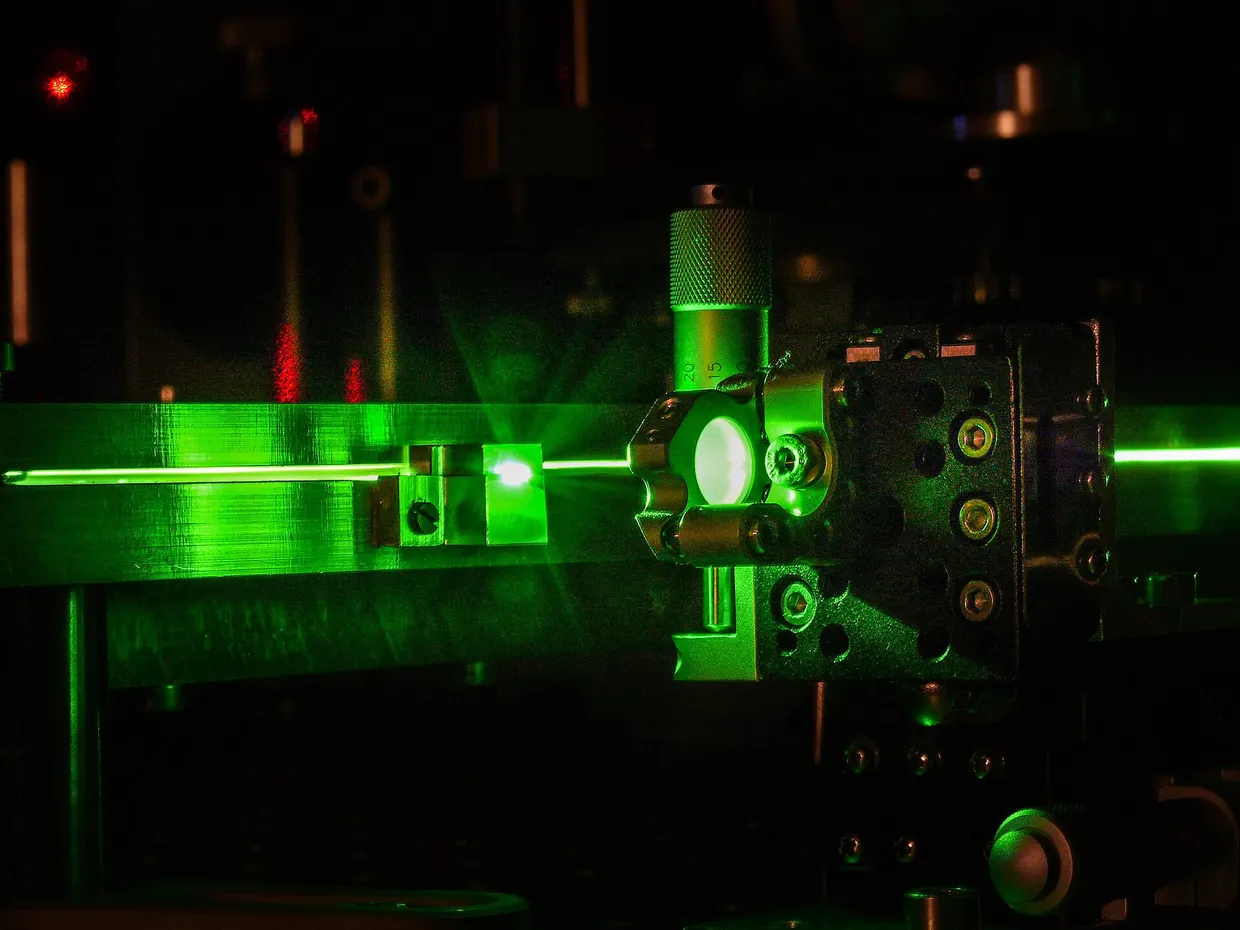
Researchers from Fudan University and Zhangjiang Laboratory have demonstrated an experimental all-optical biomimetic spike encoder based on an optically injected Fabry–Perot laser neuron. Published in Opto-Electronic Science, the study shows amplitude-to-rate linear encoding with spike rates exceeding 2.0 GHz and an encoding precision of approximately 5 bits doi.org
Opto-Electronic Sciencedoi.orgOpen source ↗.
Unlike earlier devices that were limited to binary spike outputs, the system creates a monotonic correlation where higher input optical intensity yields a higher spike firing rate. Operating in the standard 1,550 nm telecommunication band, each generated spike consumes 0.5 pJ of energy.
System integration and performance
The setup operates by tuning laser injection power, frequency detuning, and bias current. In testing with the MNIST dataset, the system achieved a handwritten digit classification accuracy of over 94.1%. Beyond static data, the system successfully translated continuous physiological and audio signals into spike sequences.
Fiber network compatibility
The researchers established an architecture compatible with time-division and wavelength-division multiplexing. The encoding performance remained stable after transmitting optical spikes over 10 km of single-mode fiber doi.org
Opto-Electronic Sciencedoi.orgOpen source ↗.
Proof-of-concept tests demonstrated multi-user processing of medical signals, including chest X-ray radiography screening, electrocardiogram arrhythmia detection, and heart sound classification. The architecture allows direct integration with existing fiber-optic communication infrastructure.