CAS mapped organic matter across nine meteorites using 10-micrometer mass spectrometry
Researchers tracked soluble organics across nine meteorites in the lab, linking compound preservation directly to water-rock reactions.
Researchers from the Institute of Geology and Geophysics at the Chinese Academy of Sciences analyzed the composition and spatial distribution of soluble organic matter in nine meteorites doi.org
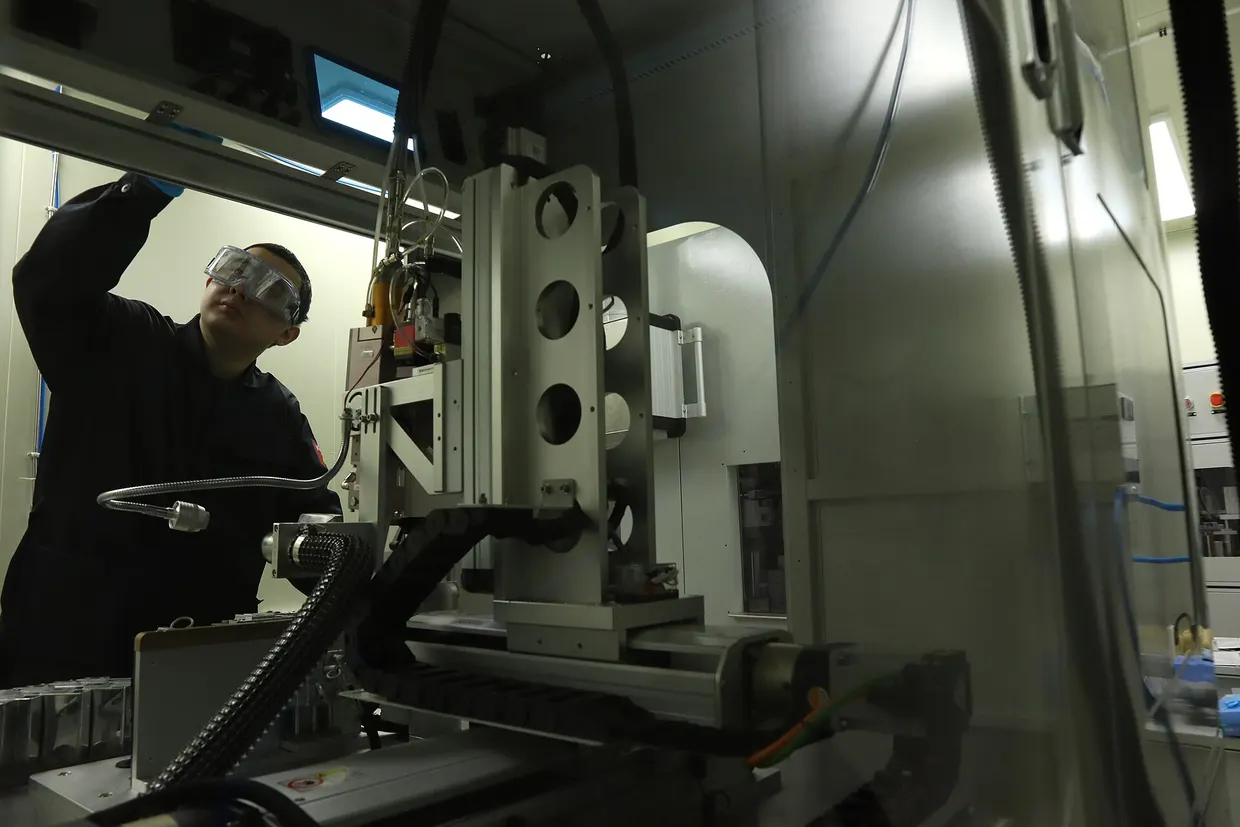
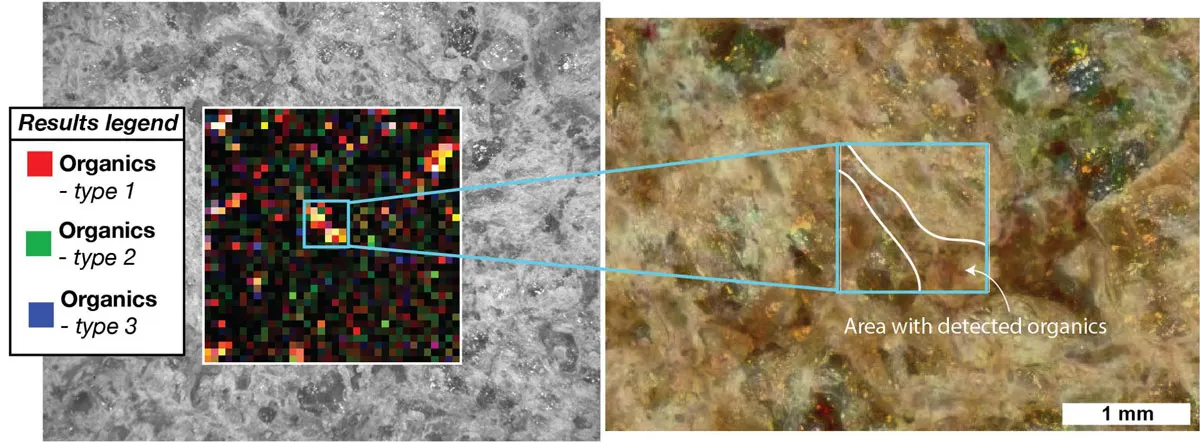
The Innovation Geosciencedoi.orgOpen source ↗. The study, published in The Innovation Geoscience, applied desorption electrospray ionization high-resolution mass spectrometry (DESI-HRMS) imaging alongside ultra-high-performance liquid chromatography–high-resolution mass spectrometry (UHPLC-HRMS). The authors analyzed polished meteorite sections at approximately 10-micrometer spatial resolution and resolved about 3,000 organic components in methanol extracts.
Mineral associations and spatial distribution
The analytical imaging revealed that soluble organic matter is not distributed uniformly throughout the samples. Instead, organic compounds preferentially concentrate within phyllosilicates, which are clay-like minerals formed during aqueous alteration, as well as in the fine-grained rims surrounding chondrules. In contrast, carbonate phases produced during the same alteration stages are depleted of soluble organic matter. The authors reported that mineral structure, porosity, and surface chemistry control the selective adsorption and preservation of these organic molecules.
Parent-body aqueous alteration and fluid conditions
Bulk chemical measurements indicated that the total abundance of soluble organics correlates positively with the degree of aqueous alteration in CM2 chondrites. Specifically, the amounts of nitrogen-, oxygen-, and sulfur-bearing compounds increase alongside water-rock reactions. However, highly altered CI1 chondrites deviate from this linear progression.
Systematic variations also emerged across different parent bodies doi.org
The Innovation Geosciencedoi.orgOpen source ↗. For instance, the Tarda meteorite from a D-type asteroid contains noticeably less-polar organic compounds than carbonaceous chondrites originating from C-type asteroids. According to the authors, the preservation and molecular features of soluble extraterrestrial organics are shaped simultaneously by three factors: original heliocentric distance in the Solar System, parent-body fluid redox conditions, and local microscale mineral phases.