Danish registry of 49,596 children: 63% of hospital spine diagnoses were non-specific
A nationwide Danish cohort study of 2007–2022 found that diagnostic codes for paediatric spine problems vary systematically with age, parental spine history and comorbidity burden.
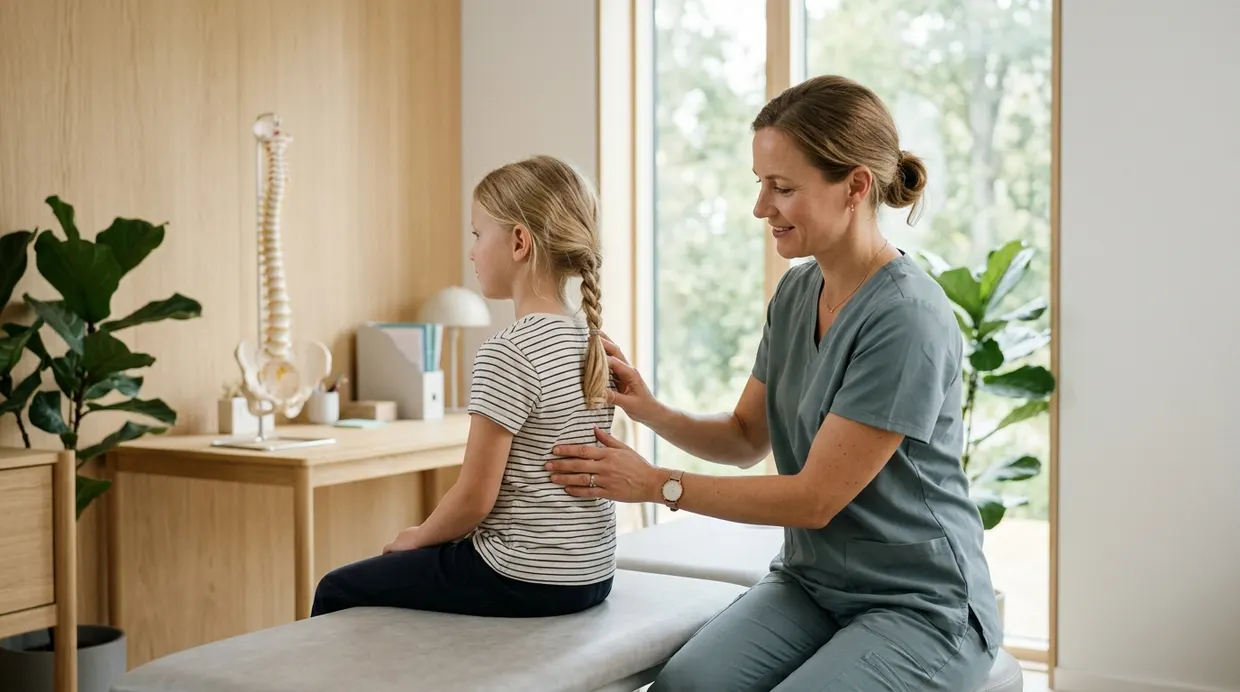
Danish researchers analysed a nationwide register cohort of 49,596 children aged 0–17 years with a hospital-based spine-related diagnosis between 2007 and 2022. The results were published in Chiropractic & Manual Therapies biomedcentral.com
Chiropractic & Manual Therapiesbiomedcentral.comOpen source ↗. Of these children, 63% received a non-specific diagnosis and 37% a specific one.
The authors set out to describe how diagnostic codes differ by age, sex, parental spine diagnoses and the child's comorbidity burden.
Data and classification
The team linked the Danish Civil Registration System to the Danish National Patient Register. This captured inpatient admissions, outpatient visits and emergency contacts across all hospital departments. Individuals without a valid registration number or Danish residency were excluded. Fracture codes were also excluded, while non-fracture cervical sprains and strains were kept.
Diagnoses were classified as specific or non-specific using ICD-10 codes. Specific diagnoses covered conditions with verifiable structural, inflammatory, post-procedural or radicular pathology, such as spinal deformities, postural disorders, spondylopathies, disc displacements and post-surgical conditions. Non-specific diagnoses covered regional pain, unspecified backache and functional disturbances. The authors note that these are administrative ICD-10 categories, not definitive bedside diagnoses. Patient characteristics were examined descriptively and with logistic regression biomedcentral.com
Chiropractic & Manual Therapiesbiomedcentral.comOpen source ↗.
Age, family history and sex
Age was the strongest determinant. About two-thirds of children aged 0–4 years received specific structural diagnoses, whereas non-specific codes predominated in older groups. In children from mid-childhood to late adolescence, the adjusted odds ratio for a specific diagnosis was 0.22–0.27 relative to the youngest group.
At least one parent or guardian had a prior hospital spine diagnosis for 14,732 children (29.7%). Among these children 68.4% received a non-specific diagnosis, versus 62.6% of those whose parents had no such record. The rate was highest, 70.5%, when the parents had only non-specific diagnoses. The adjusted odds ratio for a specific diagnosis was 0.77.
After adjustment for calendar year and age, girls had slightly higher odds of a specific diagnosis (odds ratio 1.07). Among children aged 5–17 years with specific diagnoses, 9,809 were girls and 7,832 boys (55.6% girls), a difference driven mainly by adolescent idiopathic scoliosis. Children with a lower comorbidity burden were more likely to receive non-specific diagnoses (odds ratios of about 1.09–1.13) biomedcentral.com
Chiropractic & Manual Therapiesbiomedcentral.comOpen source ↗.
The authors conclude that most children receive non-specific diagnoses and point to the need for appropriate care pathways, including greater use of primary care for non-specific spinal pain.