Inhaled phage cocktail added to antibiotics in 96 patients: no treatment-limiting adverse events
A post hoc analysis of a randomized trial in chronically critically ill patients: fewer escalations to Reserve antibiotics by day 14, no treatment-limiting adverse events.

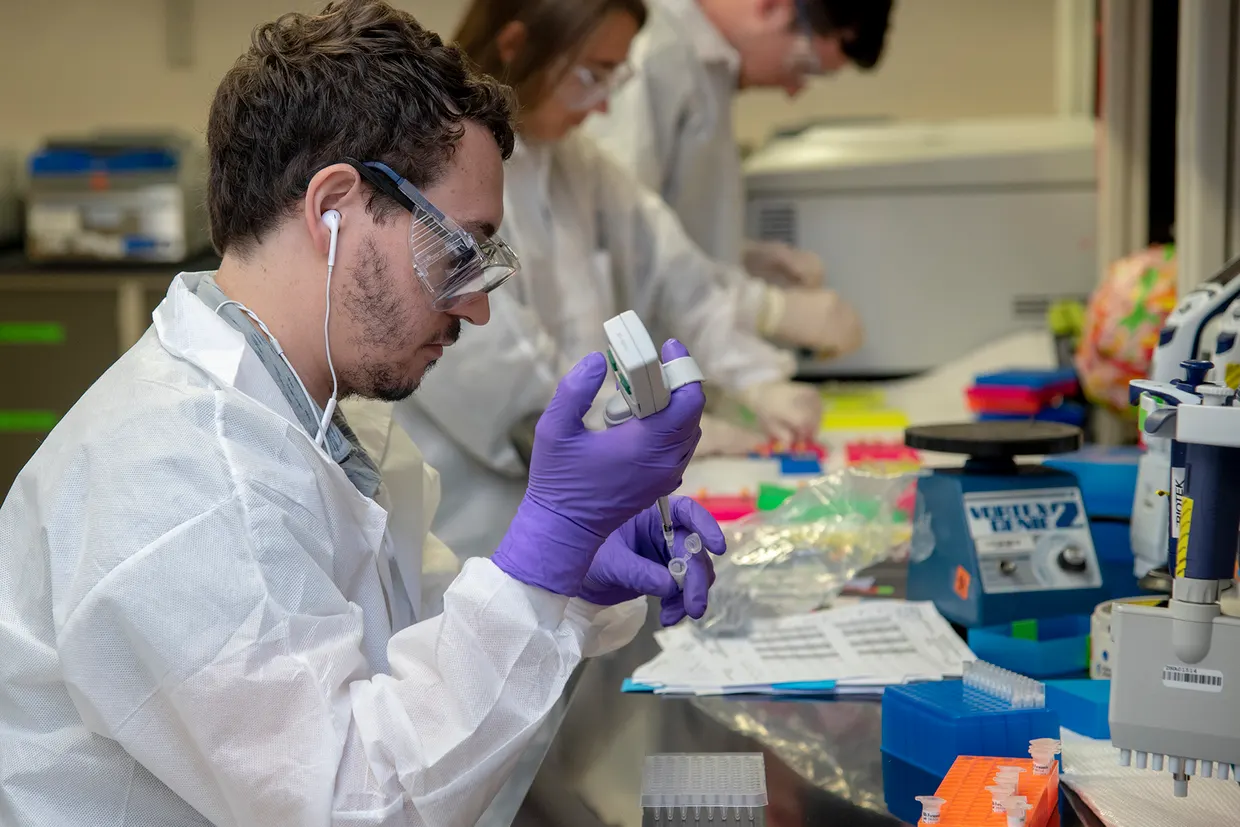
Researchers at the Federal Research and Clinical Center of Intensive Care Medicine and Rehabilitology in Moscow evaluated an inhaled hospital-adapted bacteriophage cocktail added to antimicrobial therapy in chronically critically ill patients with lower respiratory tract infections. The results were published in Frontiers in Medicine. The prospective single-center post hoc secondary analysis of a randomized controlled trial included 96 patients who were receiving systemic antibiotics at baseline frontiersin.org
Frontiers in Medicinefrontiersin.orgOpen source ↗. The cocktail was nebulized three times a day for 21 days.
Design and phage cocktail
The intervention group received antimicrobial therapy plus the inhaled phage cocktail, while 40 patients received antimicrobial therapy alone. According to the publisher's summary, the patients were in intensive care and neurological rehabilitation after severe brain injury, had a tracheostomy and persistent impairment of consciousness, and had spent at least 21 days in the intensive care unit before enrollment.
The preparation, called Bronchophage, was developed by the Research and Production Center MicroMir. Its composition was updated at least once per quarter based on local microbiological surveillance, so that the phages stayed active against the strains circulating in the hospital. Treating physicians, outcome assessors and laboratory staff were blinded to group assignment.
Safety and antibiotic escalation
No clinically apparent treatment-limiting adverse events were associated with adjunctive inhaled phage therapy during the 21-day follow-up frontiersin.org
Frontiers in Medicinefrontiersin.orgOpen source ↗. Between-group differences in ALT, AST, bilirubin and creatinine were not statistically significant on day 21. Median ALT on day 21 was 20.4 units per liter in the intervention group and 25.4 units per liter in controls; median creatinine was 64.1 and 64.8 micromoles per liter, respectively. Baseline ALT was higher in the control group.
Median C-reactive protein was 64.7 milligrams per liter in the intervention group and 55.5 in the control group at entry, and 49.2 and 54.7 milligrams per liter by day 21. In baseline-adjusted analyses, differences in CRP, chest CT score and BAL culture score at day 21 were not statistically significant, although adjusted point estimates for the CT and BAL culture scores were in the direction of lower scores in the intervention group.
A lower cumulative frequency of escalation to Reserve antibiotics was observed on day 14. The authors concluded that adjunctive inhaled phage therapy was feasible and that the findings support further evaluation in a multicenter randomized trial.