Cryo-EM structure of the Trypanosoma brucei ATOM protein-import complex resolved at 2.8 Å
Authors resolved the ATOM complex of the parasite T. brucei, which replaces TOM, and found an extra subunit and a dimeric channel like that of fungal and animal TOM.
Researchers determined the cryoelectron microscopy structure of the ATOM complex of the protozoan parasite Trypanosoma brucei at 2.8 Å resolution, according to a report in Proceedings of the National Academy of Sciences pnas.org
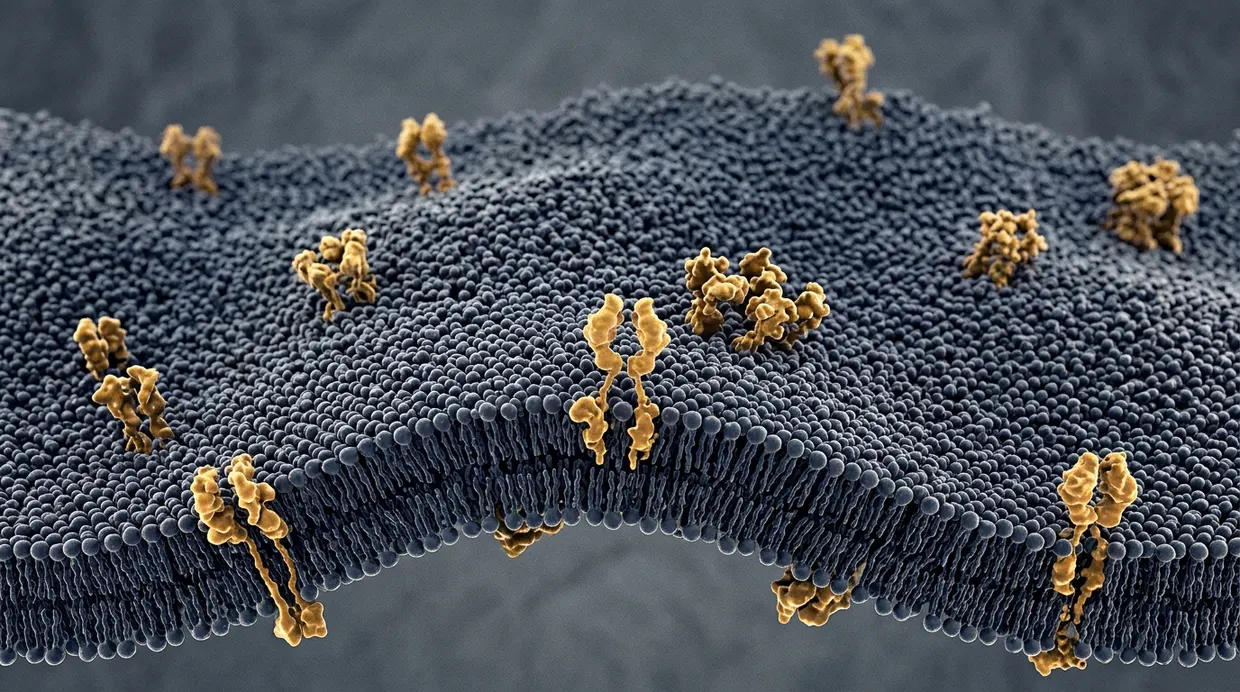
Proceedings of the National Academy of Sciencespnas.orgOpen source ↗. ATOM is the atypical translocase of the outer membrane. In T. brucei it replaces the canonical TOM complex, which mediates import of most mitochondrial preproteins in fungi and metazoans. Its composition differs substantially from those complexes.
The structure resolves all previously identified components together with an additional, previously uncharacterized subunit. Despite the divergent composition, ATOM retains a dimeric channel architecture and a protein-conducting pathway that closely resembles those of opisthokont TOM complexes. The authors conclude that the core mechanism of mitochondrial protein translocation was established early in eukaryotic evolution.
The receptor and intermembrane-space regions, by contrast, have distinct architectures. The authors describe this as extensive evolutionary diversification with multiple examples of convergent evolution. The work gives a near-atomic view of the ATOM translocase and of how the mitochondrial protein import machinery originated, was conserved and diversified across eukaryotes.