European XFEL attosecond hard X-ray pulses reach 2×10²⁰ W/cm² in a 180×330 nm focal spot
Total-reflection mirrors focused attosecond hard X-ray pulses to about 2×10²⁰ W/cm², comparable to the highest hard X-ray values, opening nonlinear and damage-free structure studies.

Researchers at the European X-ray Free Electron Laser (European XFEL) in Hamburg, Germany, focused hard X-ray attosecond pulses to a spot of 180 × 330 nm. They reached a peak intensity of about 2 × 10²⁰ W/cm², according to a report in Optica optica.org
Opticaoptica.orgOpen source ↗. The pulses concentrated 118.8 GW of power in that spot. The team combined attosecond pulses from the XFEL with total-reflection focusing optics.
How the pulses were made and focused
Attosecond pulses are usually produced by high-harmonic generation. It works well in the extreme ultraviolet and soft X-ray ranges, but study co-leader Jiawei Yan says that extending it to hard X-rays is difficult. The XFEL is a linear electron accelerator that produces coherent light by self-amplified spontaneous emission. Yan and colleagues at XFEL and DESY had earlier developed a way to generate hard X-ray attosecond pulses at terawatt scale.
The new pulses were produced with a scheme called self-chirping. An electron bunch is compressed into a short current spike, its own electromagnetic fields imprint an energy variation along it, and a magnetic arc uses this variation to compress it further. In the undulator this part of the bunch emitted pulses with energies of up to a few hundred microjoules. Yan says this is more than 10 times higher than for hard X-ray attosecond pulses made by other methods.
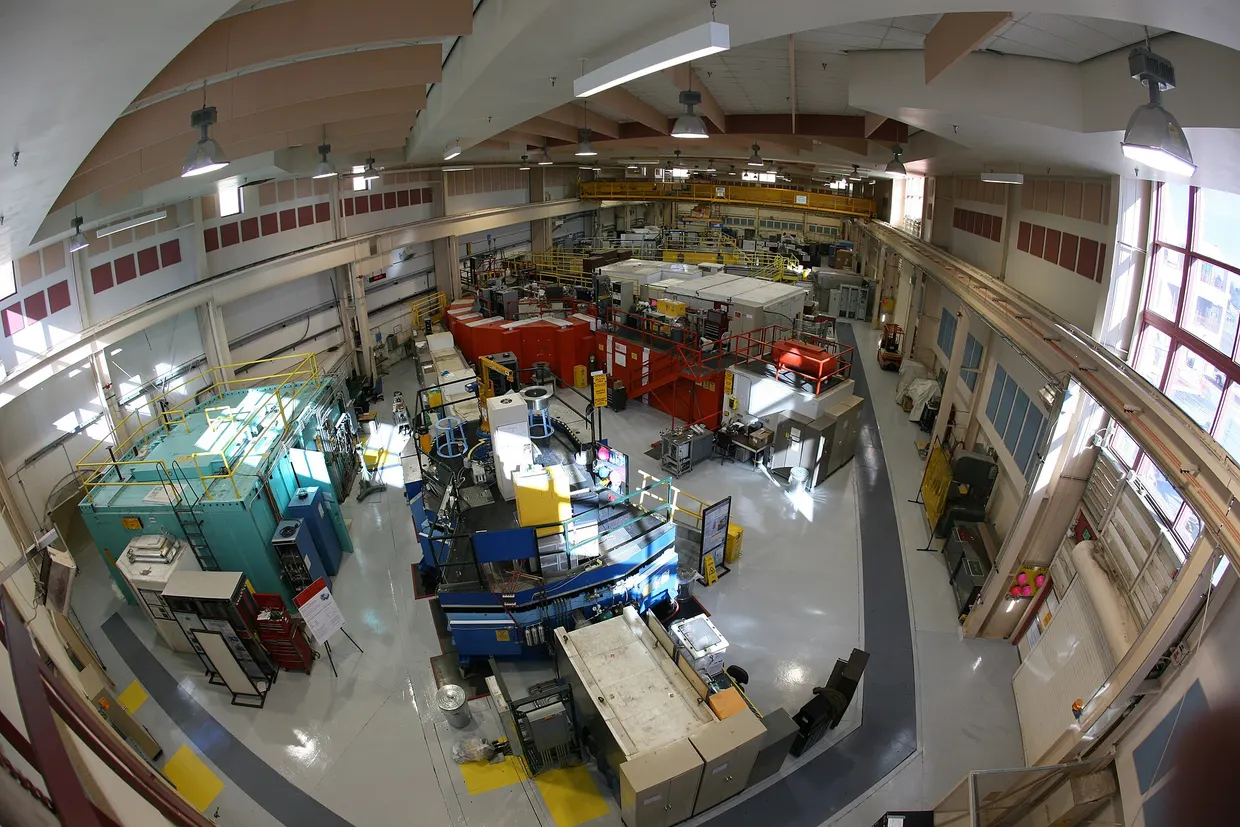
The pulses were sent to the Materials Imaging and Dynamics (MID) instrument and focused by an Advanced Kirkpatrick–Baez (AKB) total-reflection mirror system. The system was developed by Jumpei Yamada of the University of Osaka and Ichiro Inoue of the University of Tokyo.
Confirming the intensity and next steps
The peak intensity on the order of 10²⁰ W/cm² was confirmed by observing saturation of amplified spontaneous emission from copper atoms optica.org
Opticaoptica.orgOpen source ↗. The authors state that the intensities and fluences are comparable to the highest values attained in the hard X-ray regime.
According to the authors, such pulses enable the study of higher-order nonlinear light–matter interactions, damage-free structure determination and coherent control of atoms and molecules. Yan notes that diffraction signals could be collected before substantial electronic damage develops, which matters for radiation-sensitive samples.
The team is now developing stabilized attosecond pulses and ways to generate several pulses with controlled timing. Yan adds that the next step is to use the source in experiments on nonlinear X-ray interactions and ultrafast electronic dynamics.