Kazakhstan lung cancer registry, 39,071 cases: 73.09% found at stage III–IV, 5-year survival 20.20%
A 2014–2023 analysis of the Kazakhstan National Cancer Registry found no rise in early-stage detection, while prevalence grew by 12.69% a year on average.
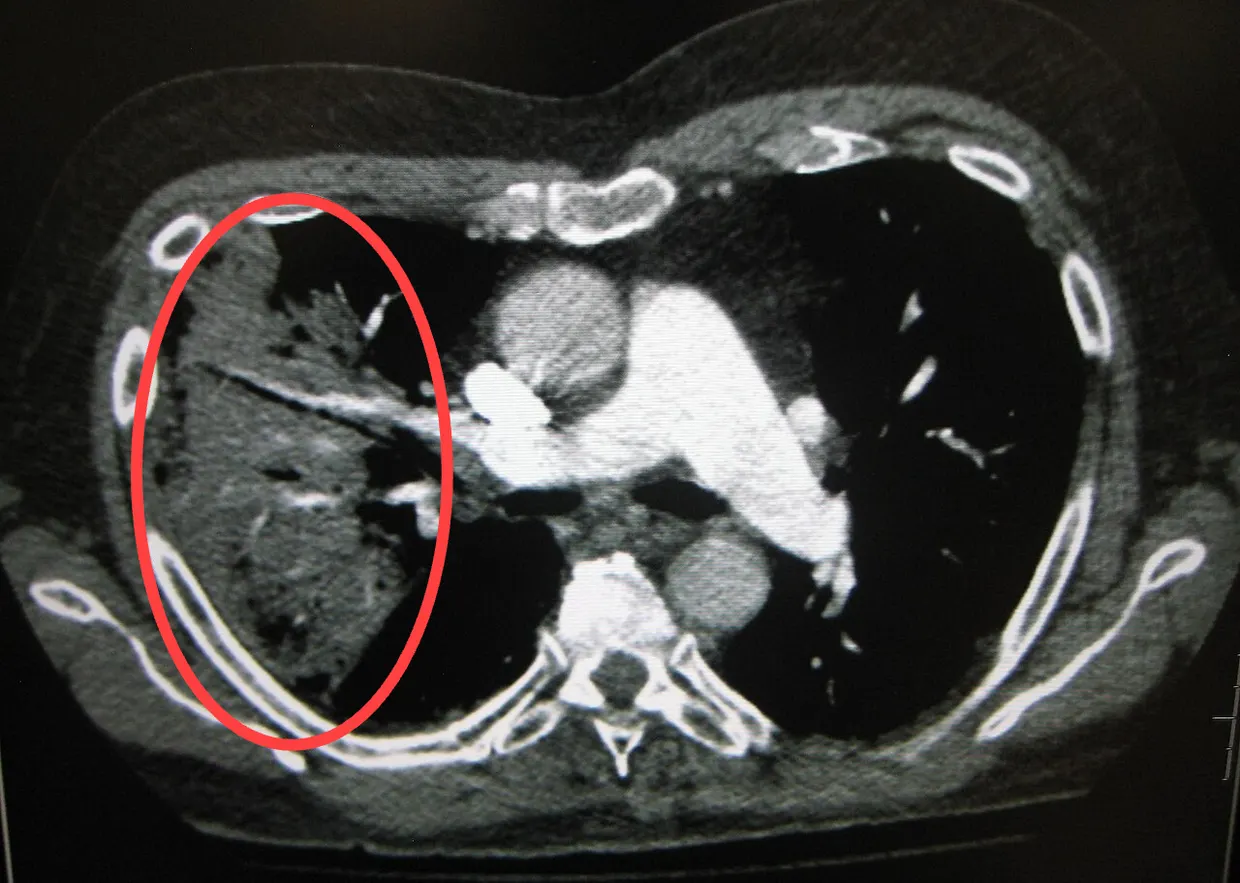
Researchers analysed National Cancer Registry data from Kazakhstan for 2014–2023 to describe the lung cancer burden in a country where such data are sparse. The study, published in EClinicalMedicine, included 39,071 patients. Most were diagnosed late: 73.09% had stage III or IV disease. sciencedirect.com
EClinicalMedicinesciencedirect.comOpen source ↗
Incidence, mortality and prevalence
The authors calculated age-standardized rates and the average annual percent change (AAPC). Incidence fell by 2.27% a year (95% CI −3.28% to −1.23%). According to registry data, the age-standardized rate went from 19.83 cases per 100,000 population in 2014 to 14.10 in 2023. Mortality from all causes rose by 3.51% a year, but its confidence interval (−0.76% to 7.97%) includes zero. Prevalence rose by 12.69% a year (95% CI 7.53%–18.09%).
The AAPC for early-stage detection was 0.27% (95% CI −0.81% to 1.31%), so the share of early diagnoses did not change appreciably over the decade. Stage III accounted for 45.33% of cases and stage IV for 27.76%, while stage I was found in 7.09% and stage II in 19.78%. Men made up 78.15% of the cohort. The authors benchmarked their estimates against the Global Burden Study (GBD).
Survival after diagnosis
The median follow-up was 1930 days (reverse Kaplan–Meier method). Survival at one month was 83.79%, and at five years 20.20%. sciencedirect.com
EClinicalMedicinesciencedirect.comOpen source ↗
To assess the effect of clinical and demographic factors, the team used restricted mean survival time (RMST) models for the period from one month to the fifth year after diagnosis. Survival was mainly affected by late stage and older age. The difference in survival time grew from 1 day at baseline to several years by the fifth year after diagnosis.
The authors state that their estimates reflect escalating public health challenges in Kazakhstan. Because lung cancer is mostly diagnosed at advanced stages, they consider preventive measures particularly important.