WMO: CO2 reached a record 426.8 ppm in 2025, with methane and nitrous oxide also at new highs
The WMO Greenhouse Gas Bulletin reports record concentrations of CO2, methane and nitrous oxide in 2025. Methane isotope data show a larger share from wildfires.
The World Meteorological Organization (WMO) reported that atmospheric concentrations of carbon dioxide, methane and nitrous oxide reached record highs in 2025, according to wmo.int. wmo.int
wmo.intwmo.intOpen source ↗ The 22nd WMO Greenhouse Gas Bulletin puts the globally averaged surface CO2 concentration at 426.8 ppm, or 153% of the 1750 pre-industrial baseline. The bulletin covers gas accumulated in the atmosphere, not new annual emissions. About half of the CO2 emitted each year stays in the air, and the rest is absorbed by land ecosystems and oceans.
CO2 growth rate and other gases
Methane averaged 1948 ppb, or 267% of the 1750 level, and nitrous oxide 339.1 ppb, or 126% of it. When the bulletin first appeared in 2004, the annual mean CO2 level at WMO's Global Atmosphere Watch stations was 377.5 ppm. The annual CO2 increase has tripled since the 1960s, from 0.8 ppm per year to 2.4 ppm per year in 2011-2020. From 2024 to 2025 it was 2.8 ppm, above the decadal average but below the exceptional rise of 2023/2024.
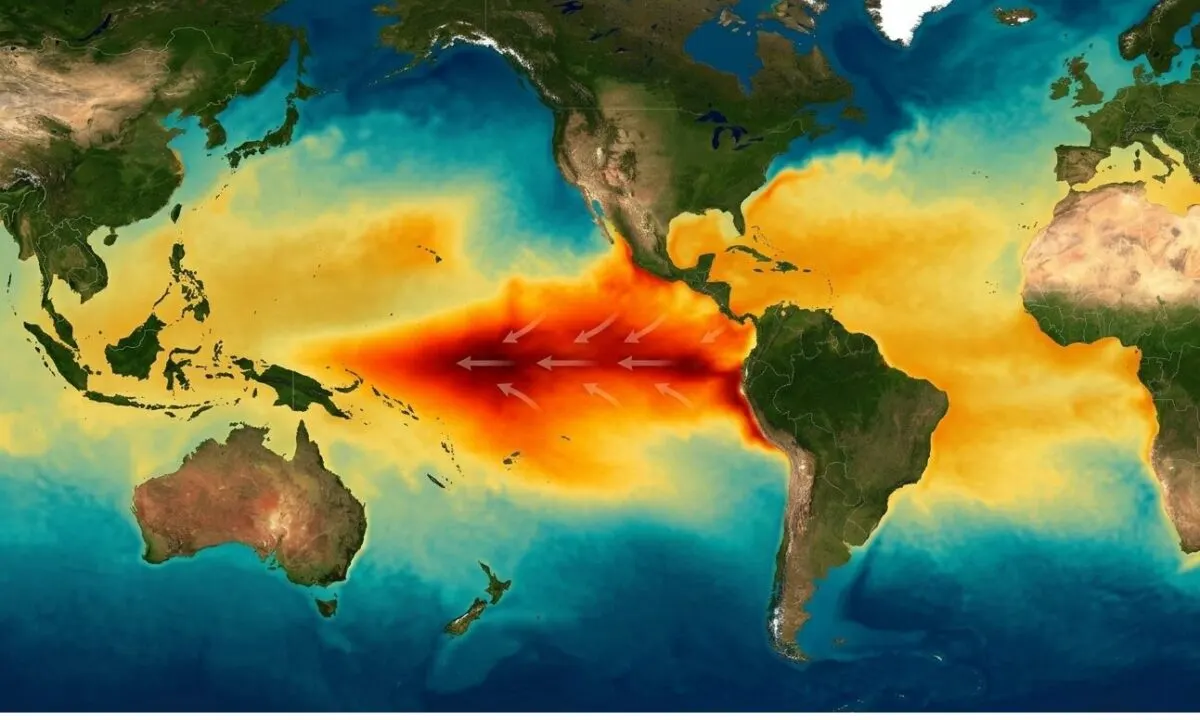
WMO scientist Oksana Tarasova linked the slower growth to the recovery of land carbon sinks and lower fire emissions after the strong 2023/2024 El Niño. She said concentrations are expected to rise further in 2026 because of fossil fuel burning and a developing El Niño. According to the NOAA index, the warming effect of long-lived greenhouse gases grew by 56% from 1990 to 2025, with CO2 accounting for about 81% of the increase.
Methane sources, SF6 and hydrogen
Methane accounts for about 16% of that warming effect. Roughly 35% of it comes from natural sources and about 65% from human activity. wmo.int
wmo.intwmo.intOpen source ↗ Researchers at Earth Sciences New Zealand, who wrote the methane section, used the 13C/12C ratio as a fingerprint of the source. From mid-2023 to 2025 the share of wildfire methane rose relative to wetlands and agriculture. The report names the record fires in North America and the Amazon in 2023 and 2024 as the likely cause. Drought also reduced wetland emissions. By the end of the period the fire share had nearly returned to the 2023 level. Lead author Peter Sperlich said that wildfires had for the first time become large enough for their methane to show in global isotope data. Whether this was a one-off or an early sign of larger shifts remains open.
The bulletin also points to two trace gases tied to power systems. SF6, used as a spark suppressant in electricity distribution, has a lifetime of over 1000 years and a 100-year warming potential about 24,300 times that of CO2. Its increase in 2025 was a record. Hydrogen concentration rose by 5.3% between 2010 and 2024. Hydrogen is not a greenhouse gas, but it affects atmospheric chemistry and so has an indirect warming effect.
Sources · 2
Found a mistake?Read also