NASA Exoplanet Archive adds two gas giants around red dwarf KMT-2026-BLG-0083L, found by microlensing
The archive's six new planets include two giants orbiting an M dwarf, the seventh multi-planet microlensing system by the authors' count. Giants around such stars are expected to be rarer.
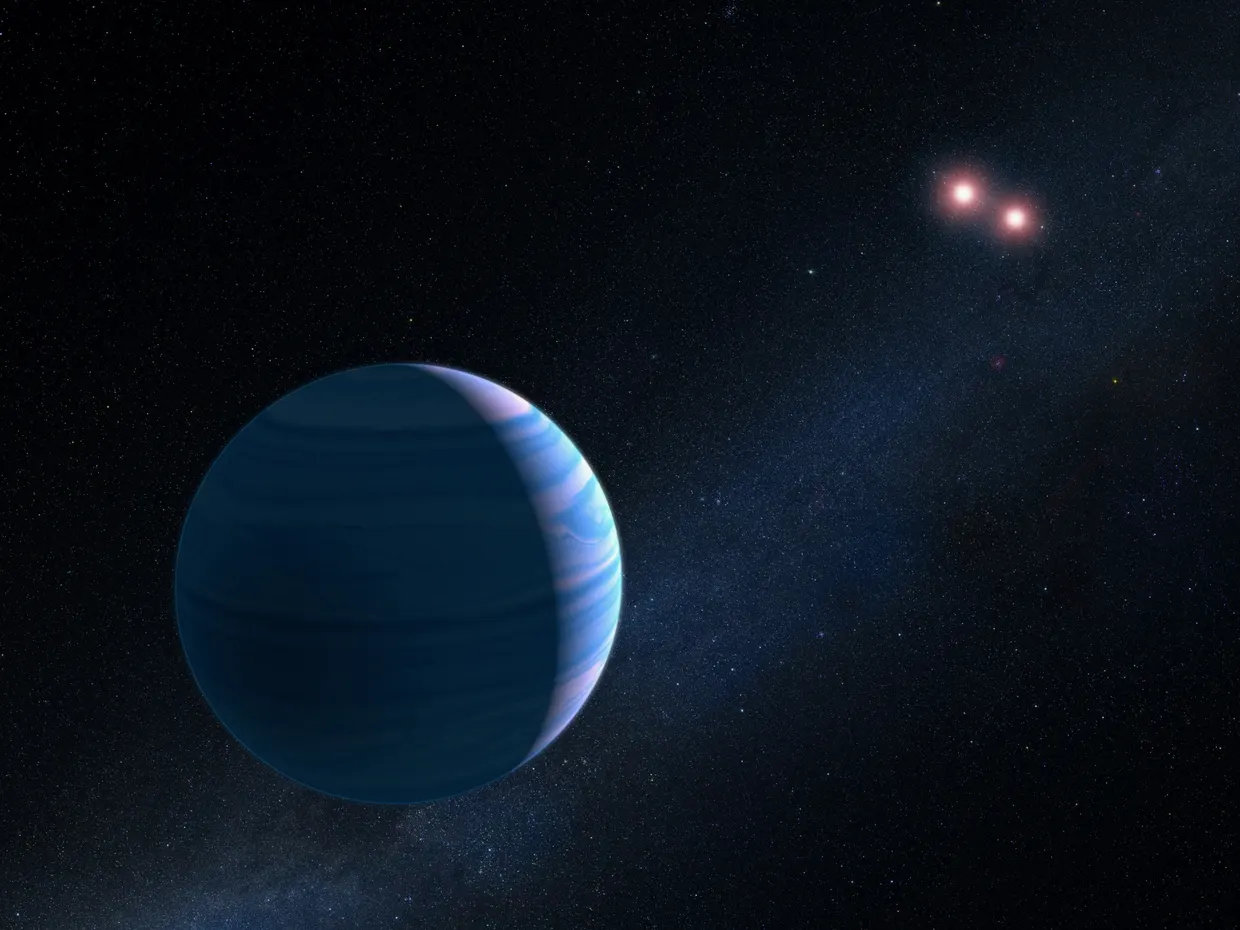
The NASA Exoplanet Archive, operated by Caltech, added six planets in an update dated November 12, 2026, according to exoplanetarchive.ipac.caltech.edu. Two of them orbit KMT-2026-BLG-0083, an M dwarf, which makes it one of the few multi-planet systems found by gravitational microlensing exoplanetarchive.ipac.caltech.edu
exoplanetarchive.ipac.caltech.eduexoplanetarchive.ipac.caltech.eduOpen source ↗. The authors of the discovery paper count it as the seventh such system.
The system and the event
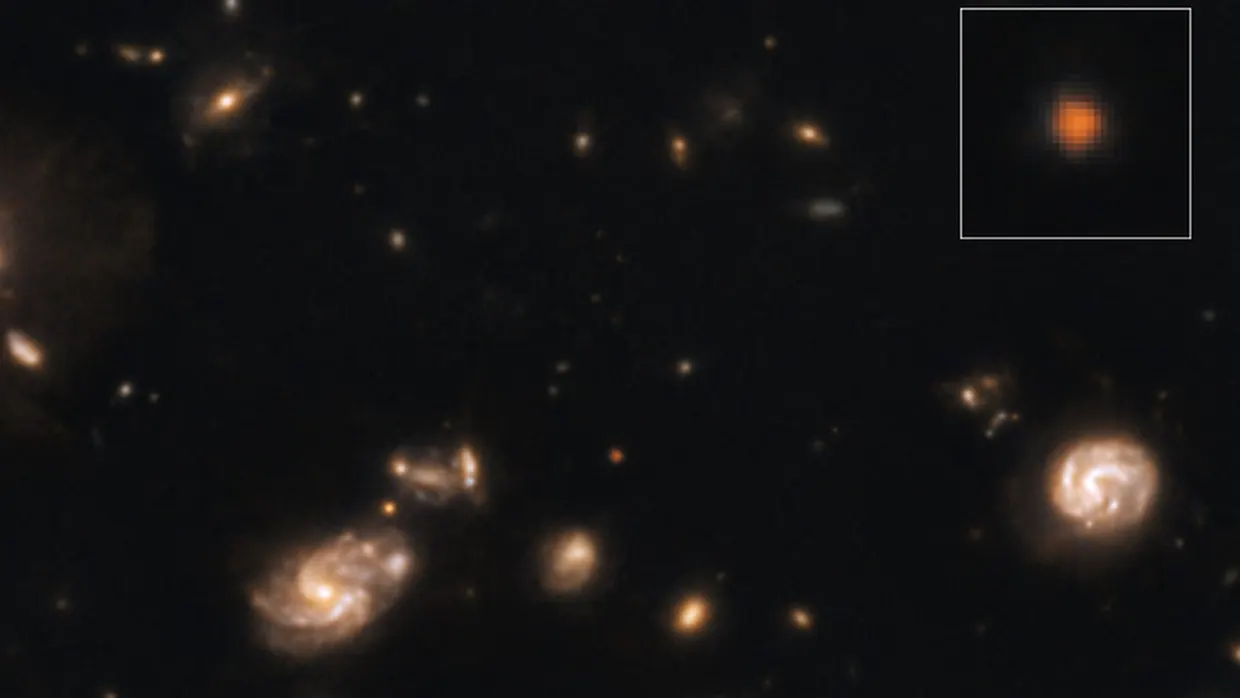
A team led by Cheongho Han of Chungbuk National University posted the analysis on arXiv on September 11, 2026. The Archive cites the version published in Publications of the Astronomical Society of the Pacific. The host star has about 0.48 solar masses, with a wide uncertainty. Archive parameters put it about 6,770 parsecs (roughly 22,000 light-years) away, toward the Galactic bulge. The paper estimates a 66% chance that the lens star lies in the bulge and 34% that it lies in the disk.
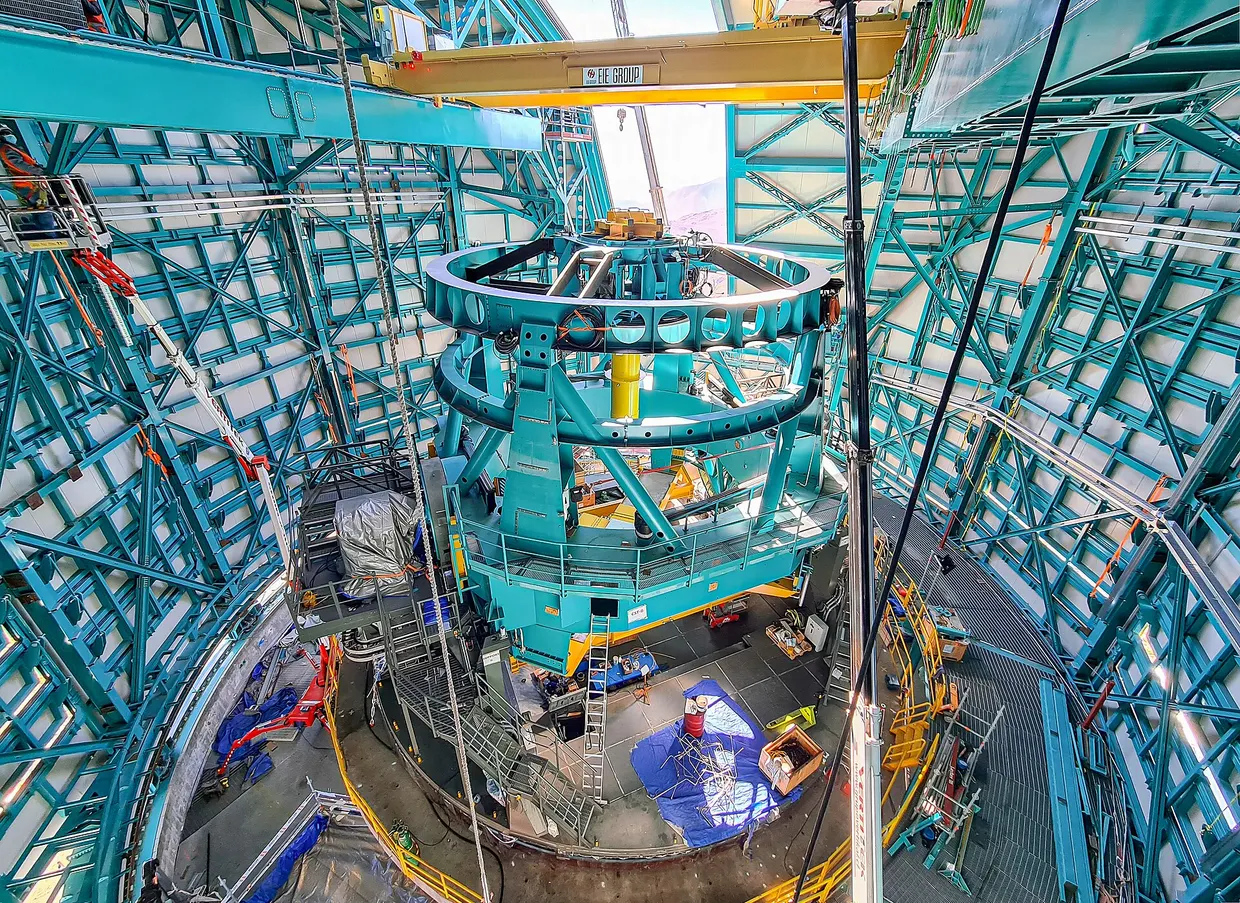
The Korea Microlensing Telescope Network (KMTNet) found the event on March 16, 2026. It uses three 1.6-meter telescopes in Chile, South Africa and Australia, each with a 4-square-degree field of view. The event fell in the overlap of two survey fields, which gave an effective cadence of 15 minutes. OGLE (as OGLE-2026-BLG-0005) and PRIME (as PRIME-2026-BLG-0025) detected it independently. The DREAMS effort monitored it every one to two minutes with the 4-meter Blanco Telescope and its Dark Energy Camera at Cerro Tololo.
Masses and formation questions
Both planetary masses come from a statistical analysis of the event and carry large error bars. The outer planet's mass could plausibly lie anywhere from roughly 1 to 4.6 Jupiter masses. The separations are projected distances, so the true orbits may be considerably larger. The authors place the inner planet near the host's snow line but give no numerical value for it. An alignment of this kind passes once, so the masses remain probability estimates rather than direct measurements.
Under core accretion, a solid core must grow fast enough to capture a thick gas envelope before the disk disperses. Low-mass stars make this harder, so giant planets around them are expected to be less common. Simulations by Sanchez and colleagues, published in Astronomy & Astrophysics in January 2026, produced a cold giant around a 0.1 solar-mass star. That required a compact disk holding about 10% of the star's mass and lasting roughly 10 million years. That star is far lighter than this one, so the result is a rough guide rather than a direct test.
The sixth microlensing multi-planet system, KMT-2022-BLG-1818Lb,c, was published in The Astronomical Journal in January 2026. Its host is likely a K dwarf in the Galactic disk, with a super-Jupiter and a Saturn-class planet. That paper noted that microlensing had yielded more than 230 exoplanets by its 2025 writing.